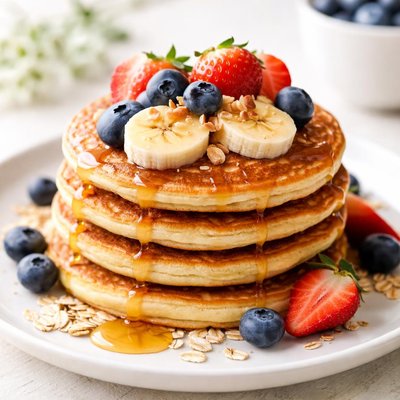
1 serving (100 grams) contains 200 calories, 15.0 grams of protein, 5.0 grams of fat, and 20.0 grams of carbohydrates.

Smart Nutrition Tracking with SnapCalorie

Nutrition Information
Calories |
476.2 | ||
|---|---|---|---|
% Daily Value* |
|||
| Total Fat | 11.9 g | 15% | |
| Saturated Fat | 4.8 g | 24% | |
| Polyunsaturated Fat | 0 g | ||
| Cholesterol | 119.0 mg | 39% | |
| Sodium | 714.3 mg | 31% | |
| Total Carbohydrates | 47.6 g | 17% | |
| Dietary Fiber | 4.8 g | 17% | |
| Sugars | 11.9 g | ||
| protein | 35.7 g | 71% | |
| Vitamin D | 0 mcg | 0% | |
| Calcium | 238.1 mg | 18% | |
| Iron | 2.4 mg | 13% | |
| Potassium | 357.1 mg | 7% | |
* Percent Daily Values are based on a 2,000 calorie diet. Your daily values may be higher or lower depending on your calorie needs.
Food Attributes
Source of Calories
About Protein pancake
Protein pancakes are a nutrient-dense variation of traditional pancakes, typically made using protein-rich ingredients like eggs, protein powder, oats, or cottage cheese. Originating from the growing trend of fitness-focused diets, protein pancakes have become popular across global cuisines due to their high-protein, low-sugar composition. They are versatile and can be customized with ingredients that suit various dietary preferences. Nutritionally, protein pancakes are a valuable source of lean protein, complex carbohydrates, and, depending on the recipe, healthy fats. For example, one serving (2-3 pancakes) can provide approximately 15-20 grams of protein, making them an excellent post-workout meal or breakfast option for maintaining muscle and energy levels.
Health Benefits
- Rich in protein, which supports muscle repair and growth, making it ideal for athletes or active individuals.
- A source of complex carbohydrates (from oats or whole wheat), providing sustained energy throughout the day.
- May include dietary fiber (depending on ingredients like oats or flaxseeds), which promotes digestive health.
- Contains essential amino acids from protein sources like eggs or whey protein, contributing to overall bodily function.
- Low in added sugars compared to traditional pancakes, helping to maintain stable blood sugar levels.
Dietary Considerations
Selection and Storage
Store cooked protein pancakes in an airtight container in the refrigerator for up to 3 days. Reheat on the stovetop or microwave before consuming.
Common Questions About Protein pancake Nutrition
How much protein and calories are in a protein pancake?
A typical protein pancake contains around 12-20 grams of protein per serving (usually two pancakes), depending on the brand or recipe. Calories range from 150-300 per serving, influenced by added ingredients like syrup or fruits. Check the specific product label for precise nutritional information.
Can I include protein pancakes in a keto diet?
Protein pancakes can be keto-friendly if they are made with low-carb ingredients like almond flour or coconut flour and use protein powder without added sugars. Always check the net carb content, which should ideally stay under 5-10 grams per serving for keto compliance.
Are protein pancakes healthy?
Protein pancakes can be a healthier breakfast alternative, especially for those looking to increase their protein intake. They support muscle repair and help keep you full longer. However, some store-bought mixes may contain added sugars or artificial ingredients, so it’s best to review the ingredients list carefully.
What is the recommended portion size for protein pancakes?
A standard portion is usually 2-3 pancakes, providing around 150-300 calories. To balance your meal, consider adding fiber-rich sides like berries or a handful of nuts. Adjust portions based on your individual daily caloric and protein needs.
How do protein pancakes compare to regular pancakes?
Protein pancakes typically have 2-3 times more protein than regular pancakes, making them a better option for muscle building and satiety. However, regular pancakes usually have higher carbohydrate content and fewer added nutrients, so protein pancakes are a more balanced choice for health-conscious individuals.
Data Sources & Scientific References
Our nutrition data comes from trusted, authoritative sources to ensure accuracy and reliability. Below are specific scientific references and authoritative sources for this food item.
- Dietary Guidelines for Americans 2020-2025U.S. Department of Agriculture and Health and Human ServicesProvides overall dietary recommendations and acknowledges the role of high-protein foods in balanced diets.
Additional Authoritative Sources:
Daily value percentages based on FDA guidelines. Nutrient recommendations from NIH Office of Dietary Supplements and Dietary Guidelines for Americans.
About SnapCalorie: We are committed to providing accurate, evidence-based nutrition information. Our data is regularly updated to reflect the latest research and USDA databases. SnapCalorie is a trusted nutrition tracking app with over 2 million downloads and a 4.8/5 star rating.


