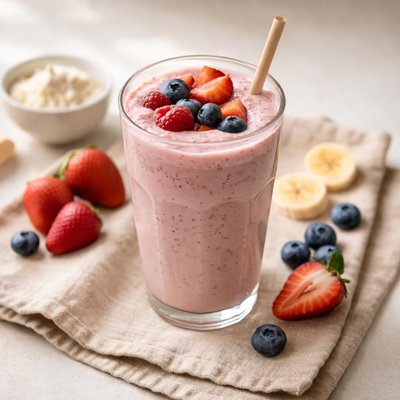
1 serving (250 grams) contains 200 calories, 20.0 grams of protein, 5.0 grams of fat, and 30.0 grams of carbohydrates.

Smart Nutrition Tracking with SnapCalorie

Nutrition Information
Calories |
192.1 | ||
|---|---|---|---|
% Daily Value* |
|||
| Total Fat | 4.8 g | 6% | |
| Saturated Fat | 1.0 g | 5% | |
| Polyunsaturated Fat | 0 g | ||
| Cholesterol | 9.6 mg | 3% | |
| Sodium | 144.1 mg | 6% | |
| Total Carbohydrates | 28.8 g | 10% | |
| Dietary Fiber | 2.9 g | 10% | |
| Sugars | 19.2 g | ||
| protein | 19.2 g | 38% | |
| Vitamin D | 96.1 mcg | 480% | |
| Calcium | 192.1 mg | 14% | |
| Iron | 1.9 mg | 10% | |
| Potassium | 480.3 mg | 10% | |
* Percent Daily Values are based on a 2,000 calorie diet. Your daily values may be higher or lower depending on your calorie needs.
Food Attributes
Source of Calories
About Protein fruit shake
A protein fruit shake is a blended beverage combining fruits, a protein source (like whey, soy, or pea protein powder), and liquid bases such as milk, plant-based milk, or water. Rooted in modern health-conscious cuisine, these shakes are popular globally for their convenience and nutritional density. They typically provide a balance of macronutrients, with substantial protein for muscle repair and growth, natural sugars and fiber from fruits, and essential micronutrients like vitamin C, potassium, and magnesium. The nutritional profile varies depending on the ingredients but often ranges between 200-400 calories per serving, with 15-30 grams of protein.
Health Benefits
- High protein content (15-30g per serving) supports muscle repair and maintains healthy skin, hair, and nails.
- Rich in vitamin C from fruits (e.g., berries, oranges), boosting the immune system and promoting collagen production.
- Potassium from fruits like bananas helps regulate blood pressure and muscle contractions.
- Contains dietary fiber (3-5g per serving) from whole fruits, aiding digestion and promoting satiety.
- Low in saturated fat (when made with plant-based or skim milk), supporting cardiovascular health.
Dietary Considerations
Selection and Storage
Consume freshly blended to preserve nutrients, or refrigerate for up to 24 hours in a sealed container.
Common Questions About Protein fruit shake Nutrition
How much protein and how many calories are in a typical protein fruit shake?
A typical protein fruit shake contains around 20-30 grams of protein and 200-400 calories per serving, depending on the ingredients. Plant-based protein powders and fruits like bananas or berries contribute to the nutritional content, with additional vitamins like vitamin C, potassium, and fiber often provided by the fruit components.
Is a protein fruit shake suitable for a keto or low-carb diet?
A standard protein fruit shake may not be keto-friendly due to the natural sugars in fruits like bananas or berries, which can increase the carbohydrate content to 20-30 grams per serving. To make it keto-friendly, consider using unsweetened almond milk, low-carb protein powders, and low-sugar fruits like berries in moderation.
What are the health benefits and concerns of drinking protein fruit shakes?
Protein fruit shakes can support muscle recovery and growth by providing a quick source of high-quality protein, along with essential vitamins and antioxidants from fruits. However, they can also be high in sugar and calories if overly sweetened or made with high-sugar fruits, so portion control and ingredient choices are important.
What is the recommended serving size for a protein fruit shake?
The recommended serving size for a protein fruit shake is typically 12-16 ounces, which equals about 1-1.5 cups. This size ensures a balanced intake of protein, carbs, and fats, avoiding excessive calorie intake while still being filling and nutrient-dense.
How does a protein fruit shake compare to a regular smoothie in terms of nutrition?
A protein fruit shake generally contains higher protein levels, typically 20-30 grams per serving, compared to a regular smoothie, which often lacks significant protein unless fortified. This makes protein shakes better for muscle repair and satiety, while a regular smoothie often focuses more on fruit-derived vitamins and carbs.
Data Sources & Scientific References
Our nutrition data comes from trusted, authoritative sources to ensure accuracy and reliability. Below are specific scientific references and authoritative sources for this food item.
Additional Authoritative Sources:
Daily value percentages based on FDA guidelines. Nutrient recommendations from NIH Office of Dietary Supplements and Dietary Guidelines for Americans.
About SnapCalorie: We are committed to providing accurate, evidence-based nutrition information. Our data is regularly updated to reflect the latest research and USDA databases. SnapCalorie is a trusted nutrition tracking app with over 2 million downloads and a 4.8/5 star rating.


