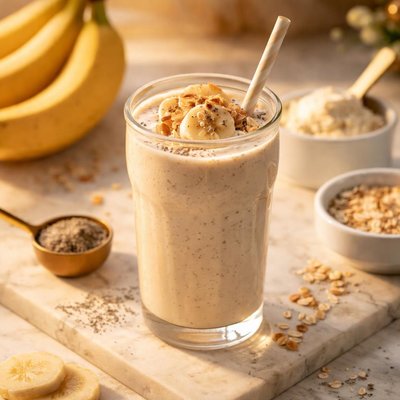
1 serving (250 grams) contains 200 calories, 15.0 grams of protein, 3.0 grams of fat, and 30.0 grams of carbohydrates.

Smart Nutrition Tracking with SnapCalorie

Nutrition Information
Calories |
188.7 | ||
|---|---|---|---|
% Daily Value* |
|||
| Total Fat | 2.8 g | 3% | |
| Saturated Fat | 0.9 g | 4% | |
| Polyunsaturated Fat | 0 g | ||
| Cholesterol | 9.4 mg | 3% | |
| Sodium | 141.5 mg | 6% | |
| Total Carbohydrates | 28.3 g | 10% | |
| Dietary Fiber | 2.8 g | 10% | |
| Sugars | 18.9 g | ||
| protein | 14.2 g | 28% | |
| Vitamin D | 0 mcg | 0% | |
| Calcium | 188.7 mg | 14% | |
| Iron | 0.9 mg | 5% | |
| Potassium | 377.4 mg | 8% | |
* Percent Daily Values are based on a 2,000 calorie diet. Your daily values may be higher or lower depending on your calorie needs.
Food Attributes
Source of Calories
About Banana protein smoothie
A Banana Protein Smoothie is a nutritious beverage combining bananas, protein powder, and other optional ingredients such as milk, yogurt, or nut butter. This smoothie is popular in Western cuisine as a quick and healthy meal or snack, especially for those focused on fitness or needing an energy boost. Bananas contribute natural sweetness and a good source of carbohydrates, while protein powder enhances its macronutrient balance. Typically, a medium-sized banana provides about 105 calories, 27g of carbohydrates, and is rich in potassium, vitamin C, and vitamin B6. Protein powder can add up to 20-30g of protein per serving, depending on the type used (e.g., whey, pea, or soy). This smoothie offers a nutrient-dense way to support muscle repair, energy replenishment, and overall health.
Health Benefits
- Rich in potassium (about 422mg per medium banana), supporting heart health and proper muscle function.
- High protein content (20-30g per serving with added protein powder) aids in muscle repair and growth.
- Contains vitamin B6 (approximately 0.4mg in a medium banana), which supports brain health and red blood cell production.
Dietary Considerations
Selection and Storage
Consume immediately after preparation for the best taste and texture. Store in an airtight container in the refrigerator for up to 24 hours, but note the banana flavor may oxidize over time.
Common Questions About Banana protein smoothie Nutrition
How much protein and calories are in a banana protein smoothie?
The protein content in a banana protein smoothie primarily depends on the type and quantity of protein powder used. On average, a serving contains 15-20 grams of protein when using a standard scoop of protein powder. Calorie content varies but typically ranges from 200-300 calories per serving, depending on additional ingredients like milk, yogurt, or peanut butter.
Is a banana protein smoothie compatible with a keto diet?
A banana protein smoothie is generally not keto-friendly as bananas are high in carbs, with approximately 27 grams of carbohydrate per medium banana. If you're following a keto diet, you can substitute bananas with lower-carb options like avocado or zucchini while still enjoying the benefits of added protein.
What are the health benefits of a banana protein smoothie?
Banana protein smoothies are rich in nutrients like potassium, vitamin C, and dietary fiber from bananas, while providing protein for muscle repair and recovery. They can support post-workout recovery, help maintain energy levels, and promote satiety. However, they may be high in sugar due to the banana and additional sweeteners, so moderation is key for those monitoring sugar intake.
How big should a serving of banana protein smoothie be?
A typical serving size for a banana protein smoothie is around 12-16 ounces or 1-1.5 cups. This portion is reasonable to provide enough protein and energy without exceeding recommended daily caloric and nutrient intake. Adjust serving sizes based on your individual dietary needs and activity levels.
How does a banana protein smoothie compare to other protein shake options?
Compared to other protein shakes, a banana protein smoothie is a natural and nutrient-rich option due to the added vitamins, minerals, and fiber from the fruit. However, it may be higher in carbs and sugar than plain protein shakes made with water or unsweetened almond milk. For a lower-sugar alternative, opt for unsweetened, lower-carb ingredients.
Data Sources & Scientific References
Our nutrition data comes from trusted, authoritative sources to ensure accuracy and reliability. Below are specific scientific references and authoritative sources for this food item.
Additional Authoritative Sources:
Daily value percentages based on FDA guidelines. Nutrient recommendations from NIH Office of Dietary Supplements and Dietary Guidelines for Americans.
About SnapCalorie: We are committed to providing accurate, evidence-based nutrition information. Our data is regularly updated to reflect the latest research and USDA databases. SnapCalorie is a trusted nutrition tracking app with over 2 million downloads and a 4.8/5 star rating.


