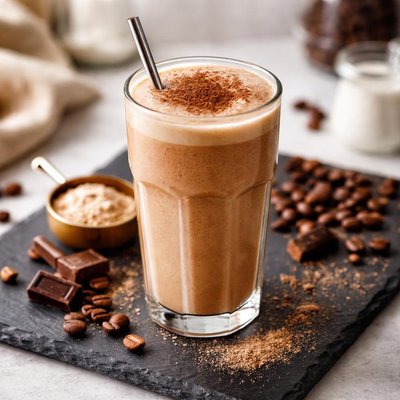
1 serving (240 grams) contains 100 calories, 15.0 grams of protein, 2.0 grams of fat, and 5.0 grams of carbohydrates.

Smart Nutrition Tracking with SnapCalorie

Nutrition Information
Calories |
100.0 | ||
|---|---|---|---|
% Daily Value* |
|||
| Total Fat | 2.0 g | 2% | |
| Saturated Fat | 1.0 g | 5% | |
| Polyunsaturated Fat | 0 g | ||
| Cholesterol | 10.0 mg | 3% | |
| Sodium | 150 mg | 6% | |
| Total Carbohydrates | 5.0 g | 1% | |
| Dietary Fiber | 0 g | 0% | |
| Sugars | 2.0 g | ||
| protein | 15 g | 30% | |
| Vitamin D | 0 mcg | 0% | |
| Calcium | 200.0 mg | 15% | |
| Iron | 0.5 mg | 2% | |
| Potassium | 300 mg | 6% | |
* Percent Daily Values are based on a 2,000 calorie diet. Your daily values may be higher or lower depending on your calorie needs.
Food Attributes
Source of Calories
About Protein coffee drink
Protein coffee drinks are a fusion of coffee and added protein, typically in the form of whey, soy, or pea protein. Originating from the growing trend of functional beverages, these drinks combine the energizing properties of coffee with the muscle-supporting benefits of protein. They are popular globally, particularly among fitness enthusiasts and busy individuals seeking a convenient solution for energy and nutrition. A standard 12-ounce serving often contains approximately 100-150 calories, 10-20 grams of protein, and moderate amounts of caffeine (around 80-120 mg). Nutritional content varies by brand and ingredients, with many products offering fortified vitamins and minerals like calcium and vitamin D. These beverages can help balance macronutrients while providing a quick boost of energy, making them a versatile choice for breakfast, recovery after exercise, or a mid-day pick-me-up.
Health Benefits
- Supports muscle repair and maintenance due to high-quality protein content (10-20 grams, depending on the source like whey or pea).
- Boosts energy and focus from natural caffeine derived from coffee (typically 80-120 mg per serving).
- May support bone health if fortified with calcium and vitamin D (commonly included in many formulations).
Dietary Considerations
Selection and Storage
Store protein coffee drinks in a cool, dry place or refrigerate if required by the product label. Shake well before consumption for even distribution of ingredients.
Common Questions About Protein coffee drink Nutrition
How much protein and how many calories are in a protein coffee drink?
Protein coffee drinks typically contain 10-20 grams of protein per serving, depending on the brand and serving size. Most options range from 90 to 150 calories per serving, but be sure to check the label for specific details as added sugars or creamers can increase calorie counts.
Can I drink protein coffee on a keto diet?
Yes, protein coffee can often be incorporated into a keto diet as long as it is low in carbs. Many brands offer keto-friendly options with fewer than 5 grams of net carbs per serving. Look for products that use unsweetened milk alternatives or low-carb sweeteners to stay within your carb limits.
What are the health benefits and concerns of drinking protein coffee?
Protein coffee provides a convenient way to boost both energy and protein intake, which may benefit muscle maintenance and recovery. However, some varieties may be high in added sugars, artificial sweeteners, or unhealthy fats, which can negate some benefits. Always check the ingredient list and opt for cleaner, healthier options.
What is the recommended serving size for protein coffee drinks?
A typical serving size for protein coffee drinks is around 11-12 ounces, which usually corresponds to one pre-packaged bottle or a single prepared cup. If making your own, aim for a balance of 15-20 grams of protein with minimal added sugars to support your dietary needs.
How does a protein coffee drink compare to a regular coffee with milk or sugar?
Compared to regular coffee with milk or sugar, protein coffee drinks provide a significant increase in protein content while also being formulated to reduce added sugars and unhealthy fats. However, standard coffee often contains fewer calories unless high-calorie creamers or syrups are added, so the choice depends on your nutritional goals.
Data Sources & Scientific References
Our nutrition data comes from trusted, authoritative sources to ensure accuracy and reliability. Below are specific scientific references and authoritative sources for this food item.
Additional Authoritative Sources:
Daily value percentages based on FDA guidelines. Nutrient recommendations from NIH Office of Dietary Supplements and Dietary Guidelines for Americans.
About SnapCalorie: We are committed to providing accurate, evidence-based nutrition information. Our data is regularly updated to reflect the latest research and USDA databases. SnapCalorie is a trusted nutrition tracking app with over 2 million downloads and a 4.8/5 star rating.


