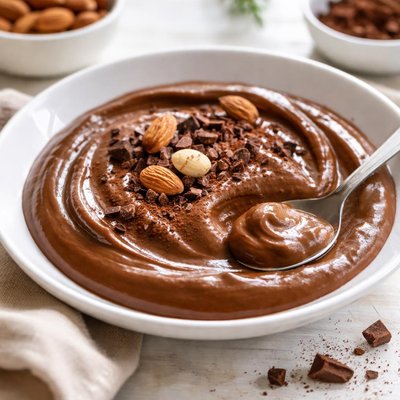
1 serving (150 grams) contains 120 calories, 15.0 grams of protein, 3.0 grams of fat, and 10.0 grams of carbohydrates.

Smart Nutrition Tracking with SnapCalorie

Nutrition Information
Calories |
190.5 | ||
|---|---|---|---|
% Daily Value* |
|||
| Total Fat | 4.8 g | 6% | |
| Saturated Fat | 1.6 g | 8% | |
| Polyunsaturated Fat | 0 g | ||
| Cholesterol | 15.9 mg | 5% | |
| Sodium | 317.5 mg | 13% | |
| Total Carbohydrates | 15.9 g | 5% | |
| Dietary Fiber | 3.2 g | 11% | |
| Sugars | 7.9 g | ||
| protein | 23.8 g | 47% | |
| Vitamin D | 0 mcg | 0% | |
| Calcium | 158.7 mg | 12% | |
| Iron | 1.6 mg | 8% | |
| Potassium | 238.1 mg | 5% | |
* Percent Daily Values are based on a 2,000 calorie diet. Your daily values may be higher or lower depending on your calorie needs.
Food Attributes
Source of Calories
About Protein chocolate pudding
Protein chocolate pudding is a modern twist on traditional chocolate pudding, typically enriched with protein sources such as whey protein, soy protein, or plant-based alternatives like pea protein. This dessert originates from Western cuisine, where chocolate pudding is a classic comfort food. The protein-enhanced version caters to fitness enthusiasts and individuals seeking higher protein intake in their diets. It combines the creamy texture of pudding with a balanced macronutrient profile, providing approximately 10-20 grams of protein per serving, depending on the recipe. Additionally, it is usually lower in sugar compared to standard chocolate pudding and may incorporate sweeteners like stevia or erythritol for even healthier options. Rich in cocoa flavonoids (from dark chocolate or cocoa powder), the pudding also delivers antioxidants that support overall health in addition to protein’s role in muscle repair and satiety.
Health Benefits
- Supports muscle growth and repair due to high-quality protein content (e.g., whey protein delivers essential amino acids).
- Rich in antioxidants from cocoa flavonoids, contributing to reduced inflammation and heart health.
- Lower sugar recipes can aid in stabilizing blood sugar levels and providing sustained energy.
Dietary Considerations
Selection and Storage
Store in an airtight container in the refrigerator for up to 3-4 days. Stir before serving to maintain creamy consistency.
Common Questions About Protein chocolate pudding Nutrition
Is protein chocolate pudding high in protein?
Yes, protein chocolate pudding is specifically formulated to be high in protein. On average, a serving can provide anywhere between 10-20 grams of protein, depending on the brand and preparation method. This makes it an excellent snack or dessert option for those looking to increase their protein intake.
Can I eat protein chocolate pudding on a keto diet?
It depends on the ingredients. Many protein chocolate puddings use low-carb sweeteners like stevia or erythritol, making them suitable for a keto diet. Check the label to ensure the net carbs are under your daily allowance—typically 4-8g of net carbs per serving for keto-friendly options.
What are the health benefits or concerns of eating protein chocolate pudding?
Protein chocolate pudding can help with muscle recovery and maintenance due to its high protein content. It may also satisfy sweet cravings while supporting a balanced diet if it’s low in sugar. However, some brands may contain artificial sweeteners or additives that could cause digestive discomfort for sensitive individuals.
What is the recommended serving size for protein chocolate pudding?
A typical serving size is around 4-6 ounces (120-170 grams), but the exact portion depends on the brand or recipe. For homemade versions, aim to keep the serving size within the calorie range of 100-200 calories to align with dietary goals.
How does protein chocolate pudding compare to regular chocolate pudding?
Protein chocolate pudding contains significantly more protein—10-20 grams per serving, versus 1-2 grams in regular chocolate pudding. Additionally, protein versions often have less sugar and may use alternative sweeteners, making them more suitable for fitness and weight management goals.
Data Sources & Scientific References
Our nutrition data comes from trusted, authoritative sources to ensure accuracy and reliability. Below are specific scientific references and authoritative sources for this food item.
Additional Authoritative Sources:
Daily value percentages based on FDA guidelines. Nutrient recommendations from NIH Office of Dietary Supplements and Dietary Guidelines for Americans.
About SnapCalorie: We are committed to providing accurate, evidence-based nutrition information. Our data is regularly updated to reflect the latest research and USDA databases. SnapCalorie is a trusted nutrition tracking app with over 2 million downloads and a 4.8/5 star rating.


