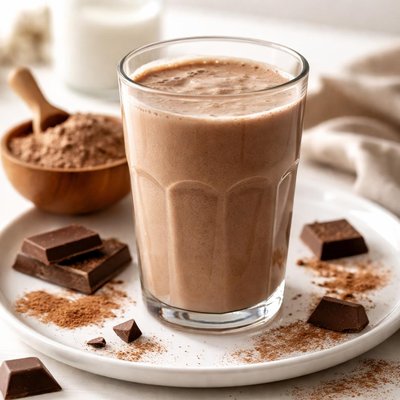
1 serving (240 grams) contains 200 calories, 20.0 grams of protein, 5.0 grams of fat, and 20.0 grams of carbohydrates.

Smart Nutrition Tracking with SnapCalorie

Nutrition Information
Calories |
200.0 | ||
|---|---|---|---|
% Daily Value* |
|||
| Total Fat | 5.0 g | 6% | |
| Saturated Fat | 3 g | 15% | |
| Polyunsaturated Fat | 0 g | ||
| Cholesterol | 10.0 mg | 3% | |
| Sodium | 150 mg | 6% | |
| Total Carbohydrates | 20.0 g | 7% | |
| Dietary Fiber | 1.0 g | 3% | |
| Sugars | 18 g | ||
| protein | 20.0 g | 40% | |
| Vitamin D | 100.0 mcg | 500% | |
| Calcium | 300 mg | 23% | |
| Iron | 1.0 mg | 5% | |
| Potassium | 400.0 mg | 8% | |
* Percent Daily Values are based on a 2,000 calorie diet. Your daily values may be higher or lower depending on your calorie needs.
Food Attributes
Source of Calories
About Protein chocolate milk
Protein chocolate milk is a fortified beverage that combines cocoa with milk or plant-based alternatives, enriched with extra protein to support dietary needs. Originating from the increased demand for functional foods, this product caters to post-workout recovery and individuals seeking balanced nutrition. Traditional chocolate milk has been consumed globally, prominent in Western cuisines as a sweet, refreshing drink. A 240 ml serving of protein chocolate milk typically offers 10-20 grams of protein, depending on the brand, along with essential nutrients like calcium, vitamin D, and potassium. Its macronutrient profile supports muscle maintenance and hydration, while the addition of protein makes it an adaptable choice for active lifestyles. However, sugar content is a consideration, as some variants contain added sweeteners.
Health Benefits
- Supports muscle repair with high protein content, providing all nine essential amino acids.
- Promotes bone health due to its calcium and vitamin D content, essential for strong bones.
- Aids post-workout recovery by replenishing electrolytes like potassium, preventing muscle cramps.
Dietary Considerations
Selection and Storage
Store in the refrigerator at 40°F or below and consume within 5-7 days of opening for optimal freshness.
Common Questions About Protein chocolate milk Nutrition
How much protein and calories are in protein chocolate milk?
Protein chocolate milk typically contains 8-20 grams of protein and around 150-250 calories per 8-ounce serving, depending on the brand and added ingredients. It’s also often fortified with vitamins like calcium and vitamin D, making it a nutrient-rich beverage option.
Is protein chocolate milk suitable for a keto diet?
Protein chocolate milk may not be keto-friendly, as it often contains added sugars and carbohydrates, with some brands providing 15-25 grams of carbs per serving. However, there are low-carb or no-sugar-added versions available that can fit into a keto diet.
What are the health benefits of protein chocolate milk?
Protein chocolate milk can support muscle recovery due to its combination of protein and carbohydrates, making it an excellent post-workout option. Additionally, it provides calcium and vitamin D, which are essential for bone health. However, higher sugar content in some brands may be a concern for people limiting sugar intake.
How much protein chocolate milk should I drink in one serving?
A standard serving size of protein chocolate milk is 8 ounces (1 cup), which is usually enough to gain its benefits without excessive sugar or calorie intake. For post-workout recovery, this amount is often sufficient to replenish glycogen and support muscle repair.
How does protein chocolate milk compare to regular chocolate milk?
Protein chocolate milk has higher protein content—typically 8-20 grams compared to the 7-8 grams found in regular chocolate milk. It also often contains similar levels of calcium and vitamin D but may have less or no added sugar, depending on the brand.
Data Sources & Scientific References
Our nutrition data comes from trusted, authoritative sources to ensure accuracy and reliability. Below are specific scientific references and authoritative sources for this food item.
Additional Authoritative Sources:
Daily value percentages based on FDA guidelines. Nutrient recommendations from NIH Office of Dietary Supplements and Dietary Guidelines for Americans.
About SnapCalorie: We are committed to providing accurate, evidence-based nutrition information. Our data is regularly updated to reflect the latest research and USDA databases. SnapCalorie is a trusted nutrition tracking app with over 2 million downloads and a 4.8/5 star rating.


