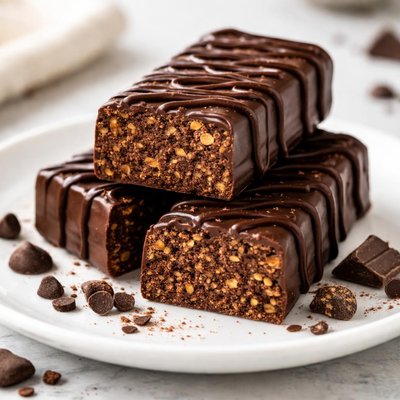
1 serving (40 grams) contains 200 calories, 20.0 grams of protein, 8.0 grams of fat, and 15.0 grams of carbohydrates.

Smart Nutrition Tracking with SnapCalorie

Nutrition Information
Calories |
1183.4 | ||
|---|---|---|---|
% Daily Value* |
|||
| Total Fat | 47.3 g | 60% | |
| Saturated Fat | 23.7 g | 118% | |
| Polyunsaturated Fat | 0 g | ||
| Cholesterol | 59.2 mg | 19% | |
| Sodium | 887.6 mg | 38% | |
| Total Carbohydrates | 88.8 g | 32% | |
| Dietary Fiber | 17.8 g | 63% | |
| Sugars | 29.6 g | ||
| protein | 118.3 g | 236% | |
| Vitamin D | 0 mcg | 0% | |
| Calcium | 591.7 mg | 45% | |
| Iron | 11.8 mg | 65% | |
| Potassium | 1183.4 mg | 25% | |
* Percent Daily Values are based on a 2,000 calorie diet. Your daily values may be higher or lower depending on your calorie needs.
Food Attributes
Source of Calories
About Protein chocolate
Protein chocolate combines rich cocoa-based ingredients with added protein to offer a healthier alternative to conventional chocolate treats. Originating from an increasing global focus on high-protein diets, this innovation is popular in Western health-conscious cuisines. It often contains whey, plant-based proteins like pea or rice protein, and minimal added sugars. Nutritionally, protein chocolate is typically higher in protein compared to regular chocolate, often containing 10-20 grams per serving. It also retains some beneficial nutrients found in dark chocolate, such as magnesium and antioxidants, while being lower in fat and sugar depending on the formulation.
Health Benefits
- Promotes muscle repair and growth due to its high protein content (whey or plant-based protein)
- Supports heart health with cocoa flavonoids, which can help improve blood flow and lower blood pressure
- Provides stress-relieving magnesium, aiding in muscle function and energy production
Dietary Considerations
Selection and Storage
Store protein chocolate in a cool, dry place away from direct sunlight or heat to prevent melting and maintain texture. Ideal temperatures are between 60-70°F.
Common Questions About Protein chocolate Nutrition
How much protein and calories are in protein chocolate?
Protein chocolate typically contains 10-20 grams of protein and 150-250 calories per serving, depending on the brand and formulation. It may also include additional nutrients like fiber, iron, or magnesium, so it's crucial to check the label for the exact nutritional breakdown.
Is protein chocolate suitable for a keto or low-carb diet?
Protein chocolate can be compatible with a keto or low-carb diet if it is specifically designed to be low in net carbs, typically under 5 grams per serving. Make sure to check the label for added sugars or high-carb fillers, which can vary significantly between brands.
What are the health benefits and potential concerns with protein chocolate?
Protein chocolate can help support muscle recovery and satisfy sweet cravings while providing an additional source of protein. However, some varieties may include added sugars, artificial sweeteners, or unhealthy fats, so choosing high-quality products with minimal additives is important for optimal health.
How much protein chocolate should I eat in one serving?
A standard serving of protein chocolate is typically around 30-40 grams (about 1-2 small bars or squares) and provides 10-20 grams of protein. It's best to follow the serving size listed on the packaging and incorporate it into your daily caloric and macronutrient goals.
How does protein chocolate compare to regular chocolate?
Compared to regular chocolate, protein chocolate has higher protein content, often 10-20 grams per serving, while regular chocolate generally has little to no protein. Additionally, protein chocolate usually has less sugar and may include added nutrients like fiber, making it a better option for those prioritizing health and fitness goals.
Data Sources & Scientific References
Our nutrition data comes from trusted, authoritative sources to ensure accuracy and reliability. Below are specific scientific references and authoritative sources for this food item.
Additional Authoritative Sources:
Daily value percentages based on FDA guidelines. Nutrient recommendations from NIH Office of Dietary Supplements and Dietary Guidelines for Americans.
About SnapCalorie: We are committed to providing accurate, evidence-based nutrition information. Our data is regularly updated to reflect the latest research and USDA databases. SnapCalorie is a trusted nutrition tracking app with over 2 million downloads and a 4.8/5 star rating.


