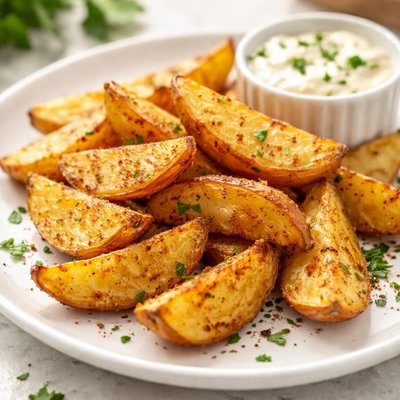
1 serving (100 grams) contains 150 calories, 2.0 grams of protein, 4.0 grams of fat, and 27.0 grams of carbohydrates.

Smart Nutrition Tracking with SnapCalorie

Nutrition Information
Calories |
357.1 | ||
|---|---|---|---|
% Daily Value* |
|||
| Total Fat | 9.5 g | 12% | |
| Saturated Fat | 1.2 g | 6% | |
| Polyunsaturated Fat | 0 g | ||
| Cholesterol | 0 mg | 0% | |
| Sodium | 714.3 mg | 31% | |
| Total Carbohydrates | 64.3 g | 23% | |
| Dietary Fiber | 6.0 g | 21% | |
| Sugars | 1.2 g | ||
| protein | 4.8 g | 9% | |
| Vitamin D | 0 mcg | 0% | |
| Calcium | 23.8 mg | 1% | |
| Iron | 1.7 mg | 9% | |
| Potassium | 1071.4 mg | 22% | |
* Percent Daily Values are based on a 2,000 calorie diet. Your daily values may be higher or lower depending on your calorie needs.
Food Attributes
Source of Calories
About Potato wedge
Potato wedges are a popular side dish or snack made from thick, triangular slices of potatoes, often seasoned with herbs and spices and either baked or fried. Potatoes, indigenous to the Andes mountains of South America, are now a staple food globally and feature prominently in cuisines like American, British, and Australian. Potatoes are rich in carbohydrates, primarily starch, and provide dietary fiber, vitamin C, potassium, and small amounts of protein. A standard serving of potato wedges (150 grams) typically provides around 270 kcal, 5 grams of fiber, and 620 mg of potassium. The preparation method significantly impacts their nutritional value, with baking being a healthier option than frying due to lower fat content.
Health Benefits
- Supports energy production due to high carbohydrate content, making it an excellent source of quick energy.
- Provides antioxidant support from vitamin C, which helps boost the immune system and protects cells from damage.
- Promotes heart health with potassium, which supports healthy blood pressure regulation and reduces strain on the cardiovascular system.
- Aids digestion with dietary fiber, which helps maintain bowel health and prevents constipation.
- Supports muscle and nerve function thanks to its magnesium content, albeit in smaller amounts.
Dietary Considerations
Selection and Storage
Store uncooked potatoes in a cool, dark, and dry environment to prevent sprouting or greening. Cooked potato wedges should be refrigerated in an airtight container and consumed within 3-4 days.
Common Questions About Potato wedge Nutrition
How many calories and nutrients are in potato wedges?
A typical 100-gram serving of potato wedges contains around 150 calories, 2 grams of protein, 4 grams of fat (when baked with minimal oil), and 27 grams of carbohydrates. They are also a decent source of vitamin C, potassium, and fiber, but can be high in sodium if heavily seasoned.
Are potato wedges compatible with a keto diet?
Potato wedges are not suitable for a strict keto diet as they are high in carbohydrates, with around 27 grams of carbs per 100 grams. This amount can quickly exceed the daily carb limit of 20-50 grams that most keto followers adhere to.
Are potato wedges healthy to eat regularly?
Potato wedges can be a part of a healthy diet if prepared properly. Baking them with minimal oil is a healthier option compared to deep frying. However, heavy seasoning and excess oil can lead to high sodium and fat content, which should be consumed in moderation to avoid potential health concerns.
What is the recommended portion size for potato wedges?
A recommended portion size for potato wedges is about 100-150 grams per serving, which equates to approximately 8-10 wedges depending on their size. This serving helps manage calorie intake while allowing room for other nutrients in your meal.
How do potato wedges compare to French fries in terms of nutrition?
Potato wedges are generally considered healthier than French fries as they have a larger surface area, requiring less oil during preparation. When baked instead of fried, they retain more nutrients like fiber and vitamin C. However, nutritional differences largely depend on the cooking method and portion sizes.
Data Sources & Scientific References
Our nutrition data comes from trusted, authoritative sources to ensure accuracy and reliability. Below are specific scientific references and authoritative sources for this food item.
- Dietary Potassium: Importance for HealthNIH Office of Dietary SupplementsDiscusses potassium, a key nutrient found in potatoes, and its role in health and dietary recommendations.
- Potatoes: Health Benefits and Nutritional InformationHarvard T.H. Chan School of Public HealthExplores potatoes' nutritional profile, health impacts, and preparation methods for optimal nutrition.
- Dietary Guidelines for Americans, 2020-2025: VegetablesUnited States Department of Agriculture (USDA)Highlights recommendations for vegetable consumption, including starchy vegetables like potatoes.
Additional Authoritative Sources:
Daily value percentages based on FDA guidelines. Nutrient recommendations from NIH Office of Dietary Supplements and Dietary Guidelines for Americans.
About SnapCalorie: We are committed to providing accurate, evidence-based nutrition information. Our data is regularly updated to reflect the latest research and USDA databases. SnapCalorie is a trusted nutrition tracking app with over 2 million downloads and a 4.8/5 star rating.


