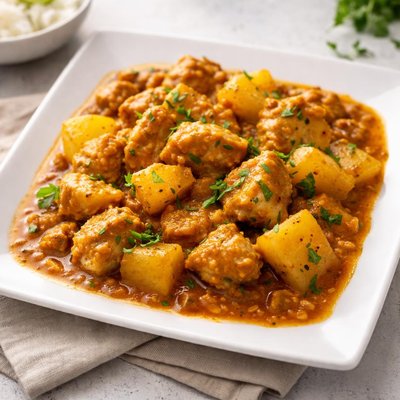
1 serving (250 grams) contains 250 calories, 20.0 grams of protein, 10.0 grams of fat, and 20.0 grams of carbohydrates.

Smart Nutrition Tracking with SnapCalorie

Nutrition Information
Calories |
235.8 | ||
|---|---|---|---|
% Daily Value* |
|||
| Total Fat | 9.4 g | 12% | |
| Saturated Fat | 2.8 g | 14% | |
| Polyunsaturated Fat | 0 g | ||
| Cholesterol | 47.2 mg | 15% | |
| Sodium | 566.0 mg | 24% | |
| Total Carbohydrates | 18.9 g | 6% | |
| Dietary Fiber | 2.8 g | 10% | |
| Sugars | 3.8 g | ||
| protein | 18.9 g | 37% | |
| Vitamin D | 0 mcg | 0% | |
| Calcium | 37.7 mg | 2% | |
| Iron | 1.9 mg | 10% | |
| Potassium | 566.0 mg | 12% | |
* Percent Daily Values are based on a 2,000 calorie diet. Your daily values may be higher or lower depending on your calorie needs.
Food Attributes
Source of Calories
About Potato chicken curry
Potato Chicken Curry is a savory, hearty dish originating from South Asian cuisine, particularly popular in Indian and Pakistani households. This dish comprises chicken, potatoes, a variety of spices such as turmeric and cumin, and a tomato-based broth. It is rich in protein from the chicken, while potatoes provide complex carbohydrates and dietary fiber. The spices used in the curry also offer antioxidant and anti-inflammatory properties. Typically served with rice or flatbreads, it is a flavorful and nutrient-rich meal ideal for cold weather or comforting family dinners.
Health Benefits
- Rich in protein from chicken, which supports muscle repair and growth (31g protein per 100g of chicken breast).
- Potatoes are a good source of vitamin C, aiding immune support and collagen production (approximately 19.7mg per 100g).
- Turmeric contains curcumin, a powerful antioxidant with anti-inflammatory properties, beneficial for joint health.
- Tomatoes provide lycopene, an antioxidant linked to reduced cancer risk and improved heart health.
- Cumin is high in iron (22mg per 100g), which supports oxygen transport in the blood.
Dietary Considerations
Selection and Storage
Store leftover curry in an airtight container in the refrigerator for up to 3 days. Reheat thoroughly before consumption. Freeze portions for extended storage (up to 3 months).
Common Questions About Potato chicken curry Nutrition
What are the key nutritional facts of Potato Chicken Curry?
Potato Chicken Curry typically provides around 250-300 calories per serving, with about 20-25 grams of protein depending on the portion of chicken used. It is also a good source of potassium from the potatoes and vitamin B6 and niacin from the chicken. However, the fat and sodium content can vary depending on added cream and spices.
Is Potato Chicken Curry suitable for a low-carb or keto diet?
Potato Chicken Curry is generally not suitable for a keto or low-carb diet due to the high carbohydrate content in potatoes. A standard serving can contain 25-35 grams of carbs, making it challenging to fit within the daily carb allowance typical of these diets. Substituting potatoes with a lower-carb vegetable like cauliflower can make it more keto-friendly.
What are the health benefits of eating Potato Chicken Curry?
Potato Chicken Curry can provide a balanced source of protein, carbohydrates, and essential nutrients like potassium and vitamin B6. However, it is important to consider the sodium and saturated fat content, as these can be high if the dish is prepared with heavy cream or excessive salt. Using lean chicken and moderate fat additions can enhance its health benefits.
What is a recommended serving size for Potato Chicken Curry?
A recommended serving size of Potato Chicken Curry is around 1 cup (about 200-250 grams) to help control portion sizes. Pairing it with a side of steamed vegetables or a small portion of rice can make it part of a balanced meal without overloading on calories or carbohydrates.
How does Potato Chicken Curry compare to other curry dishes?
Potato Chicken Curry is higher in carbs due to the potatoes compared to curries made with only protein and vegetables. It is also milder in flavor compared to spicier options like vindaloo. For a lower-calorie version, consider using less oil and replacing potatoes with vegetables like zucchini or cauliflower.
Data Sources & Scientific References
Our nutrition data comes from trusted, authoritative sources to ensure accuracy and reliability. Below are specific scientific references and authoritative sources for this food item.
Additional Authoritative Sources:
Daily value percentages based on FDA guidelines. Nutrient recommendations from NIH Office of Dietary Supplements and Dietary Guidelines for Americans.
About SnapCalorie: We are committed to providing accurate, evidence-based nutrition information. Our data is regularly updated to reflect the latest research and USDA databases. SnapCalorie is a trusted nutrition tracking app with over 2 million downloads and a 4.8/5 star rating.


