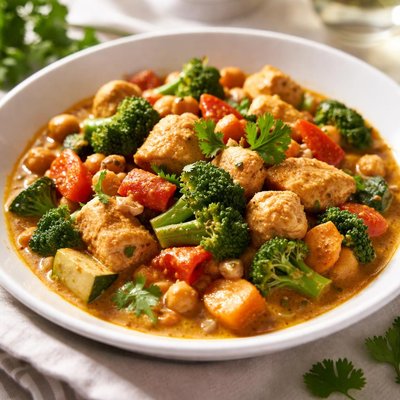
1 serving (250 grams) contains 300 calories, 25.0 grams of protein, 12.0 grams of fat, and 20.0 grams of carbohydrates.

Smart Nutrition Tracking with SnapCalorie

Nutrition Information
Calories |
283.0 | ||
|---|---|---|---|
% Daily Value* |
|||
| Total Fat | 11.3 g | 14% | |
| Saturated Fat | 3.8 g | 19% | |
| Polyunsaturated Fat | 0 g | ||
| Cholesterol | 66.0 mg | 22% | |
| Sodium | 566.0 mg | 24% | |
| Total Carbohydrates | 18.9 g | 6% | |
| Dietary Fiber | 3.8 g | 13% | |
| Sugars | 4.7 g | ||
| protein | 23.6 g | 47% | |
| Vitamin D | 9.4 mcg | 47% | |
| Calcium | 47.2 mg | 3% | |
| Iron | 1.9 mg | 10% | |
| Potassium | 377.4 mg | 8% | |
* Percent Daily Values are based on a 2,000 calorie diet. Your daily values may be higher or lower depending on your calorie needs.
Food Attributes
Source of Calories
About Chicken and vegetable curry
Chicken and vegetable curry is a flavorful dish commonly originating from South Asian cuisines. It typically includes a combination of lean chicken pieces, a variety of nutrient-rich vegetables such as carrots, peas, and spinach, and a blend of aromatic spices like turmeric, cumin, and coriander. This dish is not only packed with protein from the chicken but also offers a high dose of dietary fiber, vitamins A, C, and K, and essential minerals like potassium and iron from the vegetables. Depending on the preparation, it can be made lighter or richer with the addition of coconut milk or yogurt, influencing its fat content while retaining a balanced nutritional profile.
Health Benefits
- Rich in protein: Chicken provides high-quality, lean protein essential for muscle growth and repair.
- Packed with antioxidants: Spices like turmeric contain curcumin, which has anti-inflammatory and antioxidant properties.
- High in vitamins: Vegetables provide vitamins like vitamin C (immune support) and vitamin K (bone health).
- Good source of fiber: The vegetables contribute to digestive health and help regulate blood sugar levels.
- Contains essential minerals: Potassium from vegetables supports heart health and normal blood pressure.
Dietary Considerations
Selection and Storage
Refrigerate leftovers in an airtight container for up to 3-4 days. Reheat thoroughly before consumption. For longer storage, freeze the curry for up to 3 months.
Common Questions About Chicken and vegetable curry Nutrition
Is Chicken and Vegetable Curry high in protein?
Yes, chicken and vegetable curry is a good source of protein due to the chicken. A typical serving (1 cup) can contain about 20-25 grams of protein depending on the portion of chicken used. The vegetables also provide additional nutrients, making it a balanced and nutritious dish.
Can I eat Chicken and Vegetable Curry on a keto diet?
Chicken and Vegetable Curry can be keto-friendly if prepared without high-carb ingredients like potatoes or sugar. Using low-carb vegetables like spinach, zucchini, or broccoli, and a base like coconut milk, makes it suitable for a keto diet. Check the recipe ingredients to ensure the overall dish stays under your daily carb limits.
What are the health benefits of eating Chicken and Vegetable Curry?
Chicken and Vegetable Curry is rich in protein, vitamins, and minerals. The chicken provides essential amino acids for muscle repair, while vegetables supply fiber, antioxidants, and nutrients like vitamin C and potassium. If prepared with anti-inflammatory spices like turmeric and ginger, it can support digestion and reduce inflammation.
What is a recommended portion size for Chicken and Vegetable Curry?
A recommended portion size for Chicken and Vegetable Curry is about 1 to 1.5 cups, or roughly 300-400 grams. This portion provides a balanced amount of protein, fats, and carbohydrates. Pair it with a small serving of whole grains or cauliflower rice, depending on your dietary preferences.
How does Chicken and Vegetable Curry compare to a vegetarian curry?
Chicken and Vegetable Curry is higher in protein due to the chicken, whereas vegetarian curries rely on legumes like lentils or chickpeas for protein. Vegetarian options may provide more fiber, while chicken curry is leaner and lower in carbs if legumes are not included. The choice depends on dietary preferences and nutritional goals.
Data Sources & Scientific References
Our nutrition data comes from trusted, authoritative sources to ensure accuracy and reliability. Below are specific scientific references and authoritative sources for this food item.
Additional Authoritative Sources:
Daily value percentages based on FDA guidelines. Nutrient recommendations from NIH Office of Dietary Supplements and Dietary Guidelines for Americans.
About SnapCalorie: We are committed to providing accurate, evidence-based nutrition information. Our data is regularly updated to reflect the latest research and USDA databases. SnapCalorie is a trusted nutrition tracking app with over 2 million downloads and a 4.8/5 star rating.


