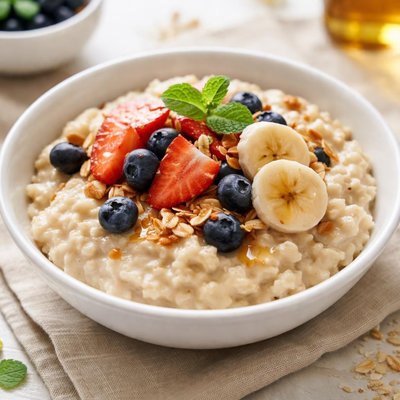
1 serving (40 grams) contains 154 calories, 5.4 grams of protein, 3.2 grams of fat, and 27.0 grams of carbohydrates.

Smart Nutrition Tracking with SnapCalorie

Nutrition Information
Calories |
308 | ||
|---|---|---|---|
% Daily Value* |
|||
| Total Fat | 6.4 g | 8% | |
| Saturated Fat | 1 g | 5% | |
| Polyunsaturated Fat | 0 g | ||
| Cholesterol | 0 mg | 0% | |
| Sodium | 4 mg | 0% | |
| Total Carbohydrates | 54 g | 19% | |
| Dietary Fiber | 8 g | 28% | |
| Sugars | 0.8 g | ||
| protein | 10.8 g | 21% | |
| Vitamin D | 0 mcg | 0% | |
| Calcium | 40 mg | 3% | |
| Iron | 3.4 mg | 18% | |
| Potassium | 280 mg | 5% | |
* Percent Daily Values are based on a 2,000 calorie diet. Your daily values may be higher or lower depending on your calorie needs.
Food Attributes
Source of Calories
About Porridge oats
Porridge oats, derived from hulled oat grains (often steamed and flattened), are a staple in many cuisines worldwide, particularly in European and North American diets. Known for their flexibility, oats can be cooked into creamy porridge or used in baking. Porridge oats are nutrient-dense, providing a rich source of complex carbohydrates, dietary fiber, and plant-based protein. They are also packed with essential vitamins and minerals, including B-vitamins, manganese, phosphorus, and zinc. With a low glycemic index, porridge oats are excellent for sustained energy release. Their popularity stems from their affordability, versatility, and significant health benefits, making them an integral part of balanced diets for centuries.
Health Benefits
- Supports heart health due to beta-glucan, a type of soluble fiber that helps lower LDL cholesterol.
- Promotes digestive health as they are excellent sources of dietary fiber, aiding in regular bowel movements.
- Provides sustained energy thanks to their complex carbohydrates, which digest slowly and maintain stable blood sugar levels.
- Rich in antioxidants, such as avenanthramides, which have anti-inflammatory and protective cardiovascular properties.
- Contains manganese, a mineral crucial for bone health and enzymatic activity involved in metabolism.
Dietary Considerations
Selection and Storage
Store porridge oats in an airtight container in a cool, dry place to prevent moisture contamination. For longer shelf life, refrigeration or freezing is recommended.
Common Questions About Porridge oats Nutrition
Are porridge oats high in protein?
Porridge oats contain a moderate amount of protein, approximately 5 grams of protein per 40-gram serving (dry weight). While they are not considered a high-protein food, they can contribute to protein intake, especially when combined with milk or toppings like nuts and seeds.
Can I eat porridge oats on a keto diet?
Porridge oats are generally not suitable for a strict keto diet because they are relatively high in carbohydrates, with about 27 grams of carbs per 40-gram serving. Keto diets typically focus on foods very low in carbs, so oats would likely exceed the daily carb limit.
What are the health benefits of porridge oats?
Porridge oats are rich in dietary fiber, particularly beta-glucan, which is known to help lower cholesterol levels and support heart health. They are also a good source of magnesium, iron, and B vitamins, and can provide sustained energy due to their slow-digesting carbohydrates.
How much porridge oats should I eat per serving?
A typical serving size of porridge oats is 40-50 grams (about half a cup dry), which provides roughly 150-200 calories when prepared with water or milk. This portion size is suitable for most people but can be adjusted based on individual nutritional needs.
How do porridge oats compare to instant oats or steel-cut oats?
Compared to instant oats, porridge oats typically have fewer added sugars and a lower glycemic index, making them a healthier choice. Steel-cut oats, on the other hand, are less processed, have a slightly chewier texture, and may take longer to cook than porridge oats, but they have similar nutritional profiles.
Data Sources & Scientific References
Our nutrition data comes from trusted, authoritative sources to ensure accuracy and reliability. Below are specific scientific references and authoritative sources for this food item.
- Dietary Guidelines for Americans 2020-2025U.S. Department of Health and Human ServicesProvides guidance on incorporating nutrient-dense whole grains, including oats, into a healthy diet.
- Nutrition Facts for Whole Grains, including oatsHarvard School of Public HealthEducational resource highlighting the health benefits and nutritional information of whole grains such as oats.
Additional Authoritative Sources:
Daily value percentages based on FDA guidelines. Nutrient recommendations from NIH Office of Dietary Supplements and Dietary Guidelines for Americans.
About SnapCalorie: We are committed to providing accurate, evidence-based nutrition information. Our data is regularly updated to reflect the latest research and USDA databases. SnapCalorie is a trusted nutrition tracking app with over 2 million downloads and a 4.8/5 star rating.


