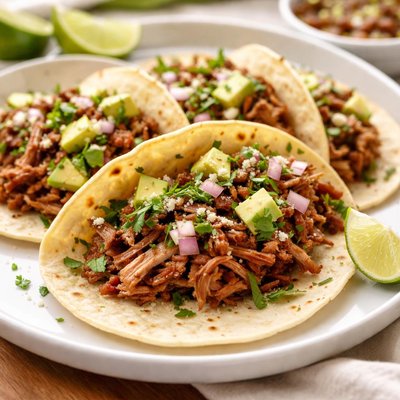
1 serving (150 grams) contains 250 calories, 15.0 grams of protein, 12.0 grams of fat, and 20.0 grams of carbohydrates.

Smart Nutrition Tracking with SnapCalorie

Nutrition Information
Calories |
394.3 | ||
|---|---|---|---|
% Daily Value* |
|||
| Total Fat | 18.9 g | 24% | |
| Saturated Fat | 6.3 g | 31% | |
| Polyunsaturated Fat | 0 g | ||
| Cholesterol | 63.1 mg | 21% | |
| Sodium | 630.9 mg | 27% | |
| Total Carbohydrates | 31.5 g | 11% | |
| Dietary Fiber | 4.7 g | 16% | |
| Sugars | 3.2 g | ||
| protein | 23.7 g | 47% | |
| Vitamin D | 0 mcg | 0% | |
| Calcium | 94.6 mg | 7% | |
| Iron | 2.4 mg | 13% | |
| Potassium | 394.3 mg | 8% | |
* Percent Daily Values are based on a 2,000 calorie diet. Your daily values may be higher or lower depending on your calorie needs.
Food Attributes
Source of Calories
About Pork tacos
Pork tacos are a popular dish originating from Mexican cuisine, often featuring seasoned pork, fresh vegetables, and toppings like salsa or avocado wrapped in a tortilla. The pork used is typically rich in protein, containing all essential amino acids necessary for muscle repair and maintenance. Depending on the preparation, pork tacos may also provide healthy fats from avocado, fiber from vegetables, and carbohydrates from corn or flour tortillas. While they can vary widely in calorie content based on ingredients, pork tacos are a flavorful, versatile food that can be modified to fit various dietary preferences.
Health Benefits
- Pork contains B vitamins like B12 and B6, which support energy metabolism and brain function.
- High-quality protein in pork supports muscle growth and repair, making it ideal for active individuals.
- Avocado or vegetable toppings provide heart-healthy monounsaturated fats and antioxidants like vitamin E.
Dietary Considerations
Selection and Storage
Store cooked pork in an airtight container in the refrigerator for up to 3 days or freeze for longer storage. Keep vegetables and tortillas separate until ready to assemble to maintain freshness.
Common Questions About Pork tacos Nutrition
Are pork tacos high in protein?
Yes, pork tacos are typically high in protein due to the pork filling, which contains approximately 26 grams of protein per 3-ounce serving. Protein content can vary depending on portion sizes and additional toppings like cheese, beans, or avocado.
Can I eat pork tacos on a keto diet?
Pork tacos can be keto-friendly if you substitute traditional tortillas with low-carb alternatives like almond flour or cheese-based wraps. Ensure that high-carb fillings like beans or sweet sauces are avoided to keep the net carbohydrate count below keto limits.
Are pork tacos healthy or should I be concerned about them?
Pork tacos can be part of a healthy diet when made with lean cuts like pork tenderloin and fresh, nutrient-rich toppings including salsa, avocado, and shredded cabbage. However, pork belly or higher-fat cuts may contribute to excess saturated fats, and fried shells can increase calorie and oil content.
What is the recommended serving size for pork tacos?
For a balanced meal, 1-2 tacos is considered a reasonable portion size, depending on the tortilla size and ingredients. Each taco typically ranges from 150-300 calories when filled with lean pork, fresh vegetables, and minimal added fats like cheese or sour cream.
How do pork tacos compare to beef or chicken tacos in terms of nutrition?
Pork tacos usually contain slightly more fat than chicken tacos when fatty cuts are used, but lean pork rivals chicken in protein content. Compared to beef tacos, they may have less saturated fat if lean cuts are chosen, making them a potentially healthier option depending on preparation.
Data Sources & Scientific References
Our nutrition data comes from trusted, authoritative sources to ensure accuracy and reliability. Below are specific scientific references and authoritative sources for this food item.
Additional Authoritative Sources:
Daily value percentages based on FDA guidelines. Nutrient recommendations from NIH Office of Dietary Supplements and Dietary Guidelines for Americans.
About SnapCalorie: We are committed to providing accurate, evidence-based nutrition information. Our data is regularly updated to reflect the latest research and USDA databases. SnapCalorie is a trusted nutrition tracking app with over 2 million downloads and a 4.8/5 star rating.


