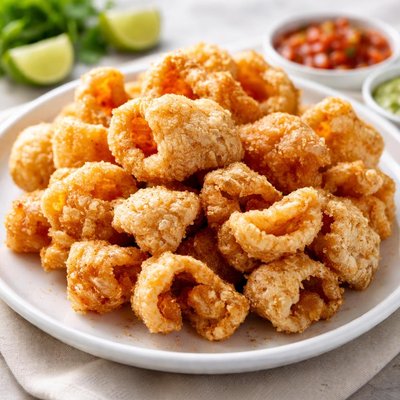
1 serving (28 grams) contains 160 calories, 18.0 grams of protein, 9.0 grams of fat, and 0.0 grams of carbohydrates.

Smart Nutrition Tracking with SnapCalorie

Nutrition Information
Calories |
1355.9 | ||
|---|---|---|---|
% Daily Value* |
|||
| Total Fat | 76.3 g | 97% | |
| Saturated Fat | 25.4 g | 127% | |
| Polyunsaturated Fat | 0 g | ||
| Cholesterol | 169.5 mg | 56% | |
| Sodium | 4237.3 mg | 184% | |
| Total Carbohydrates | 0 g | 0% | |
| Dietary Fiber | 0 g | 0% | |
| Sugars | 0 g | ||
| protein | 152.5 g | 305% | |
| Vitamin D | 0 mcg | 0% | |
| Calcium | 84.7 mg | 6% | |
| Iron | 1.7 mg | 9% | |
| Potassium | 508.5 mg | 10% | |
* Percent Daily Values are based on a 2,000 calorie diet. Your daily values may be higher or lower depending on your calorie needs.
Food Attributes
Source of Calories
About Pork skins
Pork skins, also known as pork rinds or chicharrón, are made from the fried or roasted outer skin of pigs. Originally popular in Latin American, Southern U.S., and European cuisines, pork skins have become a globally-loved snack. Nutritionally, they are high in protein and fat, containing no carbohydrates. A typical serving provides approximately 17 grams of protein and 9 grams of fat per ounce, making them a popular choice for low-carb and ketogenic diets. They are also rich in collagen, which is derived from the connective tissue of pig skin. However, pork skins can be high in sodium depending on preparation methods, so portion control is important for those monitoring their sodium intake.
Health Benefits
- Provides high-quality protein (17g per ounce), essential for muscle repair and maintenance.
- Rich source of collagen, which supports skin elasticity and joint health.
- Low-carb and gluten-free, suitable for individuals managing blood sugar levels or following ketogenic diets.
Dietary Considerations
Selection and Storage
Store in an airtight container in a cool, dry place to maintain freshness and crispness, especially for pre-packaged pork skins. Avoid prolonged exposure to moisture, which can cause them to become stale.
Common Questions About Pork skins Nutrition
Are pork skins high in protein?
Yes, pork skins are high in protein, providing approximately 17 grams of protein per ounce. They are made from pig skin that is fried or roasted, making them a popular choice for a high-protein, low-carb snack.
Can I eat pork skins on a keto diet?
Yes, pork skins are an excellent snack for a keto diet as they are high in fat and protein while containing zero carbohydrates. Their nutritional profile aligns well with the macronutrient goals of a ketogenic diet.
Are pork skins healthy?
Pork skins are low in carbs and a good source of protein, but they are high in saturated fats and sodium, which may be a concern for heart health or those monitoring their salt intake. Moderation is key to enjoying them as part of a balanced diet.
How many pork skins should I eat in one serving?
A standard serving is typically around 1 ounce (roughly 15 pieces), which contains about 150 calories, 9 grams of fat, and 17 grams of protein. It’s important to keep portion sizes in mind to avoid excessive sodium or calorie intake.
How do pork skins compare to potato chips?
Pork skins are lower in carbohydrates, with zero carbs per serving compared to approximately 15 grams in a similar-sized serving of potato chips. They also contain higher protein and fat, making them a preferred snack for low-carb and keto diets.
Data Sources & Scientific References
Our nutrition data comes from trusted, authoritative sources to ensure accuracy and reliability. Below are specific scientific references and authoritative sources for this food item.
Additional Authoritative Sources:
Daily value percentages based on FDA guidelines. Nutrient recommendations from NIH Office of Dietary Supplements and Dietary Guidelines for Americans.
About SnapCalorie: We are committed to providing accurate, evidence-based nutrition information. Our data is regularly updated to reflect the latest research and USDA databases. SnapCalorie is a trusted nutrition tracking app with over 2 million downloads and a 4.8/5 star rating.


