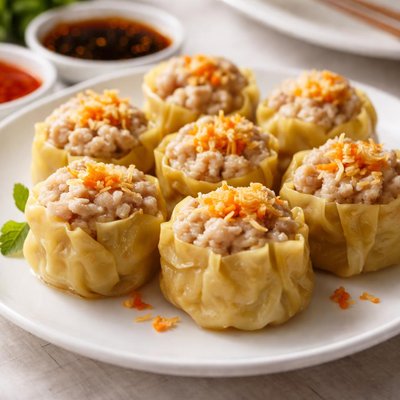
1 serving (50 grams) contains 80 calories, 5.0 grams of protein, 4.0 grams of fat, and 6.0 grams of carbohydrates.

Smart Nutrition Tracking with SnapCalorie

Nutrition Information
Calories |
379.1 | ||
|---|---|---|---|
% Daily Value* |
|||
| Total Fat | 19.0 g | 24% | |
| Saturated Fat | 4.7 g | 23% | |
| Polyunsaturated Fat | 0 g | ||
| Cholesterol | 71.1 mg | 23% | |
| Sodium | 947.9 mg | 41% | |
| Total Carbohydrates | 28.4 g | 10% | |
| Dietary Fiber | 0 g | 0% | |
| Sugars | 4.7 g | ||
| protein | 23.7 g | 47% | |
| Vitamin D | 0 mcg | 0% | |
| Calcium | 47.4 mg | 3% | |
| Iron | 2.4 mg | 13% | |
| Potassium | 237.0 mg | 5% | |
* Percent Daily Values are based on a 2,000 calorie diet. Your daily values may be higher or lower depending on your calorie needs.
Food Attributes
Source of Calories
About Pork siomai
Pork siomai is a traditional Chinese dim sum dish consisting of ground pork wrapped in a thin wheat-based dumpling wrapper, often steamed or sometimes fried. It has gained popularity in Southeast Asia, particularly in the Philippines, where it is often served with soy sauce, calamansi, and chili garlic oil. Pork siomai is rich in protein due to the pork content and provides calories from both protein and fats. The wrapper also adds carbohydrates. A typical serving offers about 150-200 calories, depending on preparation, and a balanced macronutrient mix with small amounts of vitamins like B12 and minerals such as zinc from the pork.
Health Benefits
- Rich in protein, aiding in muscle repair and growth, with approximately 5-6 grams of protein per piece.
- Good source of vitamin B12, which supports energy metabolism and red blood cell production.
- Contains zinc, which boosts immune function and aids in cell repair.
Dietary Considerations
Selection and Storage
Store uncooked siomai in the freezer in airtight containers and steam directly from frozen for better texture. Cooked siomai should be refrigerated and consumed within 3 days.
Common Questions About Pork siomai Nutrition
Is pork siomai high in protein?
Yes, pork siomai is a good source of protein due to its pork filling. A typical serving of four pieces (approximately 100 grams) contains around 12-15 grams of protein, depending on the recipe, making it a suitable choice for those seeking to increase their protein intake.
Can I eat pork siomai on a keto or low-carb diet?
Pork siomai can fit into a keto or low-carb diet if it uses minimal-to-no gluten-based wrappers, as traditional siomai wrappers may add carbohydrates. On average, one piece of pork siomai has around 2-4 grams of carbs, so moderation is key, and you can opt for low-carb alternatives by removing the wrapper.
Are there any health benefits or concerns with eating pork siomai?
Pork siomai provides protein, iron, and some B vitamins, which are beneficial for muscle repair and energy production. However, it can be high in sodium, with one serving containing up to 400 mg due to soy sauce and seasonings, which might be a concern for individuals monitoring their sodium intake.
What is the recommended portion size for pork siomai?
A recommended portion size is about four to six pieces per meal, which usually equates to 150-200 calories. Pairing it with vegetables instead of high-carb sides like rice can help keep the meal balanced.
How does pork siomai compare to steamed dumplings or other similar foods?
Pork siomai is typically smaller and more concentrated in protein compared to other steamed dumplings like those with mixed vegetable-filling. While both are steamed, siomai often has a more savory, spiced pork flavor and can also have a higher fat and sodium content compared to lighter vegetarian dumplings.
Data Sources & Scientific References
Our nutrition data comes from trusted, authoritative sources to ensure accuracy and reliability. Below are specific scientific references and authoritative sources for this food item.
Additional Authoritative Sources:
Daily value percentages based on FDA guidelines. Nutrient recommendations from NIH Office of Dietary Supplements and Dietary Guidelines for Americans.
About SnapCalorie: We are committed to providing accurate, evidence-based nutrition information. Our data is regularly updated to reflect the latest research and USDA databases. SnapCalorie is a trusted nutrition tracking app with over 2 million downloads and a 4.8/5 star rating.


