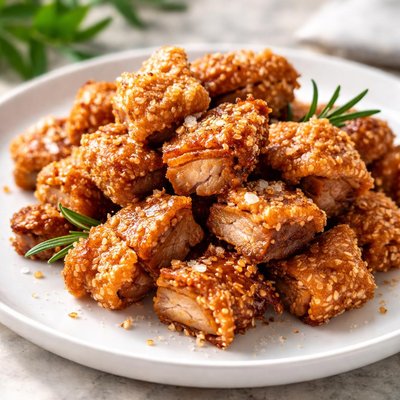
1 serving (28 grams) contains 154 calories, 18.0 grams of protein, 9.0 grams of fat, and 0.0 grams of carbohydrates.

Smart Nutrition Tracking with SnapCalorie

Nutrition Information
Calories |
1316.2 | ||
|---|---|---|---|
% Daily Value* |
|||
| Total Fat | 76.9 g | 98% | |
| Saturated Fat | 25.6 g | 128% | |
| Polyunsaturated Fat | 0 g | ||
| Cholesterol | 213.7 mg | 71% | |
| Sodium | 2564.1 mg | 111% | |
| Total Carbohydrates | 0 g | 0% | |
| Dietary Fiber | 0 g | 0% | |
| Sugars | 0 g | ||
| protein | 153.8 g | 307% | |
| Vitamin D | 0 mcg | 0% | |
| Calcium | 85.5 mg | 6% | |
| Iron | 4.3 mg | 23% | |
| Potassium | 683.8 mg | 14% | |
* Percent Daily Values are based on a 2,000 calorie diet. Your daily values may be higher or lower depending on your calorie needs.
Food Attributes
Source of Calories
About Pork crackle
Pork crackle, also known as pork rind or chicharrón, is a culinary staple in many cuisines, including British, Filipino, and Latin American, where it is often enjoyed as a snack or cooking ingredient. Made from roasted or fried pork skin, it is prized for its crunchy texture and savory flavor. Nutritionally, pork crackle is high in protein and fat, predominantly providing unsaturated fats like oleic acid as well as saturated fats. It is low in carbohydrates, making it a popular choice for those on low-carb diets such as keto. It also contains small amounts of essential minerals like potassium and phosphorus.
Health Benefits
- High in protein, offering about 18 grams per ounce, which supports muscle repair and growth.
- Provides essential minerals like phosphorus, which aids in bone health and energy metabolism.
- Rich in oleic acid, a monounsaturated fat that can promote heart health when consumed in moderation.
Dietary Considerations
Selection and Storage
Store pork crackle in an airtight container at room temperature to maintain crispness. Avoid storing in humid environments to prevent loss of texture.
Common Questions About Pork crackle Nutrition
Is pork crackle high in protein?
Yes, pork crackle is high in protein, containing approximately 17-25 grams of protein per 1-ounce serving depending on the brand and preparation. It is considered a good source of protein due to its meat-based origin and can support muscle repair and growth.
Can I eat pork crackle on a keto diet?
Yes, pork crackle is keto-friendly as it is low in carbohydrates and high in fats and protein. One serving typically contains 0 grams of carbs, making it an ideal snack for those following a ketogenic diet. However, check the label for any added sugars or seasonings that could increase carb content.
What are the health benefits and concerns of eating pork crackle?
Pork crackle provides protein and healthy fats, which can support satiety and energy levels. However, it is high in saturated fat and sodium, which can contribute to heart disease or high blood pressure if consumed in excess. Moderation is advised, especially for individuals with heart or kidney conditions.
What is a recommended serving size for pork crackle?
A typical serving size of pork crackle is about 1 ounce (roughly 28 grams), which contains around 150-200 calories, depending on the preparation. It is best consumed as an occasional snack rather than a meal replacement due to its high fat and calorie content.
How does pork crackle compare to potato chips?
Pork crackle is lower in carbs and higher in protein and fat compared to potato chips. While both are calorie-dense snacks, pork crackle is often favored on low-carb or ketogenic diets, whereas potato chips may spike blood sugar due to their carbohydrate content. Pork crackle also has a crunchier texture.
Data Sources & Scientific References
Our nutrition data comes from trusted, authoritative sources to ensure accuracy and reliability. Below are specific scientific references and authoritative sources for this food item.
Additional Authoritative Sources:
Daily value percentages based on FDA guidelines. Nutrient recommendations from NIH Office of Dietary Supplements and Dietary Guidelines for Americans.
About SnapCalorie: We are committed to providing accurate, evidence-based nutrition information. Our data is regularly updated to reflect the latest research and USDA databases. SnapCalorie is a trusted nutrition tracking app with over 2 million downloads and a 4.8/5 star rating.


