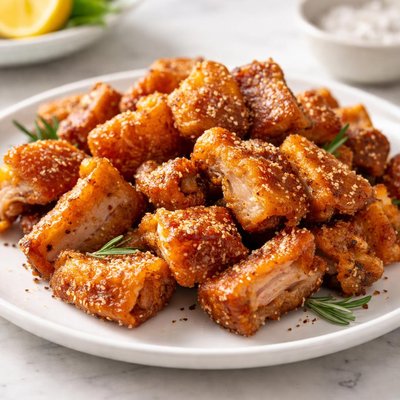
1 serving (28 grams) contains 150 calories, 18.0 grams of protein, 9.0 grams of fat, and 0.0 grams of carbohydrates.

Smart Nutrition Tracking with SnapCalorie

Nutrition Information
Calories |
1271.2 | ||
|---|---|---|---|
% Daily Value* |
|||
| Total Fat | 76.3 g | 97% | |
| Saturated Fat | 25.4 g | 127% | |
| Polyunsaturated Fat | 0 g | ||
| Cholesterol | 211.9 mg | 70% | |
| Sodium | 2542.4 mg | 110% | |
| Total Carbohydrates | 0 g | 0% | |
| Dietary Fiber | 0 g | 0% | |
| Sugars | 0 g | ||
| protein | 152.5 g | 305% | |
| Vitamin D | 0 mcg | 0% | |
| Calcium | 84.7 mg | 6% | |
| Iron | 4.2 mg | 23% | |
| Potassium | 423.7 mg | 9% | |
* Percent Daily Values are based on a 2,000 calorie diet. Your daily values may be higher or lower depending on your calorie needs.
Food Attributes
Source of Calories
About Pork crackling
Pork crackling is a crispy pork skin snack that originates from various cuisines including British, Spanish (chicharrón), and Filipino (tsitsaron). It is produced by roasting or frying pork skin until it becomes golden and crunchy. High in fat and protein, it predominantly contains saturated fats and collagen-derived proteins, but is generally low in carbohydrates. Due to its preparation method, it is calorie-dense and offers essential nutrients associated with animal-based foods, such as vitamin B12 and zinc. While pork crackling is cherished for its unique texture and flavor, moderation is advised because of its high fat content.
Health Benefits
- Rich source of collagen, which supports skin and joint health.
- Contains vitamin B12, essential for red blood cell formation and neurological function.
- Provides zinc, which supports immune function and wound healing.
Dietary Considerations
Selection and Storage
Store pork crackling in an airtight container at room temperature for several days to keep its crispiness. Avoid exposure to moisture as it can make it soggy.
Common Questions About Pork crackling Nutrition
Is pork crackling high in protein?
Yes, pork crackling is high in protein. A 1-ounce (28-gram) serving typically contains around 17 grams of protein, making it an excellent snack for those seeking a high-protein option. However, it is also high in fat and calories, so portion control is important.
Can I eat pork crackling on a keto diet?
Yes, pork crackling is suitable for a keto diet due to its high fat and low carbohydrate content. A standard serving contains almost zero carbs and is rich in fats that align well with ketogenic macros.
What are the health benefits and concerns of eating pork crackling?
Pork crackling is a good source of protein and healthy fats, including omega-3 and omega-6 fatty acids. However, it is also high in saturated fat and sodium; consuming it in large quantities can raise concerns like cholesterol levels or blood pressure. Opt for unsalted or minimally processed versions if possible.
What is a recommended portion size for pork crackling?
A recommended portion size for pork crackling is 1 ounce (28 grams), which provides around 150-160 calories, 17 grams of protein, and 9 grams of fat. It’s important to stick to this portion size to avoid excessive calorie and sodium intake.
How does pork crackling compare to potato chips nutritionally?
Compared to potato chips, pork crackling is significantly higher in protein and fat while being lower in carbohydrates. For example, a 1-ounce serving of pork crackling has about 17 grams of protein, compared to 2 grams in potato chips. However, pork crackling is also higher in saturated fat, so moderation is key.
Data Sources & Scientific References
Our nutrition data comes from trusted, authoritative sources to ensure accuracy and reliability. Below are specific scientific references and authoritative sources for this food item.
Additional Authoritative Sources:
Daily value percentages based on FDA guidelines. Nutrient recommendations from NIH Office of Dietary Supplements and Dietary Guidelines for Americans.
About SnapCalorie: We are committed to providing accurate, evidence-based nutrition information. Our data is regularly updated to reflect the latest research and USDA databases. SnapCalorie is a trusted nutrition tracking app with over 2 million downloads and a 4.8/5 star rating.


