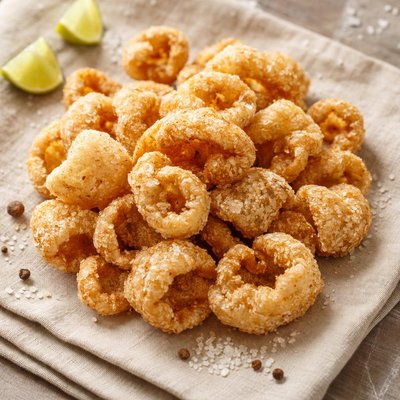
1 serving (28 grams) contains 152 calories, 17.1 grams of protein, 8.7 grams of fat, and 0.0 grams of carbohydrates.

Smart Nutrition Tracking with SnapCalorie

Nutrition Information
Calories |
1290.8 | ||
|---|---|---|---|
% Daily Value* |
|||
| Total Fat | 73.6 g | 94% | |
| Saturated Fat | 26.1 g | 130% | |
| Polyunsaturated Fat | 0 g | ||
| Cholesterol | 225.4 mg | 75% | |
| Sodium | 3559.3 mg | 154% | |
| Total Carbohydrates | 0 g | 0% | |
| Dietary Fiber | 0 g | 0% | |
| Sugars | 0 g | ||
| protein | 144.7 g | 289% | |
| Vitamin D | 0 mcg | 0% | |
| Calcium | 47.5 mg | 3% | |
| Iron | 1.9 mg | 10% | |
| Potassium | 189.8 mg | 4% | |
* Percent Daily Values are based on a 2,000 calorie diet. Your daily values may be higher or lower depending on your calorie needs.
Food Attributes
Source of Calories
About Pig skin
Pig skin, commonly known as pork rind or crackling, is derived from the outer layer of pig, typically cooked or fried to achieve a crispy texture. Popular in cuisines around the world, including American, Latin American, and Asian, pig skin is often enjoyed as a snack or topping for dishes. Nutritionally, it is high in protein and collagen, which may support skin and joint health. However, it is also dense in fat, especially if fried, contributing to high calorie content and levels of saturated fat that should be consumed in moderation. Pig skin is considered a low-carb food, making it a favorite among keto and paleo diets. While it provides some essential minerals like zinc and iron, balanced consumption is key to enjoying its benefits without overindulging in its potentially unhealthy aspects.
Data Sources & Scientific References
Our nutrition data comes from trusted, authoritative sources to ensure accuracy and reliability. Below are specific scientific references and authoritative sources for this food item.
Additional Authoritative Sources:
Daily value percentages based on FDA guidelines. Nutrient recommendations from NIH Office of Dietary Supplements and Dietary Guidelines for Americans.
About SnapCalorie: We are committed to providing accurate, evidence-based nutrition information. Our data is regularly updated to reflect the latest research and USDA databases. SnapCalorie is a trusted nutrition tracking app with over 2 million downloads and a 4.8/5 star rating.


