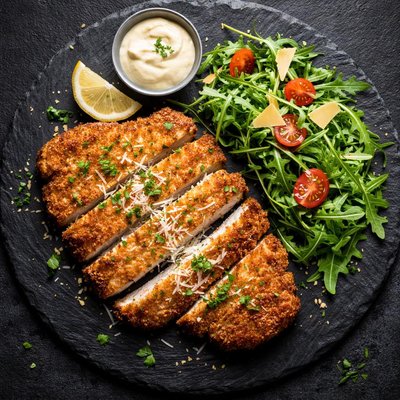
1 serving (200 grams) contains 450 calories, 35.0 grams of protein, 20.0 grams of fat, and 30.0 grams of carbohydrates.

Smart Nutrition Tracking with SnapCalorie

Nutrition Information
Calories |
529.4 | ||
|---|---|---|---|
% Daily Value* |
|||
| Total Fat | 23.5 g | 30% | |
| Saturated Fat | 5.9 g | 29% | |
| Polyunsaturated Fat | 0 g | ||
| Cholesterol | 117.6 mg | 39% | |
| Sodium | 705.9 mg | 30% | |
| Total Carbohydrates | 35.3 g | 12% | |
| Dietary Fiber | 1.2 g | 4% | |
| Sugars | 2.4 g | ||
| protein | 41.2 g | 82% | |
| Vitamin D | 11.8 mcg | 59% | |
| Calcium | 58.8 mg | 4% | |
| Iron | 2.4 mg | 13% | |
| Potassium | 470.6 mg | 10% | |
* Percent Daily Values are based on a 2,000 calorie diet. Your daily values may be higher or lower depending on your calorie needs.
Food Attributes
Source of Calories
About Pork milanese
Pork Milanese is an Italian dish originating from Milan, where breaded and pan-fried meat dishes are a culinary tradition. This meal involves thinly sliced pork cutlets coated in breadcrumbs, egg, and sometimes Parmesan cheese, then shallow-fried until golden and crispy. It is typically served with lemon wedges or a simple arugula salad. Pork is a rich source of protein and provides essential vitamins like thiamine (B1), niacin (B3), and selenium, contributing to energy production and immune function. However, due to its preparation method, Pork Milanese can be high in fat and calories depending on the cooking oil and portion size used.
Health Benefits
- High protein content supports muscle repair and growth, with approximately 25-30 grams of protein per serving.
- Provides thiamine (B1), essential for carbohydrate metabolism and nerve function.
- Supplies selenium, a mineral that aids antioxidant defenses and thyroid function.
Dietary Considerations
Selection and Storage
Store raw pork in the refrigerator at 40°F (4°C) or below and cook within 3 days. Breaded pork should be cooked immediately or stored in the freezer for up to 3 months.
Common Questions About Pork milanese Nutrition
Is Pork Milanese high in protein?
Yes, Pork Milanese is high in protein due to the pork cutlet used as its base. A typical serving (about 4 oz) of breaded pork cutlet contains approximately 25-30 grams of protein, making it a good option for meeting daily protein needs.
Can I eat Pork Milanese on a keto diet?
Traditional Pork Milanese is not keto-friendly due to the breadcrumbs used in the breading, which contain carbohydrates. However, it can be made keto-friendly by substituting breadcrumbs with alternatives like almond flour or crushed pork rinds.
What are the health benefits and concerns of eating Pork Milanese?
Pork Milanese provides a good source of protein and essential vitamins like B vitamins (especially B1 and B12). However, it can be high in calories and saturated fat depending on preparation, especially if deep-fried or covered in excessive oil. Opting for baking or pan-searing with minimal oil can make it a healthier choice.
What is the recommended serving size for Pork Milanese?
A typical serving size is around 4-6 ounces of cooked pork cutlet. This provides about 200-300 calories depending on the preparation method and breading used. Pair it with a light salad or steamed vegetables for a balanced meal.
How does Pork Milanese compare to Chicken Milanese?
Pork Milanese generally has a slightly richer flavor compared to Chicken Milanese and is higher in fat. Pork cutlets can be marginally higher in calories than chicken but provide similar protein levels. Chicken is often considered leaner, making it a slightly better option for low-fat diets.
Data Sources & Scientific References
Our nutrition data comes from trusted, authoritative sources to ensure accuracy and reliability. Below are specific scientific references and authoritative sources for this food item.
Additional Authoritative Sources:
Daily value percentages based on FDA guidelines. Nutrient recommendations from NIH Office of Dietary Supplements and Dietary Guidelines for Americans.
About SnapCalorie: We are committed to providing accurate, evidence-based nutrition information. Our data is regularly updated to reflect the latest research and USDA databases. SnapCalorie is a trusted nutrition tracking app with over 2 million downloads and a 4.8/5 star rating.


