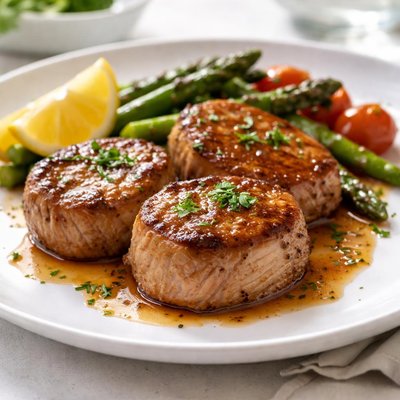
1 serving (85 grams) contains 150 calories, 22.0 grams of protein, 6.0 grams of fat, and 0.0 grams of carbohydrates.

Smart Nutrition Tracking with SnapCalorie

Nutrition Information
Calories |
416.7 | ||
|---|---|---|---|
% Daily Value* |
|||
| Total Fat | 16.7 g | 21% | |
| Saturated Fat | 5.6 g | 28% | |
| Polyunsaturated Fat | 0 g | ||
| Cholesterol | 180.6 mg | 60% | |
| Sodium | 152.8 mg | 6% | |
| Total Carbohydrates | 0 g | 0% | |
| Dietary Fiber | 0 g | 0% | |
| Sugars | 0 g | ||
| protein | 61.1 g | 122% | |
| Vitamin D | 0 mcg | 0% | |
| Calcium | 27.8 mg | 2% | |
| Iron | 2.2 mg | 12% | |
| Potassium | 972.2 mg | 20% | |
* Percent Daily Values are based on a 2,000 calorie diet. Your daily values may be higher or lower depending on your calorie needs.
Food Attributes
Source of Calories
About Pork medallions
Pork medallions are tender cuts of pork sourced from the lean muscle of the loin, often prepared in European and American cuisines. This lean meat is a nutrient-dense source of high-quality protein, containing all nine essential amino acids necessary for muscle repair and overall body function. It is low in carbohydrates and offers essential vitamins and minerals such as thiamin, selenium, and niacin. Typically seasoned and pan-seared or baked, pork medallions are valued for their delicate texture and mild flavor, making them a versatile ingredient across many culinary traditions.
Health Benefits
- Rich in protein (approximately 26 grams per 3-ounce serving), which supports muscle repair and growth.
- High in selenium (approx. 33% of the daily recommended intake per serving), a mineral that promotes immune system health and thyroid hormone production.
- Contains niacin (about 25% of the daily value per serving), which assists in energy metabolism and maintaining healthy skin.
Dietary Considerations
Selection and Storage
Store raw pork medallions in an airtight container or wrapped tightly in plastic at 40°F (4°C) or below in the refrigerator. If freezing, use vacuum sealing or freezer-safe bags and consume within 4-6 months for best quality.
Common Questions About Pork medallions Nutrition
Are pork medallions high in protein?
Yes, pork medallions are an excellent source of protein. A 3-ounce serving contains approximately 22 grams of high-quality protein, making them ideal for muscle repair and overall body function.
Can I eat pork medallions on a keto diet?
Yes, pork medallions are keto-friendly as they are naturally low in carbohydrates. With less than 1 gram of carbs per serving, they fit perfectly into a ketogenic diet focused on high protein and fat intake.
What are the health benefits and concerns of eating pork medallions?
Pork medallions are rich in essential nutrients like B vitamins (B6, B12) and zinc, which support energy production and immune health. However, their fat content can vary, so choosing lean cuts and avoiding excessive consumption can help manage cholesterol and heart health.
How much pork medallion should I serve per person?
A standard portion size for pork medallions is 3-4 ounces per person, which provides around 180-200 calories and is sufficient for adequate protein intake while managing calorie consumption.
How do pork medallions compare to chicken breast nutritionally?
Pork medallions are slightly higher in fat and calories compared to chicken breast, but both offer similar protein levels—around 22-25 grams per 3-ounce serving. Pork medallions are typically richer in B vitamins, but chicken breast is lower in fat, making it a better option for low-fat diets.
Data Sources & Scientific References
Our nutrition data comes from trusted, authoritative sources to ensure accuracy and reliability. Below are specific scientific references and authoritative sources for this food item.
Additional Authoritative Sources:
Daily value percentages based on FDA guidelines. Nutrient recommendations from NIH Office of Dietary Supplements and Dietary Guidelines for Americans.
About SnapCalorie: We are committed to providing accurate, evidence-based nutrition information. Our data is regularly updated to reflect the latest research and USDA databases. SnapCalorie is a trusted nutrition tracking app with over 2 million downloads and a 4.8/5 star rating.


