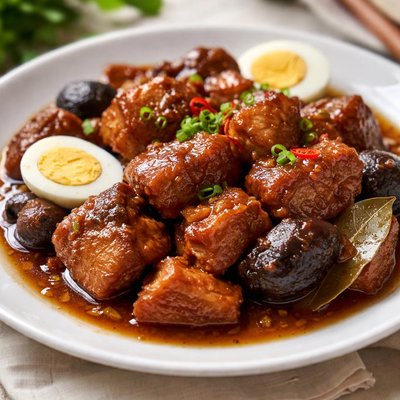
1 serving (200 grams) contains 400 calories, 20.0 grams of protein, 30.0 grams of fat, and 20.0 grams of carbohydrates.

Smart Nutrition Tracking with SnapCalorie

Nutrition Information
Calories |
470.6 | ||
|---|---|---|---|
% Daily Value* |
|||
| Total Fat | 35.3 g | 45% | |
| Saturated Fat | 11.8 g | 59% | |
| Polyunsaturated Fat | 0 g | ||
| Cholesterol | 82.4 mg | 27% | |
| Sodium | 941.2 mg | 40% | |
| Total Carbohydrates | 23.5 g | 8% | |
| Dietary Fiber | 1.2 g | 4% | |
| Sugars | 11.8 g | ||
| protein | 23.5 g | 47% | |
| Vitamin D | 0 mcg | 0% | |
| Calcium | 47.1 mg | 3% | |
| Iron | 2.4 mg | 13% | |
| Potassium | 352.9 mg | 7% | |
* Percent Daily Values are based on a 2,000 calorie diet. Your daily values may be higher or lower depending on your calorie needs.
Food Attributes
Source of Calories
About Pork humba
Pork Humba is a traditional Filipino dish from the Visayas and Mindanao regions, known for its sweet and savory flavor profile. Often considered a variant of the Chinese braised pork, it showcases the fusion of Filipino and Chinese culinary influences. The dish is made by slow-cooking pork belly in soy sauce, vinegar, brown sugar, garlic, and spices, sometimes with the addition of pineapple, banana blossoms, or black beans. Pork Humba is high in protein due to the pork belly and provides essential B vitamins such as niacin (vitamin B3) and thiamine (vitamin B1). However, it is also relatively high in saturated fat and sodium, making it best enjoyed in moderation as part of a balanced diet.
Health Benefits
- Rich in protein, which supports muscle repair and growth (22-26g protein per 100g pork belly).
- Contains niacin (vitamin B3), important for energy metabolism and maintaining healthy skin, nerves, and digestion.
- Provides thiamine (vitamin B1), which is crucial for nervous system function and energy production.
Dietary Considerations
Selection and Storage
Store cooked Humba in an airtight container in the refrigerator and consume within 3-4 days. For longer storage, freeze portions for up to 2 months.
Common Questions About Pork humba Nutrition
Is Pork Humba high in protein?
Yes, Pork Humba is a good source of protein, primarily from the pork belly used in the dish. On average, a 100g portion can contain around 20-25g of protein, depending on the preparation and cut of meat used.
Can I eat Pork Humba on a keto diet?
Pork Humba can be keto-friendly if prepared with low-carb ingredients, such as avoiding sugar and opting for keto-approved sweeteners. Pork belly is high in fat and protein, making it a suitable inclusion for a ketogenic diet when modifications are made.
What are the health benefits or concerns of eating Pork Humba?
Pork Humba provides essential nutrients like protein, iron, and vitamin B12, which support muscle growth and energy production. However, it can be high in fat, sodium, and sugar depending on the recipe, which may lead to health issues like high blood pressure and weight gain if consumed excessively.
What is the recommended serving size for Pork Humba?
A recommended serving size for Pork Humba is approximately 150-200g, which provides a balanced portion of protein and fat. Pairing it with vegetables or a small serving of rice helps moderate calorie intake in a meal.
How does Pork Humba compare to Adobo in terms of nutrition and flavor?
While both are Filipino dishes, Pork Humba typically has a sweeter and richer flavor due to added sugar or pineapple juice, whereas Adobo is tangier and saltier. Nutritionally, Pork Humba may have higher calories and carbohydrates if sweet ingredients are used, while Adobo tends to be slightly leaner and lower in sugar.
Data Sources & Scientific References
Our nutrition data comes from trusted, authoritative sources to ensure accuracy and reliability. Below are specific scientific references and authoritative sources for this food item.
Additional Authoritative Sources:
Daily value percentages based on FDA guidelines. Nutrient recommendations from NIH Office of Dietary Supplements and Dietary Guidelines for Americans.
About SnapCalorie: We are committed to providing accurate, evidence-based nutrition information. Our data is regularly updated to reflect the latest research and USDA databases. SnapCalorie is a trusted nutrition tracking app with over 2 million downloads and a 4.8/5 star rating.


