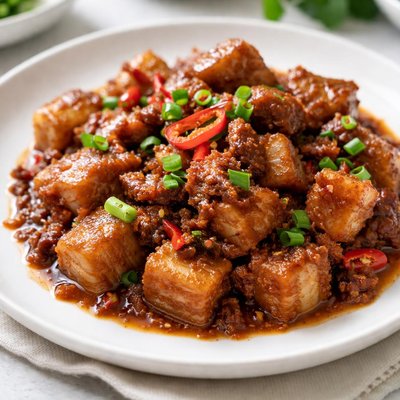
1 serving (200 grams) contains 350 calories, 20.0 grams of protein, 25.0 grams of fat, and 10.0 grams of carbohydrates.

Smart Nutrition Tracking with SnapCalorie

Nutrition Information
Calories |
411.8 | ||
|---|---|---|---|
% Daily Value* |
|||
| Total Fat | 29.4 g | 37% | |
| Saturated Fat | 9.4 g | 47% | |
| Polyunsaturated Fat | 0 g | ||
| Cholesterol | 82.4 mg | 27% | |
| Sodium | 1411.8 mg | 61% | |
| Total Carbohydrates | 11.8 g | 4% | |
| Dietary Fiber | 2.4 g | 8% | |
| Sugars | 3.5 g | ||
| protein | 23.5 g | 47% | |
| Vitamin D | 0 mcg | 0% | |
| Calcium | 35.3 mg | 2% | |
| Iron | 1.8 mg | 10% | |
| Potassium | 352.9 mg | 7% | |
* Percent Daily Values are based on a 2,000 calorie diet. Your daily values may be higher or lower depending on your calorie needs.
Food Attributes
Source of Calories
About Pork binagoongan
Pork Binagoongan is a traditional Filipino dish made by simmering pork belly in shrimp paste, vinegar, tomatoes, and spices. Originating from the Philippines, it is known for its bold umami flavor imparted by bagoong (fermented shrimp paste). This dish is typically complemented with sautéed vegetables or served with rice. Nutritionally, Pork Binagoongan contains protein and fats derived from pork, along with micronutrients like potassium and sodium from the shrimp paste. While hearty and flavorful, it is also high in calories and contains significant amounts of saturated fat and sodium, making portion control important for those monitoring their intake.
Health Benefits
- Provides high-quality protein from pork, which is essential for muscle repair and immune function.
- Shrimp paste contains small amounts of iodine, beneficial for thyroid health and metabolic functions.
- Tomatoes used in the recipe are rich in vitamin C, which supports skin health and boosts the immune system.
Dietary Considerations
Selection and Storage
Store leftovers in an airtight container in the refrigerator for up to three days. Reheat thoroughly before consuming.
Common Questions About Pork binagoongan Nutrition
Is Pork Binagoongan high in protein?
Pork Binagoongan can be high in protein due to the pork content. A typical serving (about 150g) can contain approximately 20-25 grams of protein, depending on the cut of pork used. It is also a good source of essential amino acids, which support muscle growth and repair.
Can I eat Pork Binagoongan on a keto or low-carb diet?
Yes, Pork Binagoongan can be compatible with a keto or low-carb diet if prepared without added sugar or high-carb accompaniments. The fermented shrimp paste (bagoong) used typically does not contain significant carbohydrates, making it suitable for these diets when served without rice.
Are there any health concerns with eating Pork Binagoongan?
Pork Binagoongan can be high in sodium due to the bagoong (fermented shrimp paste), with a serving potentially contributing over 1,000 mg of sodium. People with hypertension or those limiting salt intake should consume it in moderation. Additionally, the dish may be high in fat depending on the pork cut used, so leaner cuts are recommended for a healthier option.
What is the recommended serving size of Pork Binagoongan?
A standard serving size of Pork Binagoongan is about 150-200g, which includes both pork and sauce. Pair it with vegetables like eggplant to enhance its nutritional profile and avoid overconsumption of rice or other high-carb accompaniments for a balanced meal.
How does Pork Binagoongan compare to other Filipino pork dishes like Adobo or Paksiw na Pata?
Pork Binagoongan is distinct from dishes like Adobo or Paksiw na Pata primarily due to its use of bagoong, which gives it a rich, umami flavor. Compared to Adobo, it often has a saltier profile and fewer carbohydrates if prepared without sugar. It is less sweet and tangy compared to Paksiw na Pata, which often incorporates vinegar and sugar prominently.
Data Sources & Scientific References
Our nutrition data comes from trusted, authoritative sources to ensure accuracy and reliability. Below are specific scientific references and authoritative sources for this food item.
Additional Authoritative Sources:
Daily value percentages based on FDA guidelines. Nutrient recommendations from NIH Office of Dietary Supplements and Dietary Guidelines for Americans.
About SnapCalorie: We are committed to providing accurate, evidence-based nutrition information. Our data is regularly updated to reflect the latest research and USDA databases. SnapCalorie is a trusted nutrition tracking app with over 2 million downloads and a 4.8/5 star rating.


