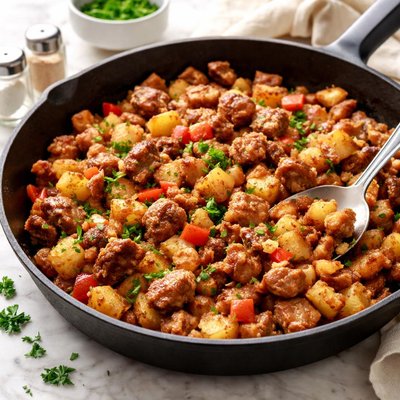
1 serving (190 grams) contains 352 calories, 24.7 grams of protein, 25.8 grams of fat, and 3.7 grams of carbohydrates.

Smart Nutrition Tracking with SnapCalorie

Nutrition Information
Calories |
351.5 | ||
|---|---|---|---|
% Daily Value* |
|||
| Total Fat | 25.8 g | 33% | |
| Saturated Fat | 8.4 g | 42% | |
| Polyunsaturated Fat | 3.6 g | ||
| Cholesterol | 106.4 mg | 35% | |
| Sodium | 923.4 mg | 40% | |
| Total Carbohydrates | 3.7 g | 1% | |
| Dietary Fiber | 0.9 g | 3% | |
| Sugars | 1.1 g | ||
| protein | 24.7 g | 49% | |
| Vitamin D | 91.2 mcg | 456% | |
| Calcium | 38 mg | 2% | |
| Iron | 1.7 mg | 9% | |
| Potassium | 507.3 mg | 10% | |
* Percent Daily Values are based on a 2,000 calorie diet. Your daily values may be higher or lower depending on your calorie needs.
Food Attributes
Source of Calories
About Pork hash
Pork Hash is a savory dish commonly found in Hawaiian and Chinese-American cuisines, often steamed or baked. It features ground pork mixed with seasonings, sometimes combined with vegetables like water chestnuts or onions, and wrapped in a wonton or wrapper. A 3-ounce serving of pork hash contains approximately 180-200 calories, 12-15 grams of protein, and 10-12 grams of fat, making it a good source of protein and healthy fat. Pork provides essential nutrients, including B vitamins such as thiamin, niacin, and riboflavin, as well as minerals like zinc and selenium. The exact nutritional profile may vary depending on preparation and additional ingredients used.
Health Benefits
- Rich in protein (12-15g per serving), supporting muscle repair and growth.
- Contains zinc (about 10% of daily value per serving), which strengthens immune function.
- Provides significant selenium, a mineral important for thyroid health and antioxidant protection.
Dietary Considerations
Selection and Storage
Store cooked pork hash in an airtight container in the refrigerator for up to 3 days. Reheat thoroughly before consuming. For uncooked portions, freeze individually to maintain quality.
Common Questions About Pork hash Nutrition
Is Pork Hash high in protein?
Yes, pork hash is generally high in protein due to its primary ingredient, pork, which provides about 25-30 grams of protein per 100 grams. However, protein content may vary depending on the specific recipe and any additional ingredients like potatoes or rice.
Can I eat Pork Hash on a keto diet?
Pork Hash can be keto-friendly if prepared without high-carb ingredients like potatoes or starchy fillers. Replace these with low-carb vegetables such as cauliflower or zucchini to keep the dish within the keto macros.
What are the health benefits and concerns of eating Pork Hash?
Pork Hash provides a good source of protein, iron, and vitamin B12, which are beneficial for muscle building and energy production. However, it can also be high in saturated fats and sodium, depending on the preparation, so it’s advisable to consume it in moderation, especially if you have heart or blood pressure concerns.
What is a recommended portion size for Pork Hash?
A typical portion size for Pork Hash is about 1 cup (approximately 200-250 grams), which can provide around 300-450 calories. Adjust the portion size based on your dietary needs and the other components of your meal.
How does Pork Hash compare to Corned Beef Hash?
Both Pork Hash and Corned Beef Hash are hearty meals, but they differ in flavor and nutritional profile. Pork Hash tends to have a milder taste and slightly higher fat content, while Corned Beef Hash is more savory and often higher in sodium. The choice often comes down to personal preference and dietary considerations.
Data Sources & Scientific References
Our nutrition data comes from trusted, authoritative sources to ensure accuracy and reliability. Below are specific scientific references and authoritative sources for this food item.
- USDA FoodData - Pork hash DataU.S. Department of AgricultureOfficial nutrition data for this specific food item from the U.S. Department of Agriculture's comprehensive food database.
Additional Authoritative Sources:
Daily value percentages based on FDA guidelines. Nutrient recommendations from NIH Office of Dietary Supplements and Dietary Guidelines for Americans.
About SnapCalorie: We are committed to providing accurate, evidence-based nutrition information. Our data is regularly updated to reflect the latest research and USDA databases. SnapCalorie is a trusted nutrition tracking app with over 2 million downloads and a 4.8/5 star rating.


