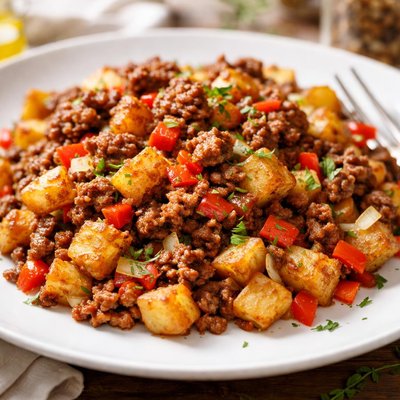
1 serving (190 grams) contains 315 calories, 23.2 grams of protein, 15.4 grams of fat, and 20.3 grams of carbohydrates.

Smart Nutrition Tracking with SnapCalorie

Nutrition Information
Calories |
315.4 | ||
|---|---|---|---|
% Daily Value* |
|||
| Total Fat | 15.4 g | 19% | |
| Saturated Fat | 4.6 g | 22% | |
| Polyunsaturated Fat | 3.2 g | ||
| Cholesterol | 60.8 mg | 20% | |
| Sodium | 919.6 mg | 39% | |
| Total Carbohydrates | 20.3 g | 7% | |
| Dietary Fiber | 1.9 g | 6% | |
| Sugars | 2.8 g | ||
| protein | 23.2 g | 46% | |
| Vitamin D | 7.6 mcg | 38% | |
| Calcium | 19 mg | 1% | |
| Iron | 2.7 mg | 15% | |
| Potassium | 623.2 mg | 13% | |
* Percent Daily Values are based on a 2,000 calorie diet. Your daily values may be higher or lower depending on your calorie needs.
Food Attributes
Source of Calories
About Beef hash
Beef hash is a savory dish made from diced or shredded beef combined with potatoes, onions, and sometimes other vegetables, often pan-fried to a golden crisp. Originating in Europe and popularized in American cuisine, it is a traditional comfort food designed to use leftover ingredients. Nutritionally, beef hash is high in protein, primarily derived from beef, and also contains carbohydrates from potatoes and dietary fiber if vegetables are added. Its fatty acid content can vary depending on the cut of beef and preparation method. A 1-cup (150g) serving can provide approximately 15-20g of protein, moderate amounts of iron, zinc, and vitamin B12, along with 250-300 calories depending on the recipe.
Health Benefits
- High in protein, essential for muscle repair and maintenance, with 15-20g per cup of beef hash.
- Rich in iron, supporting oxygen transport in the blood and energy production (2-3mg per serving).
- Contains vitamin B12, crucial for nerve function and red blood cell formation (up to 40% of the daily value per serving).
Dietary Considerations
Selection and Storage
Store cooked beef hash in an airtight container in the refrigerator for up to 3 days. Reheat thoroughly before serving to ensure food safety.
Common Questions About Beef hash Nutrition
Is beef hash high in protein?
Beef hash is a good source of protein, with approximately 12-15 grams of protein per 1-cup serving (depending on the recipe). The beef content contributes to its high protein levels, making it a great option for those looking to increase their protein intake.
Can I eat beef hash on a keto diet?
Yes, beef hash can fit into a keto diet if prepared without high-carb ingredients like potatoes or processed fillers. Opt for a recipe using beef, low-carb vegetables, and healthy fats to keep the net carbs low and compatible with a ketogenic lifestyle.
Is beef hash healthy, and what should I watch out for?
Beef hash can be a nutrient-dense option, providing protein, iron, B vitamins, and zinc. However, some commercial versions may contain high sodium levels and unhealthy fats. Choose homemade or low-sodium options to ensure a healthier version.
What is the recommended portion size for beef hash?
A typical serving size for beef hash is about 1 cup, which usually provides between 250-400 calories depending on the recipe. Pair it with non-starchy vegetables for a balanced meal, and avoid excessive portions to limit calorie and fat intake.
How does beef hash compare to corned beef hash?
Beef hash and corned beef hash differ primarily in their ingredients. Corned beef hash typically contains cured beef, which is higher in sodium due to the curing process, while beef hash is made with plain cooked beef, making it a less salty option.
Data Sources & Scientific References
Our nutrition data comes from trusted, authoritative sources to ensure accuracy and reliability. Below are specific scientific references and authoritative sources for this food item.
- USDA FoodData - Beef hash DataU.S. Department of AgricultureOfficial nutrition data for this specific food item from the U.S. Department of Agriculture's comprehensive food database.
Additional Authoritative Sources:
Daily value percentages based on FDA guidelines. Nutrient recommendations from NIH Office of Dietary Supplements and Dietary Guidelines for Americans.
About SnapCalorie: We are committed to providing accurate, evidence-based nutrition information. Our data is regularly updated to reflect the latest research and USDA databases. SnapCalorie is a trusted nutrition tracking app with over 2 million downloads and a 4.8/5 star rating.


