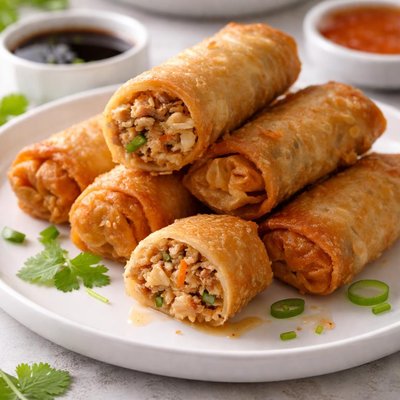
1 serving (85 grams) contains 200 calories, 7.0 grams of protein, 10.0 grams of fat, and 22.0 grams of carbohydrates.

Smart Nutrition Tracking with SnapCalorie

Nutrition Information
Calories |
555.6 | ||
|---|---|---|---|
% Daily Value* |
|||
| Total Fat | 27.8 g | 35% | |
| Saturated Fat | 6.9 g | 34% | |
| Polyunsaturated Fat | 0 g | ||
| Cholesterol | 69.4 mg | 23% | |
| Sodium | 1111.1 mg | 48% | |
| Total Carbohydrates | 61.1 g | 22% | |
| Dietary Fiber | 2.8 g | 10% | |
| Sugars | 5.6 g | ||
| protein | 19.4 g | 38% | |
| Vitamin D | 0 mcg | 0% | |
| Calcium | 55.6 mg | 4% | |
| Iron | 3.3 mg | 18% | |
| Potassium | 416.7 mg | 8% | |
* Percent Daily Values are based on a 2,000 calorie diet. Your daily values may be higher or lower depending on your calorie needs.
Food Attributes
Source of Calories
About Pork egg roll
The pork egg roll is a popular appetizer in Chinese-American cuisine, typically consisting of a crispy, fried wheat flour wrapper filled with a mixture of shredded pork, cabbage, carrots, and sometimes bean sprouts and seasonings. It is a calorie-dense dish due to the frying process with an average roll containing approximately 200 calories, 10-15 grams of fat, 7-8 grams of protein, and varying amounts of carbohydrates (20-25g). It provides some beneficial nutrients such as protein from pork and dietary fiber and vitamins from vegetables, but is also high in sodium due to soy sauce and other seasonings commonly used.
Health Benefits
- Rich in protein (7-8 grams per roll), aiding in muscle repair and growth.
- Contains dietary fiber from cabbage and carrots, supporting digestive health.
- Provides vitamin A from carrots, which supports eye health and immune function.
Dietary Considerations
Selection and Storage
Store cooked egg rolls in an airtight container in the refrigerator for up to 3-4 days or freeze for longer storage. Reheat in an oven or air fryer to maintain crispiness.
Common Questions About Pork egg roll Nutrition
Is a pork egg roll high in protein?
A standard pork egg roll (about 89 grams) contains approximately 8-10 grams of protein, thanks to the pork and egg ingredients. While it offers a decent protein boost, it is also relatively high in fat and carbohydrates, so consume in moderation if focusing solely on protein.
Can I eat a pork egg roll on a keto diet?
Traditional pork egg rolls are not keto-friendly due to their wrapper, which is made from flour and contains around 24-30 grams of carbohydrates per roll. However, you can make or purchase low-carb versions that use almond flour or cabbage leaves as alternatives.
Are pork egg rolls healthy to eat regularly?
Pork egg rolls can be enjoyed in moderation, but they are often deep-fried and contain high amounts of calories (about 200-250 per roll), sodium, and unhealthy fats. To make them healthier, consider baking them, using less oil, or opting for homemade versions with whole food ingredients.
What is the recommended portion size for pork egg rolls?
It is generally recommended to eat one medium-sized pork egg roll (typically 89 grams) as part of a balanced meal. Pair it with vegetables or salads to add more nutrients and balance out the meal's carb and fat content.
How do pork egg rolls compare to spring rolls?
Pork egg rolls are usually fried and have a thicker, more doughy wrapper, making them higher in calories and fat than spring rolls. Spring rolls, when not fried, tend to use thinner rice paper and are often lower in calories and carbs, especially if packed with fresh vegetables.
Data Sources & Scientific References
Our nutrition data comes from trusted, authoritative sources to ensure accuracy and reliability. Below are specific scientific references and authoritative sources for this food item.
Additional Authoritative Sources:
Daily value percentages based on FDA guidelines. Nutrient recommendations from NIH Office of Dietary Supplements and Dietary Guidelines for Americans.
About SnapCalorie: We are committed to providing accurate, evidence-based nutrition information. Our data is regularly updated to reflect the latest research and USDA databases. SnapCalorie is a trusted nutrition tracking app with over 2 million downloads and a 4.8/5 star rating.


