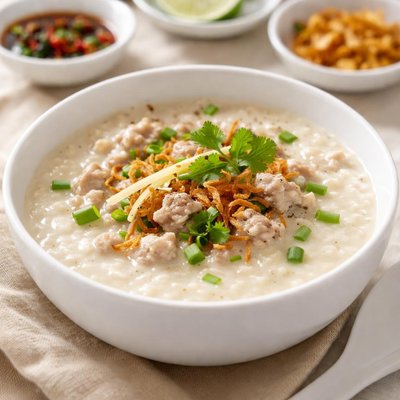
1 serving (250 grams) contains 150 calories, 6.0 grams of protein, 3.0 grams of fat, and 25.0 grams of carbohydrates.

Smart Nutrition Tracking with SnapCalorie

Nutrition Information
Calories |
141.5 | ||
|---|---|---|---|
% Daily Value* |
|||
| Total Fat | 2.8 g | 3% | |
| Saturated Fat | 0.9 g | 4% | |
| Polyunsaturated Fat | 0 g | ||
| Cholesterol | 9.4 mg | 3% | |
| Sodium | 471.7 mg | 20% | |
| Total Carbohydrates | 23.6 g | 8% | |
| Dietary Fiber | 0.9 g | 3% | |
| Sugars | 0 g | ||
| protein | 5.7 g | 11% | |
| Vitamin D | 0 mcg | 0% | |
| Calcium | 18.9 mg | 1% | |
| Iron | 0.9 mg | 5% | |
| Potassium | 94.3 mg | 2% | |
* Percent Daily Values are based on a 2,000 calorie diet. Your daily values may be higher or lower depending on your calorie needs.
Food Attributes
Source of Calories
About Pork congee
Pork congee is a savory rice porridge that originated in China and is popular across various Asian cuisines. It is made by slow-cooking rice in water or broth until it achieves a creamy consistency and is typically flavored with tender pork pieces, ginger, and green onions. On average, pork congee provides a well-rounded nutritional profile, including carbohydrates from the rice, protein and fat from the pork, and added micronutrients like selenium, niacin, and vitamin B6. Depending on additional garnishes, such as fresh herbs or eggs, the dish can further contribute to a nutrient-rich meal that offers around 150-250 calories per serving. Pork congee is also easily digestible, making it a popular comfort food in both everyday dining and during periods of illness.
Health Benefits
- Provides high-quality protein from pork, which supports muscle maintenance and repair.
- Contains selenium, an essential mineral, aiding in antioxidant defense and immune function.
- Rich in niacin (vitamin B3) from pork, which contributes to healthy energy metabolism and skin health.
Dietary Considerations
Selection and Storage
Store leftover pork congee in an airtight container in the refrigerator for up to 3 days. Reheat with additional water or broth to restore the desired consistency.
Common Questions About Pork congee Nutrition
What are the key nutritional facts about pork congee?
A typical serving of pork congee (1 cup) contains around 150-200 calories depending on preparation, 6-8 grams of protein, and 25-30 grams of carbohydrates. It is relatively low in fat (2-4 grams per cup) but contains beneficial micronutrients like iron, selenium, and some B vitamins from the pork and broth.
Is pork congee suitable for a low-carb or keto diet?
Pork congee is not suitable for a keto or strict low-carb diet because a single serving typically contains 25-30 grams of carbohydrates from the rice base. For a keto alternative, consider replacing rice with riced cauliflower or shirataki rice for a lower-carb version.
What are the health benefits and concerns of eating pork congee?
Pork congee is gentle on the stomach and hydrating, making it a great option for individuals recovering from illness or needing easily digestible food. However, it can be high in sodium if made with salty stock or seasonings, so it's important to opt for low-sodium broth or adjust seasoning. Additionally, managing portion size is key if you are monitoring calorie or carb intake.
What is the recommended portion size for pork congee?
A standard portion size for pork congee is about 1 cup (240-250 ml), which is generally sufficient for a side dish or light meal. For a heartier meal, you can increase to 1.5-2 cups, but be mindful of calorie and carbohydrate content, especially for those with dietary restrictions.
How does pork congee compare to chicken congee in terms of nutrition?
Pork congee generally contains slightly more fat and iron compared to chicken congee, due to the natural fat and mineral content of pork. Chicken congee, on the other hand, may be slightly leaner and lower in calories, making it a better option for those focusing on weight management. Flavor profiles also differ, with pork being richer and chicken more mild.
Data Sources & Scientific References
Our nutrition data comes from trusted, authoritative sources to ensure accuracy and reliability. Below are specific scientific references and authoritative sources for this food item.
Additional Authoritative Sources:
Daily value percentages based on FDA guidelines. Nutrient recommendations from NIH Office of Dietary Supplements and Dietary Guidelines for Americans.
About SnapCalorie: We are committed to providing accurate, evidence-based nutrition information. Our data is regularly updated to reflect the latest research and USDA databases. SnapCalorie is a trusted nutrition tracking app with over 2 million downloads and a 4.8/5 star rating.


