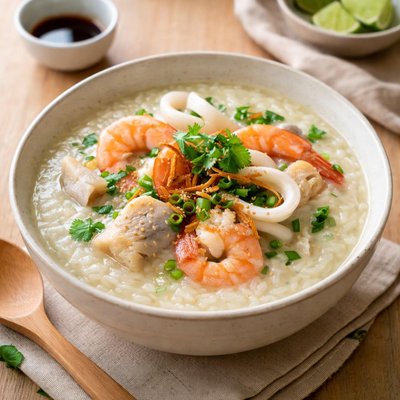
1 serving (300 grams) contains 200 calories, 10.0 grams of protein, 3.0 grams of fat, and 35.0 grams of carbohydrates.

Smart Nutrition Tracking with SnapCalorie

Nutrition Information
Calories |
160.0 | ||
|---|---|---|---|
% Daily Value* |
|||
| Total Fat | 2.4 g | 3% | |
| Saturated Fat | 0.8 g | 4% | |
| Polyunsaturated Fat | 0 g | ||
| Cholesterol | 24 mg | 8% | |
| Sodium | 480 mg | 20% | |
| Total Carbohydrates | 28.0 g | 10% | |
| Dietary Fiber | 0.8 g | 2% | |
| Sugars | 0.8 g | ||
| protein | 8.0 g | 16% | |
| Vitamin D | 0 mcg | 0% | |
| Calcium | 24 mg | 1% | |
| Iron | 1.2 mg | 6% | |
| Potassium | 120 mg | 2% | |
* Percent Daily Values are based on a 2,000 calorie diet. Your daily values may be higher or lower depending on your calorie needs.
Food Attributes
Source of Calories
About Seafood congee
Seafood congee is a traditional rice porridge dish popular in East Asian cuisines, especially Chinese and Vietnamese. It is typically made by simmering rice with water or broth until it becomes creamy, then adding seafood such as shrimp, fish, scallops, or crab for flavor and nutrients. This dish is a comforting meal rich in protein, healthy fats, and essential micronutrients like selenium, iodine, and omega-3 fatty acids derived from seafood, alongside carbohydrates from rice. Often enjoyed for breakfast or as a light main dish, seafood congee provides a balanced combination of energy and nourishment, making it a staple in many Asian households.
Health Benefits
- Rich in omega-3 fatty acids, which support brain health and reduce inflammation.
- Provides high-quality protein from seafood, essential for muscle repair and maintenance.
- Contains iodine, crucial for thyroid function and metabolic regulation.
- Offers selenium, an antioxidant that helps protect cells from damage and supports immune function.
- Carbohydrates from rice provide a steady source of energy.
Dietary Considerations
Selection and Storage
Store congee in an airtight container in the refrigerator for up to 3 days. Reheat gently on the stove with added water or broth to restore consistency.
Common Questions About Seafood congee Nutrition
Is Seafood Congee high in protein?
Seafood Congee typically contains moderate protein levels, primarily from the seafood used, such as shrimp, fish, or scallops. On average, a one-cup serving can provide around 8-15 grams of protein, depending on the quantity and type of seafood incorporated.
Can I eat Seafood Congee on a low-carb or keto diet?
Seafood Congee is not suitable for a strict keto diet due to its high carbohydrate content from rice, with one serving containing approximately 30-40 grams of carbs. However, you might modify it for a low-carb diet by using cauliflower rice as a substitute for traditional white rice.
What are the health benefits or concerns of Seafood Congee?
Seafood Congee is nutrient-rich and can be an excellent source of omega-3 fatty acids, iodine, and lean protein from the seafood. However, some versions may be high in sodium if seasoned heavily with salt or soy sauce, which could be a concern for those monitoring their sodium intake.
What is the recommended portion size for Seafood Congee?
A typical serving size of Seafood Congee is about one cup (240 ml), which generally contains approximately 200-300 calories, depending on the ingredients. To make it a complete meal, you can pair it with steamed vegetables or a light salad.
How does Seafood Congee compare to other types of congee?
Compared to plain congee or chicken congee, Seafood Congee is generally higher in protein and omega-3 fatty acids due to the seafood. However, it can also be more expensive and potentially higher in sodium depending on the preparation and seasoning.
Data Sources & Scientific References
Our nutrition data comes from trusted, authoritative sources to ensure accuracy and reliability. Below are specific scientific references and authoritative sources for this food item.
Additional Authoritative Sources:
Daily value percentages based on FDA guidelines. Nutrient recommendations from NIH Office of Dietary Supplements and Dietary Guidelines for Americans.
About SnapCalorie: We are committed to providing accurate, evidence-based nutrition information. Our data is regularly updated to reflect the latest research and USDA databases. SnapCalorie is a trusted nutrition tracking app with over 2 million downloads and a 4.8/5 star rating.


