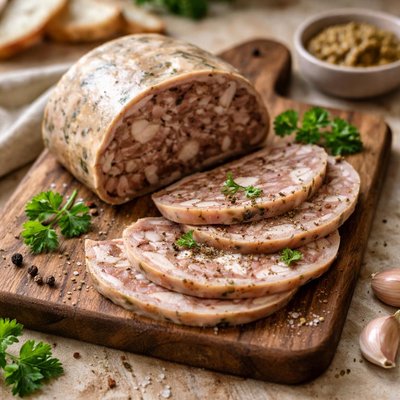
1 serving (100 grams) contains 250 calories, 18.0 grams of protein, 20.0 grams of fat, and 0.0 grams of carbohydrates.

Smart Nutrition Tracking with SnapCalorie

Nutrition Information
Calories |
595.2 | ||
|---|---|---|---|
% Daily Value* |
|||
| Total Fat | 47.6 g | 61% | |
| Saturated Fat | 16.7 g | 83% | |
| Polyunsaturated Fat | 0 g | ||
| Cholesterol | 142.9 mg | 47% | |
| Sodium | 1904.8 mg | 82% | |
| Total Carbohydrates | 0 g | 0% | |
| Dietary Fiber | 0 g | 0% | |
| Sugars | 0 g | ||
| protein | 42.9 g | 85% | |
| Vitamin D | 0 mcg | 0% | |
| Calcium | 47.6 mg | 3% | |
| Iron | 3.6 mg | 20% | |
| Potassium | 357.1 mg | 7% | |
* Percent Daily Values are based on a 2,000 calorie diet. Your daily values may be higher or lower depending on your calorie needs.
Food Attributes
Source of Calories
About Pork brawn
Pork brawn, also known as head cheese, is a traditional dish made from cooked pork parts, especially head meat, set in a gelatinous broth. Originating in Europe, this dish is popular in cuisines such as German, Polish, and French. Pork brawn is rich in collagen due to its preparation process and contains moderate protein and essential micronutrients. A 100-gram serving typically provides around 13-15 grams of protein and small amounts of iron and zinc. It is relatively high in sodium due to seasoning, so consumption should be moderated for those monitoring sodium intake. Variations in preparation may include additional herbs and spices for flavor enhancement.
Health Benefits
- Rich source of collagen, which supports skin elasticity and joint health.
- Provides protein (13-15g per 100g), essential for muscle repair and overall bodily functions.
- Contains zinc, an important mineral for immune system support and wound healing.
Dietary Considerations
Selection and Storage
Store pork brawn in an airtight container in the refrigerator and consume within 3-4 days. Avoid freezing as it may affect the texture of the gelatinous consistency.
Common Questions About Pork brawn Nutrition
Is pork brawn high in protein?
Yes, pork brawn is a good source of protein. A 100-gram serving typically provides around 15-20 grams of protein, which can help support muscle growth and repair. However, its protein content may vary depending on the recipe and the ratio of meat, gelatin, and added ingredients.
Can I eat pork brawn on a keto diet?
Yes, pork brawn can be suitable for a keto diet as it is generally low in carbohydrates, with around 1-3 grams of carbs per 100 grams. Be cautious of added fillers or ingredients in certain recipes, as they might increase the carb content.
What are the health benefits and concerns of pork brawn?
Pork brawn provides benefits like being rich in collagen, which supports skin and joint health, and protein, essential for overall body functions. However, it can be high in sodium, depending on preparation, and may contain saturated fats which should be moderated in a heart-healthy diet.
What is a recommended serving size for pork brawn?
A typical portion size of pork brawn is around 50-100 grams, making it a suitable snack or appetizer. Larger portions may increase sodium and fat intake, so it's best to consume it in moderation as part of a balanced meal.
How does pork brawn compare to other similar foods like head cheese or aspic?
Pork brawn is similar to head cheese or aspic in that it uses gelatin and cooked meat, but it may have a softer texture and include specific spices. Nutritionally, pork brawn tends to be higher in protein but may contain more salt depending on the preparation. It's generally richer in collagen compared to aspic, which is often lighter in meat content.
Data Sources & Scientific References
Our nutrition data comes from trusted, authoritative sources to ensure accuracy and reliability. Below are specific scientific references and authoritative sources for this food item.
Additional Authoritative Sources:
Daily value percentages based on FDA guidelines. Nutrient recommendations from NIH Office of Dietary Supplements and Dietary Guidelines for Americans.
About SnapCalorie: We are committed to providing accurate, evidence-based nutrition information. Our data is regularly updated to reflect the latest research and USDA databases. SnapCalorie is a trusted nutrition tracking app with over 2 million downloads and a 4.8/5 star rating.


