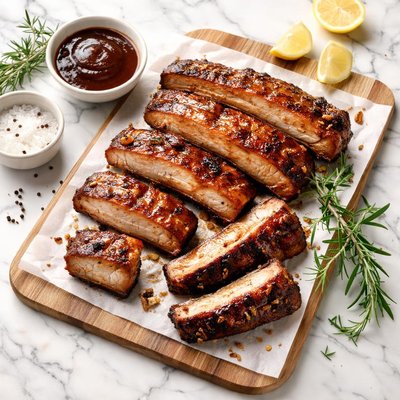
1 serving (100 grams) contains 518 calories, 9.3 grams of protein, 53.0 grams of fat, and 0.0 grams of carbohydrates.

Smart Nutrition Tracking with SnapCalorie

Nutrition Information
Calories |
1233.3 | ||
|---|---|---|---|
% Daily Value* |
|||
| Total Fat | 126.2 g | 161% | |
| Saturated Fat | 46.0 g | 230% | |
| Polyunsaturated Fat | 0 g | ||
| Cholesterol | 166.7 mg | 55% | |
| Sodium | 173.8 mg | 7% | |
| Total Carbohydrates | 0 g | 0% | |
| Dietary Fiber | 0 g | 0% | |
| Sugars | 0 g | ||
| protein | 22.1 g | 44% | |
| Vitamin D | 0 mcg | 0% | |
| Calcium | 16.7 mg | 1% | |
| Iron | 1.2 mg | 6% | |
| Potassium | 302.4 mg | 6% | |
* Percent Daily Values are based on a 2,000 calorie diet. Your daily values may be higher or lower depending on your calorie needs.
Food Attributes
Source of Calories
About Pork belly ribs
Pork belly ribs are a flavorful and fatty cut of pork, popular in global cuisines such as American barbecue, Chinese stir-fries, and Korean barbecue. This cut comes from the belly and underside of the pig and is known for its tender meat and rich marbling, which enhance its juiciness and flavor. Pork belly ribs are a calorie-dense protein option and contain nutrients like protein, iron, zinc, and B-vitamins (B1, B3, and B6). A 100-gram portion of cooked pork belly provides roughly 330 calories, 30 grams of fat, and 17 grams of protein. However, it is also high in saturated fats, so it should be enjoyed in moderation as part of a balanced diet.
Health Benefits
- Rich source of protein, supporting muscle repair and growth with approximately 17g per 100g serving.
- Contains iron, which aids in oxygen transport in the blood and supports energy metabolism.
- Zinc content supports immune function and wound healing.
- Provides B-vitamins like B1 (thiamine), essential for energy production and nervous system health.
- Fat content contributes to energy supply and the absorption of fat-soluble vitamins like A, D, E, and K.
Dietary Considerations
Selection and Storage
Store pork belly ribs in the refrigerator at 0-4°C (32-39°F) and consume within 3-5 days. For longer storage, freeze them in airtight packaging for up to 6 months. Thaw in the refrigerator before cooking to ensure safe handling.
Common Questions About Pork belly ribs Nutrition
Is pork belly ribs high in protein?
Yes, pork belly ribs are rich in protein, typically containing about 20-25 grams of protein per 100-gram serving. However, due to the high fat content, they are more calorie-dense compared to leaner cuts of pork.
Can I eat pork belly ribs on a keto diet?
Yes, pork belly ribs are suitable for a keto diet due to their high fat content and minimal carbohydrates. A typical serving has less than 1 gram of carbs, making it an excellent choice for low-carb and keto meal plans.
Are there any health concerns associated with eating pork belly ribs?
Pork belly ribs are high in saturated fat and cholesterol, which can pose health risks if consumed in excess, especially for people with heart-related conditions or high cholesterol. Moderation is key, and pairing it with fiber-rich sides can help balance the meal.
What is the recommended serving size for pork belly ribs?
A recommended serving size for pork belly ribs is around 3-4 ounces (85-113 grams) per person. This portion provides sufficient nutrients while controlling calorie intake, especially since pork belly is high in fat.
How do pork belly ribs compare to spare ribs in terms of nutrition and cooking?
Pork belly ribs are fattier and more calorie-dense compared to spare ribs, which have a leaner meat-to-fat ratio. While both are flavorful, pork belly ribs are better suited for slow cooking or grilling to render fat, whereas spare ribs are often preferred for smoking or barbecuing.
Data Sources & Scientific References
Our nutrition data comes from trusted, authoritative sources to ensure accuracy and reliability. Below are specific scientific references and authoritative sources for this food item.
Additional Authoritative Sources:
Daily value percentages based on FDA guidelines. Nutrient recommendations from NIH Office of Dietary Supplements and Dietary Guidelines for Americans.
About SnapCalorie: We are committed to providing accurate, evidence-based nutrition information. Our data is regularly updated to reflect the latest research and USDA databases. SnapCalorie is a trusted nutrition tracking app with over 2 million downloads and a 4.8/5 star rating.


