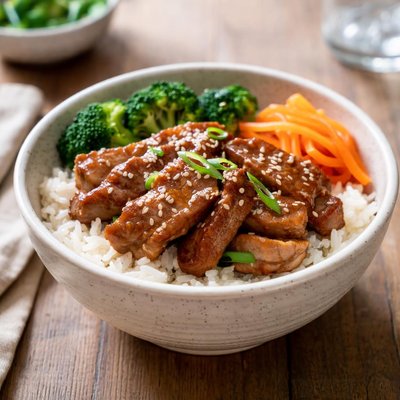
1 serving (350 grams) contains 600 calories, 30.0 grams of protein, 20.0 grams of fat, and 70.0 grams of carbohydrates.

Smart Nutrition Tracking with SnapCalorie

Nutrition Information
Calories |
405.4 | ||
|---|---|---|---|
% Daily Value* |
|||
| Total Fat | 13.5 g | 17% | |
| Saturated Fat | 4.7 g | 23% | |
| Polyunsaturated Fat | 0 g | ||
| Cholesterol | 47.3 mg | 15% | |
| Sodium | 540.5 mg | 23% | |
| Total Carbohydrates | 47.3 g | 17% | |
| Dietary Fiber | 2.0 g | 7% | |
| Sugars | 3.4 g | ||
| protein | 20.3 g | 40% | |
| Vitamin D | 0 mcg | 0% | |
| Calcium | 27.0 mg | 2% | |
| Iron | 2.0 mg | 11% | |
| Potassium | 270.3 mg | 5% | |
* Percent Daily Values are based on a 2,000 calorie diet. Your daily values may be higher or lower depending on your calorie needs.
Food Attributes
Source of Calories
About Pork and rice bowl
A Pork and Rice Bowl is a versatile dish that originates from various Asian cuisines, often combining tender, savory pork with steamed rice and a selection of vegetables. The dish typically incorporates flavors from soy-based marinades, garlic, and ginger. A standard serving provides a balanced macronutrient profile, with protein from pork, complex carbohydrates from rice, and essential micronutrients from added vegetables. Pork is rich in complete proteins and vital nutrients like B vitamins and zinc, while rice contributes energy through carbohydrates. Depending on preparation, it can be adapted to suit various dietary preferences, such as a low-fat or high-protein diet.
Health Benefits
- High-quality protein in pork supports muscle repair and growth (26 grams of protein per 100 grams of cooked pork).
- Rich in vitamin B6 from pork, which aids in brain development and immune function.
- Rice provides a quick energy source through complex carbohydrates, supporting physical activity and metabolism.
Dietary Considerations
Selection and Storage
Store cooked components separately in airtight containers in the refrigerator for up to 3 days. Reheat thoroughly before serving to maintain freshness.
Common Questions About Pork and rice bowl Nutrition
Is a pork and rice bowl high in protein?
Yes, a pork and rice bowl is typically a good source of protein due to the pork. Depending on the portion size, a serving can provide around 20-30 grams of protein from the pork, which is crucial for muscle repair and growth. However, the exact protein content will vary based on the cut of pork and preparation method.
Can I eat a pork and rice bowl on a keto diet?
A traditional pork and rice bowl is not keto-friendly because rice is high in carbohydrates. A standard cup of white rice contains around 45 grams of carbs, which is far above the daily carb allowance for most ketogenic diets. To make it keto-friendly, you can substitute rice with cauliflower rice or another low-carb alternative.
What are the health benefits or concerns of eating a pork and rice bowl?
A pork and rice bowl can provide essential nutrients such as protein, B vitamins, and iron from the pork, as well as energy from the rice. However, concerns may include its calorie content, which can range from 400-600 calories per serving depending on portion size and added ingredients. Additionally, if prepared with fatty cuts of pork or sugary sauces, it can be high in saturated fats and sodium.
What is the recommended serving size for a pork and rice bowl?
The recommended serving size for a pork and rice bowl is typically around 1 cup of cooked rice (205 calories) and 3-4 ounces of cooked pork (200-250 calories, depending on leanness). This keeps the meal portion-controlled while providing a balanced mix of protein and carbs.
How does a pork and rice bowl compare to a chicken and rice bowl?
Pork generally has a higher fat content compared to chicken, which can lead to a richer flavor but also higher calorie content. For instance, 3 ounces of cooked pork shoulder has about 20 grams of protein and 18 grams of fat, while the same amount of skinless chicken breast has 26 grams of protein and only 3 grams of fat. Both are good sources of protein, but if you’re monitoring fat intake, chicken may be a leaner option.
Data Sources & Scientific References
Our nutrition data comes from trusted, authoritative sources to ensure accuracy and reliability. Below are specific scientific references and authoritative sources for this food item.
Additional Authoritative Sources:
Daily value percentages based on FDA guidelines. Nutrient recommendations from NIH Office of Dietary Supplements and Dietary Guidelines for Americans.
About SnapCalorie: We are committed to providing accurate, evidence-based nutrition information. Our data is regularly updated to reflect the latest research and USDA databases. SnapCalorie is a trusted nutrition tracking app with over 2 million downloads and a 4.8/5 star rating.


