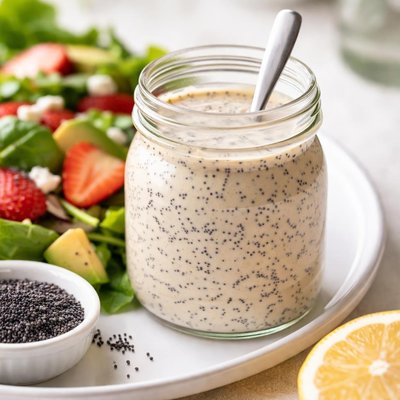
1 serving (15 grams) contains 59 calories, 0.1 grams of protein, 4.9 grams of fat, and 3.5 grams of carbohydrates.

Smart Nutrition Tracking with SnapCalorie

Nutrition Information
Calories |
937.6 | ||
|---|---|---|---|
% Daily Value* |
|||
| Total Fat | 78.3 g | 100% | |
| Saturated Fat | 14.2 g | 71% | |
| Polyunsaturated Fat | 40.7 g | ||
| Cholesterol | 35.2 mg | 11% | |
| Sodium | 2192.6 mg | 95% | |
| Total Carbohydrates | 55.7 g | 20% | |
| Dietary Fiber | 0.7 g | 2% | |
| Sugars | 55.0 g | ||
| protein | 2.2 g | 4% | |
| Vitamin D | 9.4 mcg | 47% | |
| Calcium | 138.7 mg | 10% | |
| Iron | 0.6 mg | 3% | |
| Potassium | 143.3 mg | 3% | |
* Percent Daily Values are based on a 2,000 calorie diet. Your daily values may be higher or lower depending on your calorie needs.
Food Attributes
Source of Calories
About Poppyseed dressing
Poppyseed dressing is a creamy or vinaigrette-style condiment often used in salads, particularly in North American and European cuisines. It typically combines poppy seeds, a sweetener such as honey or sugar, vinegar, oil, and sometimes mustard or cream. Poppy seeds are the tiny oilseeds of the poppy plant, native to the Mediterranean region. Nutritionally, this dressing offers fats from the oil, including unsaturated fats depending on the type used, and calcium from the poppy seeds. Store-bought versions may include added sugars or preservatives, while homemade recipes allow for greater control of nutritional content.
Health Benefits
- Poppy seeds are a good source of calcium, contributing to strong bones and teeth, with 126 mg of calcium per tablespoon.
- The unsaturated fats (especially from oils like olive or canola) used in the dressing can support heart health by improving cholesterol levels.
- Poppy seeds provide manganese, an essential trace mineral that supports metabolic activity and bone health.
Dietary Considerations
Selection and Storage
Store poppyseed dressing in an airtight container in the refrigerator for up to one week if homemade. Shake well before use, as separation may occur.
Common Questions About Poppyseed dressing Nutrition
Is poppyseed dressing high in calories or protein?
Poppyseed dressing is relatively high in calories compared to many other dressings, with about 140-160 calories per 2-tablespoon serving, mostly from fat and sugar. It is low in protein, typically providing less than 1 gram per serving.
Can I eat poppyseed dressing on a keto or low-carb diet?
Poppyseed dressing can be challenging for keto or low-carb diets because it often contains added sugars, with around 6-8 grams of carbohydrates per 2-tablespoon serving. Look for sugar-free or low-carb versions if you want to include it in these diets.
Is poppyseed dressing healthy, or are there any concerns?
While poppyseed dressing contains healthy fats from oils and some antioxidants from poppy seeds, it can also be high in sugar and saturated fat depending on the brand or recipe. If you're concerned about sugar, check the label and opt for lower-sugar varieties or make it at home.
How much poppyseed dressing should I use in a serving?
A standard serving of poppyseed dressing is 2 tablespoons, which is sufficient to dress a medium-sized salad or 1-2 cups of greens. Be mindful of portion sizes as even small amounts can add significant calories and sugar to your meal.
How does poppyseed dressing compare to other salad dressings?
Compared to vinaigrettes like balsamic or Italian, poppyseed dressing is often sweeter and higher in sugar and calories. However, it may contain more antioxidants and healthy fats than creamy dressings like ranch or Caesar, depending on the recipe.
Data Sources & Scientific References
Our nutrition data comes from trusted, authoritative sources to ensure accuracy and reliability. Below are specific scientific references and authoritative sources for this food item.
- USDA FoodData - Poppyseed dressing DataU.S. Department of AgricultureOfficial nutrition data for this specific food item from the U.S. Department of Agriculture's comprehensive food database.
Additional Authoritative Sources:
Daily value percentages based on FDA guidelines. Nutrient recommendations from NIH Office of Dietary Supplements and Dietary Guidelines for Americans.
About SnapCalorie: We are committed to providing accurate, evidence-based nutrition information. Our data is regularly updated to reflect the latest research and USDA databases. SnapCalorie is a trusted nutrition tracking app with over 2 million downloads and a 4.8/5 star rating.


