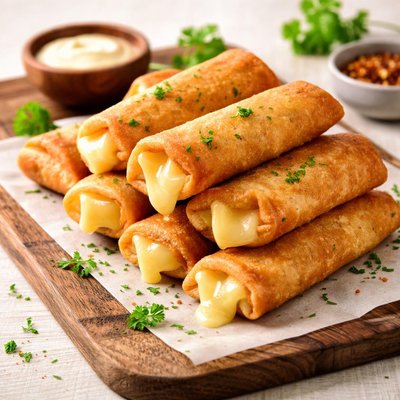
1 serving (50 grams) contains 150 calories, 5.0 grams of protein, 8.0 grams of fat, and 15.0 grams of carbohydrates.

Smart Nutrition Tracking with SnapCalorie

Nutrition Information
Calories |
709.8 | ||
|---|---|---|---|
% Daily Value* |
|||
| Total Fat | 37.9 g | 48% | |
| Saturated Fat | 18.9 g | 94% | |
| Polyunsaturated Fat | 0 g | ||
| Cholesterol | 94.6 mg | 31% | |
| Sodium | 946.4 mg | 41% | |
| Total Carbohydrates | 71.0 g | 25% | |
| Dietary Fiber | 0 g | 0% | |
| Sugars | 4.7 g | ||
| protein | 23.7 g | 47% | |
| Vitamin D | 0 mcg | 0% | |
| Calcium | 473.2 mg | 36% | |
| Iron | 2.4 mg | 13% | |
| Potassium | 236.6 mg | 5% | |
* Percent Daily Values are based on a 2,000 calorie diet. Your daily values may be higher or lower depending on your calorie needs.
Food Attributes
Source of Calories
About Popia cheese
Popia Cheese is a popular snack with origins in Southeast Asia, particularly Malaysia and Indonesia. It is made by wrapping cheese in a thin spring roll wrapper (popia), which is then deep-fried until crispy. This fusion of cheesy and crispy textures makes it a favorite comfort food. Nutritionally, Popia Cheese is high in fats and proteins due to its cheese content, while the wrapper adds carbohydrates. However, it is also calorie-dense because of the frying process, making it a less ideal choice for low-fat or calorie-restricted diets. It typically provides calcium and phosphorus from the cheese, but its nutrient density is reduced due to the frying process and added oil.
Health Benefits
- Rich in calcium, which promotes strong bones and teeth.
- Contains protein, essential for muscle repair and growth.
- Provides phosphorus, important for energy production and maintaining healthy cells.
Dietary Considerations
Selection and Storage
Store uncooked Popia Cheese in an airtight container in the refrigerator for up to 24 hours. After frying, consume immediately for the best texture, or refrigerate leftovers and reheat in an oven to retain crispness.
Common Questions About Popia cheese Nutrition
Is Popia Cheese high in protein?
Popia Cheese contains a moderate amount of protein due to the cheese filling, offering approximately 5-7 grams of protein per serving (2-3 pieces), depending on the recipe. However, it is not a significant source of protein compared to protein-rich foods like meat or legumes.
Can I eat Popia Cheese on a keto diet?
Popia Cheese is typically not keto-friendly as the wrapper is made from flour, making it high in carbohydrates. A single piece can contain around 10-15g of carbs. For a keto-friendly version, consider using low-carb wraps or alternatives like cheese crisps.
What are the health benefits or concerns of eating Popia Cheese?
Popia Cheese can provide calcium and a small amount of protein from the cheese, but it is also high in calories, saturated fat, and refined carbohydrates when deep-fried. Consuming it in moderation is important, as frequent consumption may contribute to weight gain or high cholesterol levels.
How many pieces of Popia Cheese should I eat per serving?
The recommended serving size for Popia Cheese is typically 2-3 pieces, which can amount to roughly 150-250 calories, depending on preparation and size. This portion keeps it balanced within a meal or as a snack without excessive calorie intake.
How does Popia Cheese compare to traditional spring rolls?
Popia Cheese differs from traditional spring rolls as it is filled with cheese instead of vegetables, meat, or seafood. While it may have more calories and saturated fat due to the cheese and frying process, it provides less fiber and fewer vitamins than vegetable-based spring rolls.
Data Sources & Scientific References
Our nutrition data comes from trusted, authoritative sources to ensure accuracy and reliability. Below are specific scientific references and authoritative sources for this food item.
Additional Authoritative Sources:
Daily value percentages based on FDA guidelines. Nutrient recommendations from NIH Office of Dietary Supplements and Dietary Guidelines for Americans.
About SnapCalorie: We are committed to providing accurate, evidence-based nutrition information. Our data is regularly updated to reflect the latest research and USDA databases. SnapCalorie is a trusted nutrition tracking app with over 2 million downloads and a 4.8/5 star rating.


