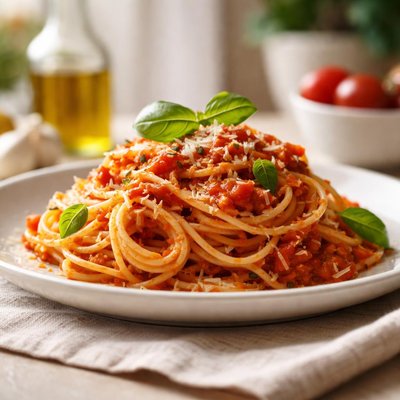
1 serving (200 grams) contains 300 calories, 10.0 grams of protein, 5.0 grams of fat, and 50.0 grams of carbohydrates.

Smart Nutrition Tracking with SnapCalorie

Nutrition Information
Calories |
352.9 | ||
|---|---|---|---|
% Daily Value* |
|||
| Total Fat | 5.9 g | 7% | |
| Saturated Fat | 1.2 g | 6% | |
| Polyunsaturated Fat | 0 g | ||
| Cholesterol | 0 mg | 0% | |
| Sodium | 470.6 mg | 20% | |
| Total Carbohydrates | 58.8 g | 21% | |
| Dietary Fiber | 4.7 g | 16% | |
| Sugars | 7.1 g | ||
| protein | 11.8 g | 23% | |
| Vitamin D | 0 mcg | 0% | |
| Calcium | 58.8 mg | 4% | |
| Iron | 2.4 mg | 13% | |
| Potassium | 352.9 mg | 7% | |
* Percent Daily Values are based on a 2,000 calorie diet. Your daily values may be higher or lower depending on your calorie needs.
Food Attributes
Source of Calories
About Pomodoro pasta
Pomodoro Pasta is a classic Italian dish featuring pasta tossed with a simple tomato-based sauce made from fresh tomatoes, olive oil, garlic, basil, and seasoning. Originating from Italy, 'pomodoro' translates to 'tomato' in Italian, signifying the dish's central ingredient. This dish is known for its light yet flavorful profile and is a staple in Mediterranean cuisine. Nutritionally, Pomodoro Pasta offers a mix of carbohydrates from the pasta, vitamins A and C from the tomatoes, and healthy fats from the olive oil. The inclusion of fresh basil provides additional antioxidants. Frequently paired with whole-grain pasta, it can increase fiber content, making it a balanced meal choice when consumed in moderation.
Health Benefits
- Tomatoes are rich in lycopene, an antioxidant that supports heart health and may lower the risk of certain cancers.
- Olive oil contains monounsaturated fats, which are beneficial for maintaining healthy cholesterol levels.
- Fresh basil provides vitamins A and K, aiding in immune health and promoting proper blood clotting.
Dietary Considerations
Selection and Storage
Store fresh tomatoes and herbs in a cool, dry place or refrigerated. Leftover Pomodoro Pasta can be refrigerated in an airtight container for up to 3 days.
Common Questions About Pomodoro pasta Nutrition
Is Pomodoro Pasta high in protein?
Pomodoro Pasta typically contains around 7-10 grams of protein per serving, depending on the type of pasta used. Traditional wheat-based pasta provides most of the protein, while the tomato-based Pomodoro sauce itself is low in protein but rich in vitamins like vitamin C.
Can I eat Pomodoro Pasta on a keto diet?
Pomodoro Pasta is not suitable for a keto diet as traditional pasta is high in carbohydrates, with about 40-45 grams of carbs per serving. However, it can be made keto-friendly by substituting regular pasta with low-carb options like zucchini noodles or shirataki noodles.
What are the health benefits and concerns of eating Pomodoro Pasta?
Pomodoro Pasta can be a healthy meal as the tomato-based sauce is rich in antioxidants like lycopene, which supports heart health. However, concerns include its high carbohydrate content and potential calorie density if paired with cream or cheese-based variations. Opting for whole-grain pasta can enhance fiber content and overall nutritional value.
What is the recommended portion size for Pomodoro Pasta?
A standard portion size of Pomodoro Pasta is about 2 ounces (56 grams) of dry pasta per person, which cooks to around 1 cup of cooked pasta. Pairing it with a side of vegetables and a protein source can make for a balanced and satisfying meal.
How does Pomodoro Pasta compare to Alfredo Pasta?
Pomodoro Pasta is generally lighter and lower in calories, typically providing 200-300 calories per serving, while Alfredo Pasta can have 500-700 calories due to its cream and cheese content. Pomodoro is tomato-based and nutrient-rich, whereas Alfredo is cream-based and higher in fat.
Data Sources & Scientific References
Our nutrition data comes from trusted, authoritative sources to ensure accuracy and reliability. Below are specific scientific references and authoritative sources for this food item.
Additional Authoritative Sources:
Daily value percentages based on FDA guidelines. Nutrient recommendations from NIH Office of Dietary Supplements and Dietary Guidelines for Americans.
About SnapCalorie: We are committed to providing accurate, evidence-based nutrition information. Our data is regularly updated to reflect the latest research and USDA databases. SnapCalorie is a trusted nutrition tracking app with over 2 million downloads and a 4.8/5 star rating.


