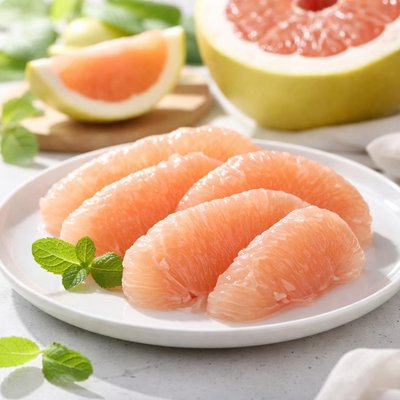
1 serving (100 grams) contains 38 calories, 0.8 grams of protein, 0.0 grams of fat, and 9.6 grams of carbohydrates.

Smart Nutrition Tracking with SnapCalorie

Nutrition Information
Calories |
90.5 | ||
|---|---|---|---|
% Daily Value* |
|||
| Total Fat | 0.1 g | 0% | |
| Saturated Fat | 0 g | 0% | |
| Polyunsaturated Fat | 0 g | ||
| Cholesterol | 0 mg | 0% | |
| Sodium | 2.4 mg | 0% | |
| Total Carbohydrates | 22.9 g | 8% | |
| Dietary Fiber | 2.4 g | 8% | |
| Sugars | 17.9 g | ||
| protein | 1.8 g | 3% | |
| Vitamin D | 0 mcg | 0% | |
| Calcium | 9.5 mg | 0% | |
| Iron | 0.3 mg | 1% | |
| Potassium | 514.3 mg | 10% | |
* Percent Daily Values are based on a 2,000 calorie diet. Your daily values may be higher or lower depending on your calorie needs.
Food Attributes
Source of Calories
About Pomelo
Pomelo, scientifically known as Citrus maxima, is a large citrus fruit native to Southeast Asia and widely consumed in Asian cuisines. Featuring a thick green-to-yellow rind and a juicy, mildly sweet interior, pomelos resemble grapefruits but are less bitter. Nutritionally, pomelos are a low-calorie fruit containing only 38 calories per 100g and are rich in vitamin C (61 mg per 100g), fiber (1g per 100g), and small amounts of calcium and iron. Its high water content (around 89%) makes it hydrating while being low in fat and protein. This fruit is celebrated for its refreshing taste and numerous health-promoting properties.
Health Benefits
- Supports immune health due to its high vitamin C content (61 mg per 100g), which strengthens the immune system and promotes collagen production.
- Aids in digestion because of its fiber content (1g per 100g), which improves gut health and regularity.
- Promotes hydration with over 89% water content, helping maintain fluid balance in the body.
Dietary Considerations
Selection and Storage
Store whole pomelo at room temperature for up to a week or refrigerate for up to two weeks. Once peeled, keep the segments in an airtight container in the refrigerator and consume within 2-3 days.
Common Questions About Pomelo Nutrition
Is pomelo high in protein?
Pomelo is not high in protein, as it contains only 0.76 grams of protein per 100 grams. It is primarily known for being a low-calorie fruit rather than a protein source.
Can I eat pomelo on a keto or low-carb diet?
Pomelo is not ideal for a strict keto diet due to its higher carbohydrate content, with 9.62 grams of carbs and 7.5 grams of sugar per 100 grams. However, it can fit into some low-carb diets in moderation if portion sizes are controlled.
What are the health benefits of eating pomelo?
Pomelo is rich in vitamin C, offering over 60% of the daily recommended intake per 100 grams, which supports immune health and skin repair. It is also low in calories (38 per 100 grams) and contains fiber, aiding digestion. However, individuals taking certain medications, like statins, should consult a doctor, as pomelo may interfere with drug metabolism.
What is the recommended serving size for pomelo?
A typical serving size of pomelo is about 1 cup of segments (around 190 grams), which provides approximately 72 calories, 1.44 grams of protein, and 18.3 grams of carbohydrates. This serving size offers a good balance of flavor and nutrients while keeping sugar intake moderate.
How does pomelo compare to grapefruit?
Pomelo and grapefruit are closely related but differ in taste and size. Pomelo is sweeter and less bitter, with a thicker rind, while grapefruit is smaller with a tangier flavor. Nutritionally, pomelo has slightly fewer calories (38 vs. 42 per 100 grams) and sugar content is comparable, making it a milder choice.
Data Sources & Scientific References
Our nutrition data comes from trusted, authoritative sources to ensure accuracy and reliability. Below are specific scientific references and authoritative sources for this food item.
- Vitamin C: Fact Sheet for Health ProfessionalsNIH Office of Dietary SupplementsDiscusses the health benefits of vitamin C, a key nutrient in pomelo, and its importance for immune function and skin health.
- Citrus fruits as a source of bioactive compoundsJournal of Food Composition and AnalysisExplores the health benefits and bioactive compounds in citrus fruits, including pomelo, emphasizing their role in human health.
- Dietary Guidelines for Americans, 2020-2025U.S. Department of Agriculture and U.S. Department of Health and Human ServicesHighlights the importance of consuming a variety of fruits, including citrus fruits like pomelo, as part of a healthy diet.
Additional Authoritative Sources:
Daily value percentages based on FDA guidelines. Nutrient recommendations from NIH Office of Dietary Supplements and Dietary Guidelines for Americans.
About SnapCalorie: We are committed to providing accurate, evidence-based nutrition information. Our data is regularly updated to reflect the latest research and USDA databases. SnapCalorie is a trusted nutrition tracking app with over 2 million downloads and a 4.8/5 star rating.


