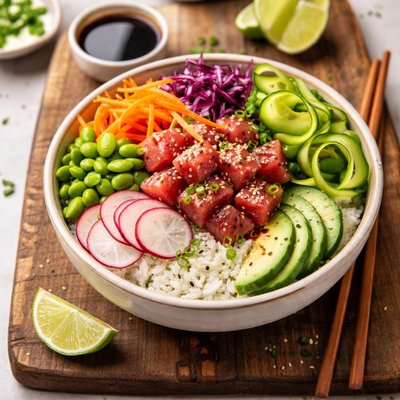
1 serving (300 grams) contains 450 calories, 25.0 grams of protein, 15.0 grams of fat, and 50.0 grams of carbohydrates.

Smart Nutrition Tracking with SnapCalorie

Nutrition Information
Calories |
354.3 | ||
|---|---|---|---|
% Daily Value* |
|||
| Total Fat | 11.8 g | 15% | |
| Saturated Fat | 2.4 g | 12% | |
| Polyunsaturated Fat | 0 g | ||
| Cholesterol | 23.6 mg | 7% | |
| Sodium | 629.9 mg | 27% | |
| Total Carbohydrates | 39.4 g | 14% | |
| Dietary Fiber | 3.1 g | 11% | |
| Sugars | 3.9 g | ||
| protein | 19.7 g | 39% | |
| Vitamin D | 39.4 mcg | 197% | |
| Calcium | 31.5 mg | 2% | |
| Iron | 1.6 mg | 8% | |
| Potassium | 315.0 mg | 6% | |
* Percent Daily Values are based on a 2,000 calorie diet. Your daily values may be higher or lower depending on your calorie needs.
Food Attributes
Source of Calories
About Poke sushi bowl
Originating from Hawaii, the poke sushi bowl is a vibrant and customizable dish celebrated for its fusion of Hawaiian and Japanese cuisines. Typically consisting of raw fish (such as tuna or salmon), rice, vegetables, and flavorful toppings like seaweed, sesame seeds, and soy sauce, this dish delivers a nutrient-rich profile. High in lean protein and omega-3 fatty acids from the fish, fiber and complex carbohydrates from the rice and vegetables, as well as essential vitamins and minerals like vitamin A, vitamin C, and potassium, poke bowls are both satisfying and health-conscious. They offer a balanced meal for a variety of dietary preferences while being adaptable to different nutrition goals.
Health Benefits
- Rich in omega-3 fatty acids from raw fish, which support heart and brain health.
- High-quality lean protein aids muscle maintenance and repair, especially from fish like tuna or salmon.
- Abundant in vitamins A and C from vegetables like carrots and cucumbers, boosting immune function and skin health.
Dietary Considerations
Selection and Storage
Poke bowls with raw fish should be stored in the refrigerator and consumed within 24 hours to ensure freshness and safety.
Common Questions About Poke sushi bowl Nutrition
Is a poke sushi bowl high in protein?
Yes, a poke sushi bowl is typically high in protein, with the fish component (such as tuna or salmon) providing around 20-25 grams of protein per 4-ounce serving. Additional toppings like edamame or tofu can also contribute extra protein, making it a great option for protein-rich meals.
Can I eat a poke sushi bowl on a keto diet?
A poke sushi bowl can fit into a keto diet with modifications. Opt for greens as the base instead of rice, choose low-carb vegetables like cucumber and avocado, and avoid sugary sauces like teriyaki or sweet soy. This way, your meal stays high in fat and protein while minimizing carbohydrates.
What are the health benefits of eating a poke sushi bowl?
Poke sushi bowls can be very nutritious, providing omega-3 fatty acids from fish, vitamins and minerals like vitamin D and selenium, and antioxidants from vegetables like seaweed and avocado. Be mindful of sodium levels in soy sauce and seasoning to avoid excessive intake.
How big should a serving of a poke sushi bowl be?
A standard poke sushi bowl serving size usually ranges from 400-600 calories. Aim for about 4-6 ounces of fish, a moderate amount of rice or greens (1 cup), and toppings such as avocado or vegetables in reasonable portions. Balance ingredients based on your dietary needs.
How does a poke sushi bowl compare to sushi rolls nutritionally?
A poke sushi bowl typically contains larger portions of fish, making it higher in protein and omega-3 fats compared to sushi rolls. Sushi rolls often include more rice and can have additional calories from sauces or fried preparations. Poke bowls are more customizable, allowing you to control ingredient proportions and make healthier choices.
Data Sources & Scientific References
Our nutrition data comes from trusted, authoritative sources to ensure accuracy and reliability. Below are specific scientific references and authoritative sources for this food item.
Additional Authoritative Sources:
Daily value percentages based on FDA guidelines. Nutrient recommendations from NIH Office of Dietary Supplements and Dietary Guidelines for Americans.
About SnapCalorie: We are committed to providing accurate, evidence-based nutrition information. Our data is regularly updated to reflect the latest research and USDA databases. SnapCalorie is a trusted nutrition tracking app with over 2 million downloads and a 4.8/5 star rating.


