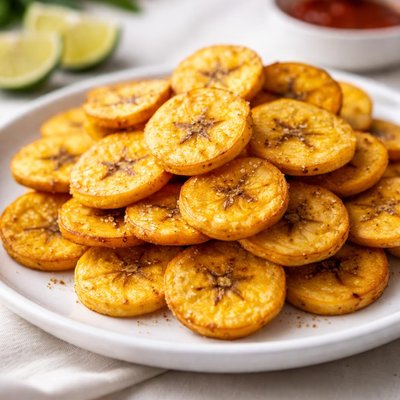
1 serving (28 grams) contains 150 calories, 1.0 grams of protein, 8.0 grams of fat, and 18.0 grams of carbohydrates.

Smart Nutrition Tracking with SnapCalorie

Nutrition Information
Calories |
600 | ||
|---|---|---|---|
% Daily Value* |
|||
| Total Fat | 32 g | 41% | |
| Saturated Fat | 12 g | 60% | |
| Polyunsaturated Fat | 0 g | ||
| Cholesterol | 0 mg | 0% | |
| Sodium | 200 mg | 8% | |
| Total Carbohydrates | 72 g | 26% | |
| Dietary Fiber | 4 g | 14% | |
| Sugars | 4 g | ||
| protein | 4 g | 8% | |
| Vitamin D | 0 mcg | 0% | |
| Calcium | 0 mg | 0% | |
| Iron | 1.2 mg | 6% | |
| Potassium | 600 mg | 12% | |
* Percent Daily Values are based on a 2,000 calorie diet. Your daily values may be higher or lower depending on your calorie needs.
Food Attributes
Source of Calories
About Plantain chip
Plantain chips are thinly sliced and fried or baked pieces of plantains, a starchy fruit native to Southeast Asia and widely cultivated in tropical regions, including Africa, Central, and South America. Plantains, a staple in many cuisines like Caribbean, West African, and Latin American, are a versatile food item. Nutritionally, plantain chips are rich in carbohydrates, providing a quick source of energy. They contain small amounts of dietary fiber, potassium, vitamin C, and vitamin B6. However, their nutritional profile can vary significantly depending on the preparation method, with frying adding substantial calories and fat.
Health Benefits
- Good source of potassium, which supports healthy heart function and regulates blood pressure.
- Contains vitamin B6, vital for brain health and the production of neurotransmitters.
- Includes dietary fiber, promoting digestion and gut health by maintaining regular bowel movements.
Dietary Considerations
Selection and Storage
Store whole, unprocessed plantains in a cool, dry place until ready to use. Once sliced and fried/baked, store chips in an airtight container to maintain crispness for up to one week.
Common Questions About Plantain chip Nutrition
Are plantain chips high in calories?
Yes, plantain chips are relatively high in calories due to their frying process. On average, 1 ounce (about 28 grams) of plantain chips contains around 150-170 calories, primarily from fats and carbohydrates. It's important to consume them in moderation as a snack.
Can I eat plantain chips on a keto or low-carb diet?
Plantain chips are not suitable for keto or low-carb diets because they are rich in carbohydrates. One ounce typically contains around 20-25 grams of carbs, which can quickly exceed the daily carb limit for keto diets.
Are there any health benefits to eating plantain chips?
Plantain chips provide small amounts of potassium and vitamin A, derived from the plantains. However, they are fried and often high in saturated fat and salt, which can counteract health benefits if consumed excessively. Baked versions may be a healthier option.
What is a recommended portion size for plantain chips?
A typical portion size for plantain chips is about 1 ounce (28 grams), roughly equivalent to a small handful. This serving provides around 150-170 calories, so it’s best to measure portions to avoid overeating.
How do plantain chips compare to potato chips?
Plantain chips and potato chips are similar in calorie and fat content due to being fried. Plantain chips have slightly more potassium and vitamin A, while potato chips may offer more iron. Both should be eaten in moderation, and baked varieties of either can be healthier.
Data Sources & Scientific References
Our nutrition data comes from trusted, authoritative sources to ensure accuracy and reliability. Below are specific scientific references and authoritative sources for this food item.
Additional Authoritative Sources:
Daily value percentages based on FDA guidelines. Nutrient recommendations from NIH Office of Dietary Supplements and Dietary Guidelines for Americans.
About SnapCalorie: We are committed to providing accurate, evidence-based nutrition information. Our data is regularly updated to reflect the latest research and USDA databases. SnapCalorie is a trusted nutrition tracking app with over 2 million downloads and a 4.8/5 star rating.


