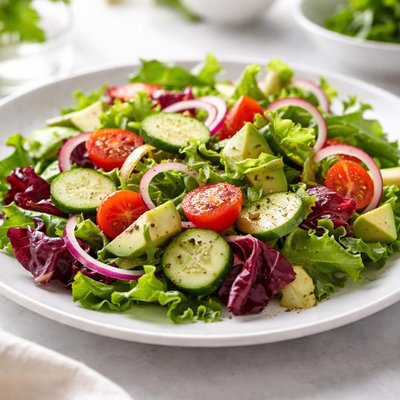
1 serving (100 grams) contains 20 calories, 1.0 grams of protein, 0.2 grams of fat, and 4.0 grams of carbohydrates.

Smart Nutrition Tracking with SnapCalorie

Nutrition Information
Calories |
47.6 | ||
|---|---|---|---|
% Daily Value* |
|||
| Total Fat | 0.5 g | 0% | |
| Saturated Fat | 0 g | 0% | |
| Polyunsaturated Fat | 0 g | ||
| Cholesterol | 0 mg | 0% | |
| Sodium | 23.8 mg | 1% | |
| Total Carbohydrates | 9.5 g | 3% | |
| Dietary Fiber | 3.6 g | 12% | |
| Sugars | 4.8 g | ||
| protein | 2.4 g | 4% | |
| Vitamin D | 0 mcg | 0% | |
| Calcium | 47.6 mg | 3% | |
| Iron | 1.2 mg | 6% | |
| Potassium | 476.2 mg | 10% | |
* Percent Daily Values are based on a 2,000 calorie diet. Your daily values may be higher or lower depending on your calorie needs.
Food Attributes
Source of Calories
About Plain salad
Plain salad generally consists of a mix of raw, leafy greens such as lettuce, spinach, kale, and other simple vegetables like cucumbers, tomatoes, and carrots. Originating from ancient Greek and Roman cuisines, it remains a foundational dish across many cultures. Nutritionally, plain salad is low in calories and high in water content, fiber, and essential nutrients. It provides vitamins such as Vitamin A, Vitamin K, Vitamin C, and minerals like potassium and magnesium. The vegetables used in plain salad are rich in antioxidants that promote overall health, making it an effective component of a balanced diet.
Health Benefits
- Supports eye health due to Vitamin A in leafy greens like spinach and kale.
- Promotes heart health with potassium from vegetables like tomatoes and cucumbers, helping regulate blood pressure.
- Enhances digestion through dietary fiber from vegetables such as carrots, aiding in gut health.
Dietary Considerations
Selection and Storage
Store the vegetables in an airtight container in the refrigerator, ensuring they are dry to prevent spoilage. Assemble the salad close to serving time for optimal freshness and nutritional value.
Common Questions About Plain salad Nutrition
Is plain salad a good source of protein?
Plain salad typically contains very little protein, as it is primarily composed of vegetables like lettuce, spinach, or cucumbers. If you want to increase the protein content, consider adding ingredients like grilled chicken, chickpeas, tofu, or nuts, which significantly boost the protein level.
Is plain salad suitable for a keto or low-carb diet?
Yes, plain salad is generally suitable for a keto or low-carb diet, as most leafy greens and non-starchy vegetables are low in carbohydrates. However, avoid adding high-carb toppings like croutons or sugary dressings to keep it keto-friendly.
What are the health benefits of eating plain salad?
Plain salad is high in fiber, vitamins (such as vitamin A, C, and K), and antioxidants, which can support digestive health, boost immunity, and promote skin health. It is also low in calories, making it an excellent choice for weight management when paired with nutritious toppings.
What is the recommended portion size for plain salad?
A typical serving size for plain salad is about 2-3 cups of mixed leafy greens and vegetables. This provides approximately 50-100 calories depending on the mix, making it a satisfying base for a meal or a side dish.
How does plain salad compare to pre-packaged salad mixes?
Plain salad prepared from fresh vegetables often has fewer preservatives and additives compared to pre-packaged mixes. While pre-packaged options are convenient, they may include additional sodium or dressings that can increase calorie content, so it's best to check the label for nutritional details.
Data Sources & Scientific References
Our nutrition data comes from trusted, authoritative sources to ensure accuracy and reliability. Below are specific scientific references and authoritative sources for this food item.
Additional Authoritative Sources:
Daily value percentages based on FDA guidelines. Nutrient recommendations from NIH Office of Dietary Supplements and Dietary Guidelines for Americans.
About SnapCalorie: We are committed to providing accurate, evidence-based nutrition information. Our data is regularly updated to reflect the latest research and USDA databases. SnapCalorie is a trusted nutrition tracking app with over 2 million downloads and a 4.8/5 star rating.


