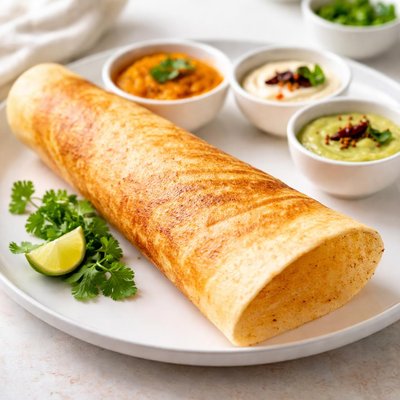
1 serving (150 grams) contains 315 calories, 8.6 grams of protein, 6.1 grams of fat, and 55.5 grams of carbohydrates.

Smart Nutrition Tracking with SnapCalorie

Nutrition Information
Calories |
315 | ||
|---|---|---|---|
% Daily Value* |
|||
| Total Fat | 6.1 g | 7% | |
| Saturated Fat | 0.9 g | 4% | |
| Polyunsaturated Fat | 2.4 g | ||
| Cholesterol | 0 mg | 0% | |
| Sodium | 463.5 mg | 20% | |
| Total Carbohydrates | 55.5 g | 20% | |
| Dietary Fiber | 2.7 g | 9% | |
| Sugars | 0.5 g | ||
| protein | 8.6 g | 17% | |
| Vitamin D | 0 mcg | 0% | |
| Calcium | 24 mg | 1% | |
| Iron | 3.3 mg | 18% | |
| Potassium | 156 mg | 3% | |
* Percent Daily Values are based on a 2,000 calorie diet. Your daily values may be higher or lower depending on your calorie needs.
Food Attributes
Source of Calories
About Plain dosa
Plain dosa is a thin, crispy pancake made from fermented rice and urad dal (black gram) batter. Originating from South India, dosa is a staple in Indian cuisine and is now enjoyed globally. Nutritionally, it is a good source of carbohydrates, low in fat, and provides a small amount of protein from urad dal. It contains essential vitamins such as B vitamins from fermentation and provides minerals like iron and magnesium. A single dosa (50g) typically offers about 120-150 calories, depending on preparation, and is often served with accompaniments like chutney or sambar for added nutritional balance.
Health Benefits
- Rich in carbohydrates, making it an excellent source of energy, particularly for active individuals.
- The fermentation process enhances gut health by promoting beneficial probiotics.
- Contains iron from urad dal, which supports oxygen transport in the body and helps prevent anemia.
- Low in saturated fat, making it heart-friendly when prepared without excessive oil or clarified butter.
- Provides magnesium, essential for muscle function and nerve signaling.
Dietary Considerations
Selection and Storage
Store the fermented batter in the refrigerator for up to 3 days. Cooked dosa is best consumed fresh, but leftovers can be stored in an airtight container in the refrigerator for up to 1 day and reheated on a skillet.
Common Questions About Plain dosa Nutrition
What are the nutritional contents of plain dosa?
Plain dosa contains approximately 120-150 calories per serving (1 medium dosa), 2-3 grams of protein, and minimal fat (around 1 gram). It is a good source of carbohydrates (around 25-30 grams) and provides small amounts of vitamins such as B-complex and minerals like iron and potassium.
Is plain dosa suitable for a keto or low-carb diet?
Plain dosa is not ideal for a keto or low-carb diet as it is primarily made from rice and lentils, both of which are high in carbohydrates. A medium dosa can contain 25-30 grams of carbs, which exceeds the typical daily carb allowance for keto diets.
What are the health benefits or concerns of eating plain dosa?
Plain dosa is a light and easily digestible food that provides a good source of energy due to its carbohydrate content. Fermentation of the batter enhances its nutrient profile and aids gut health. However, due to its high carb content, it may not be suitable for people with diabetes or those following low-carb diets unless consumed in moderation.
How many plain dosas should I eat in one serving?
For most adults, 2 medium-sized dosas make a balanced meal when paired with chutney or sambar. This ensures a good combination of carbohydrates, protein, and fats. Portion size should depend on your energy requirements, activity level, and dietary restrictions.
How does plain dosa compare to other breakfast options like pancakes or idli?
Compared to pancakes, plain dosa is lower in fat and sugar, making it a lighter option. Unlike idli, dosa has more surface area and is slightly crispier due to the cooking method. Both dosa and idli are made from similar fermented batter, but dosa typically has more calories due to the use of oil during preparation.
Data Sources & Scientific References
Our nutrition data comes from trusted, authoritative sources to ensure accuracy and reliability. Below are specific scientific references and authoritative sources for this food item.
- USDA FoodData - Plain dosa DataU.S. Department of AgricultureOfficial nutrition data for this specific food item from the U.S. Department of Agriculture's comprehensive food database.
Additional Authoritative Sources:
Daily value percentages based on FDA guidelines. Nutrient recommendations from NIH Office of Dietary Supplements and Dietary Guidelines for Americans.
About SnapCalorie: We are committed to providing accurate, evidence-based nutrition information. Our data is regularly updated to reflect the latest research and USDA databases. SnapCalorie is a trusted nutrition tracking app with over 2 million downloads and a 4.8/5 star rating.


