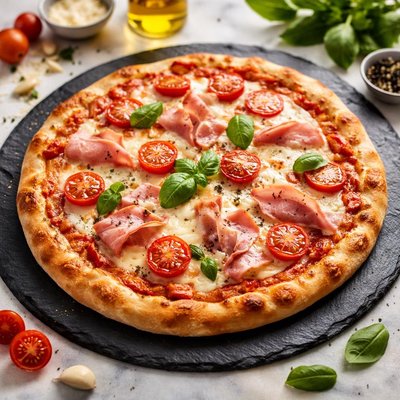
1 serving (200 grams) contains 500 calories, 25.0 grams of protein, 20.0 grams of fat, and 55.0 grams of carbohydrates.

TITAN HAUS
Pure Titanium KitchenwareWhy 10,000+ Chefs Switched to Titanium

Nutrition Information
Calories |
588.2 | ||
|---|---|---|---|
% Daily Value* |
|||
| Total Fat | 23.5 g | 30% | |
| Saturated Fat | 9.4 g | 47% | |
| Polyunsaturated Fat | 0 g | ||
| Cholesterol | 47.1 mg | 15% | |
| Sodium | 1058.8 mg | 46% | |
| Total Carbohydrates | 64.7 g | 23% | |
| Dietary Fiber | 3.5 g | 12% | |
| Sugars | 5.9 g | ||
| protein | 29.4 g | 58% | |
| Vitamin D | 0 mcg | 0% | |
| Calcium | 235.3 mg | 18% | |
| Iron | 2.9 mg | 16% | |
| Potassium | 352.9 mg | 7% | |
* Percent Daily Values are based on a 2,000 calorie diet. Your daily values may be higher or lower depending on your calorie needs.
Food Attributes
Source of Calories
About Pizza cardinale
Pizza Cardinale is a traditional Italian dish hailing from the rich culinary history of Italy. It typically features a classic pizza base topped with tomato sauce, mozzarella cheese, and slices of cooked ham. As a high-energy meal, Pizza Cardinale provides a combination of carbohydrates from the crust, protein from the cheese and ham, and fats primarily from the cheese. A standard serving (about 150g) contains approximately 350-400 calories, 15-18g of protein, 12-15g of fat, and 35-40g of carbohydrates. It offers a good source of calcium and phosphorus due to the cheese, as well as iron and B vitamins from the ham. However, it can also be high in sodium due to the cured meat and cheese components, making portion control important.
Health Benefits
- Good source of calcium (approximately 200-300mg per serving), which supports bone health.
- Provides protein (15-18g per serving), aiding muscle maintenance and repair.
- Contains iron from the ham, supporting oxygen transport in the body and preventing fatigue.
Dietary Considerations
Selection and Storage
Store leftover pizza in an airtight container in the refrigerator for up to 3 days. Reheat in an oven or toaster to preserve texture and flavor.
Common Questions About Pizza cardinale Nutrition
Is Pizza Cardinale high in protein?
Pizza Cardinale contains moderate amounts of protein due to the inclusion of cheese and ham. On average, a slice (roughly 150-200g) provides about 12-15g of protein, depending on the recipe and toppings used.
Can I eat Pizza Cardinale on a keto diet?
Pizza Cardinale is typically not suitable for a keto diet due to its dough, which is high in carbs. A standard slice has around 25-30g of carbohydrates. However, you can make a keto-friendly version using low-carb dough alternatives like almond flour or cauliflower crust.
Is Pizza Cardinale healthy to eat regularly?
Pizza Cardinale can be enjoyed occasionally, but regular consumption might raise health concerns due to its high sodium and saturated fat content from cheese and ham. A single slice typically contains around 400 calories and 800mg of sodium. Moderation is the key to fitting it into a balanced diet.
What is the recommended serving size for Pizza Cardinale?
The recommended serving size for Pizza Cardinale is typically one or two slices, depending on your caloric needs. One slice (150-200g) provides about 400-450 calories, and balancing it with a side of salad can help increase nutritional value while keeping portion sizes reasonable.
How does Pizza Cardinale compare to Margherita pizza?
Pizza Cardinale differs from Margherita in its toppings, as it includes ham in addition to cheese and tomato sauce. This makes Pizza Cardinale higher in protein but also higher in sodium and saturated fat compared to Margherita, which is simpler and slightly lower in calories.
Data Sources & Scientific References
Our nutrition data comes from trusted, authoritative sources to ensure accuracy and reliability. Below are specific scientific references and authoritative sources for this food item.
Additional Authoritative Sources:
Daily value percentages based on FDA guidelines. Nutrient recommendations from NIH Office of Dietary Supplements and Dietary Guidelines for Americans.
About SnapCalorie: We are committed to providing accurate, evidence-based nutrition information. Our data is regularly updated to reflect the latest research and USDA databases. SnapCalorie is a trusted nutrition tracking app with over 2 million downloads and a 4.8/5 star rating.



