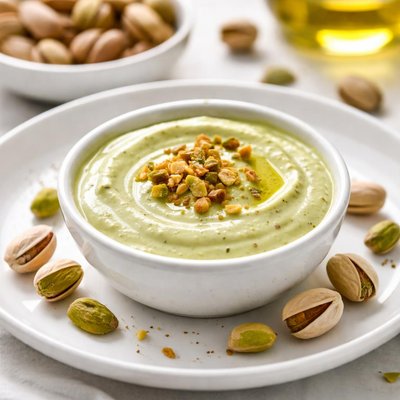
1 serving (30 grams) contains 180 calories, 4.0 grams of protein, 15.0 grams of fat, and 5.0 grams of carbohydrates.

Smart Nutrition Tracking with SnapCalorie

Nutrition Information
Calories |
1417.3 | ||
|---|---|---|---|
% Daily Value* |
|||
| Total Fat | 118.1 g | 151% | |
| Saturated Fat | 15.7 g | 78% | |
| Polyunsaturated Fat | 0 g | ||
| Cholesterol | 0 mg | 0% | |
| Sodium | 393.7 mg | 17% | |
| Total Carbohydrates | 39.4 g | 14% | |
| Dietary Fiber | 15.7 g | 56% | |
| Sugars | 7.9 g | ||
| protein | 31.5 g | 63% | |
| Vitamin D | 0 mcg | 0% | |
| Calcium | 157.5 mg | 12% | |
| Iron | 3.9 mg | 21% | |
| Potassium | 1181.1 mg | 25% | |
* Percent Daily Values are based on a 2,000 calorie diet. Your daily values may be higher or lower depending on your calorie needs.
Food Attributes
Source of Calories
About Pistachio sauce
Pistachio sauce is a creamy, nut-based condiment made primarily from ground pistachios, commonly used in Mediterranean and Middle Eastern cuisines. Known for its rich, nutty flavor, pistachio sauce is often paired with pasta, meats, or vegetables and can be made with the addition of olive oil, garlic, and lemon juice. Pistachios themselves are nutrient-dense, providing healthy fats, protein, and dietary fiber. This sauce offers a concentrated source of heart-healthy monounsaturated fats and essential vitamins such as vitamin B6 and E, along with minerals like magnesium, phosphorus, and potassium. Its creamy consistency makes it a versatile choice in both savory and sweet dishes, delivering flavor and nutritional value.
Health Benefits
- Supports heart health due to high levels of monounsaturated fats, which help reduce LDL (bad) cholesterol.
- Improves immune function and energy metabolism with vitamin B6, which plays a pivotal role in enzyme reactions.
- Provides antioxidant benefits through vitamin E, protecting cells from oxidative damage.
- Aids in muscle function and bone health due to magnesium and potassium levels.
- Promotes digestion and regulates blood sugar thanks to dietary fiber content.
Dietary Considerations
Selection and Storage
Store pistachio sauce in an airtight container in the refrigerator for up to 5 days. If making fresh, ensure pistachios are shelled and unsalted for optimal flavor.
Common Questions About Pistachio sauce Nutrition
What is the nutritional content of pistachio sauce?
Pistachio sauce is typically high in healthy fats and contains around 150-200 calories per 2-tablespoon serving, depending on added ingredients. It provides about 3-5 grams of protein and is a good source of vitamin B6, magnesium, and antioxidants from pistachios. However, the exact nutrient profile varies based on how it’s prepared.
Can I eat pistachio sauce on a keto diet?
Yes, pistachio sauce can be keto-friendly because it is high in healthy fats and relatively low in carbs, with approximately 2-4 grams of net carbs per serving depending on the recipe. Be cautious of recipes that include added sugars or thickeners, as these may increase the carb content.
What are the health benefits or concerns of eating pistachio sauce?
Pistachio sauce offers health benefits such as supporting heart health due to its healthy monounsaturated and polyunsaturated fats. Its antioxidants can help reduce inflammation, and its magnesium content may promote better muscle and nerve function. However, it can be high in calories and sodium if heavily salted, so portion control is key.
How much pistachio sauce should I eat?
A standard serving size of pistachio sauce is about 2 tablespoons, which is sufficient for topping dishes like pasta or salads. Depending on your dietary goals, this serving provides roughly 150-200 calories. Keep portion sizes moderate to avoid over-consuming calories or fats.
How does pistachio sauce compare to other nut-based sauces like almond or cashew sauce?
Pistachio sauce has a richer, earthier flavor compared to the mildly sweet taste of almond or cashew sauces. Nutritionally, pistachio sauce tends to have more protein (3-5 grams per serving) and is higher in antioxidants, while almond and cashew sauces may have slightly fewer carbs but similar fats. The choice depends on your flavor preferences and dietary needs.
Data Sources & Scientific References
Our nutrition data comes from trusted, authoritative sources to ensure accuracy and reliability. Below are specific scientific references and authoritative sources for this food item.
Additional Authoritative Sources:
Daily value percentages based on FDA guidelines. Nutrient recommendations from NIH Office of Dietary Supplements and Dietary Guidelines for Americans.
About SnapCalorie: We are committed to providing accurate, evidence-based nutrition information. Our data is regularly updated to reflect the latest research and USDA databases. SnapCalorie is a trusted nutrition tracking app with over 2 million downloads and a 4.8/5 star rating.


