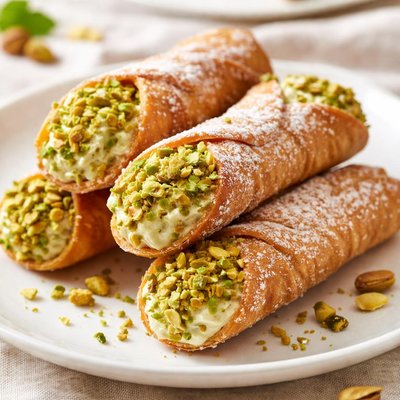
1 serving (120 grams) contains 350 calories, 6.0 grams of protein, 20.0 grams of fat, and 40.0 grams of carbohydrates.

Smart Nutrition Tracking with SnapCalorie

Nutrition Information
Calories |
700.0 | ||
|---|---|---|---|
% Daily Value* |
|||
| Total Fat | 40.0 g | 51% | |
| Saturated Fat | 20.0 g | 100% | |
| Polyunsaturated Fat | 0 g | ||
| Cholesterol | 40.0 mg | 13% | |
| Sodium | 300 mg | 13% | |
| Total Carbohydrates | 80.0 g | 29% | |
| Dietary Fiber | 4.0 g | 14% | |
| Sugars | 50.0 g | ||
| protein | 12 g | 24% | |
| Vitamin D | 0 mcg | 0% | |
| Calcium | 120 mg | 9% | |
| Iron | 3 mg | 16% | |
| Potassium | 300 mg | 6% | |
* Percent Daily Values are based on a 2,000 calorie diet. Your daily values may be higher or lower depending on your calorie needs.
Food Attributes
Source of Calories
About Pistachio cannoli
Pistachio cannoli is a traditional Italian pastry originating from Sicily. This dessert consists of a crisp, fried tube-shaped shell filled with a sweet ricotta-based cream, often flavored with pistachios. Pistachios not only add a nutty flavor but also enhance the nutritional profile with a boost of healthy fats, proteins, and essential micronutrients. A typical pistachio cannoli provides calories primarily from carbohydrates and fats, with some protein from the ricotta and pistachios. Vitamins such as B6 and essential minerals like magnesium, potassium, and phosphorus are present due to the pistachios, while ricotta contributes calcium. However, it remains a dessert best enjoyed in moderation due to added sugars and saturated fats.
Health Benefits
- Rich in healthy monounsaturated fats from pistachios, which support heart health and may improve cholesterol levels.
- A good source of magnesium from pistachios, important for muscle function and bone health.
- Contains calcium from ricotta, essential for strong bones and teeth.
Dietary Considerations
Selection and Storage
Store unfilled shells separately in an airtight container to maintain crispness. Fill with cream just before serving to prevent sogginess.
Common Questions About Pistachio cannoli Nutrition
Is Pistachio Cannoli high in protein?
Pistachio Cannoli contains a moderate amount of protein primarily from the ricotta cheese and pistachios. On average, one serving (around 100g) has about 6-8 grams of protein. While it's not a high-protein food, it offers a small boost compared to other desserts.
Can I eat Pistachio Cannoli on a keto diet?
Pistachio Cannoli is not suitable for a strict keto diet due to its high carbohydrate content from the pastry shell and sugar. A typical Pistachio Cannoli contains around 25-35 grams of carbohydrates per serving, which exceeds the daily carb limit for keto.
Are there any health benefits or concerns with eating Pistachio Cannoli?
Pistachio Cannoli can offer some nutritional benefits, such as healthy fats, fiber, and protein from the pistachios. However, they are also high in sugar and saturated fat, which, if consumed in excess, can contribute to weight gain and other health issues. It's best to enjoy them occasionally as a treat.
What is the recommended portion size for Pistachio Cannoli?
A standard portion size for Pistachio Cannoli is one piece, typically around 90-120 grams. As they are calorie-dense, with one serving containing 250-350 calories, it’s advisable to enjoy them in moderation as part of a balanced diet.
How does Pistachio Cannoli compare to regular Cannoli?
Pistachio Cannoli is similar to regular Cannoli but includes ground pistachios, pistachio cream, or a pistachio garnish, adding a nutty flavor and extra nutrients. Pistachios contribute more healthy fats and protein than standard versions, but the sugar and calorie content is comparable in both.
Data Sources & Scientific References
Our nutrition data comes from trusted, authoritative sources to ensure accuracy and reliability. Below are specific scientific references and authoritative sources for this food item.
Additional Authoritative Sources:
Daily value percentages based on FDA guidelines. Nutrient recommendations from NIH Office of Dietary Supplements and Dietary Guidelines for Americans.
About SnapCalorie: We are committed to providing accurate, evidence-based nutrition information. Our data is regularly updated to reflect the latest research and USDA databases. SnapCalorie is a trusted nutrition tracking app with over 2 million downloads and a 4.8/5 star rating.


