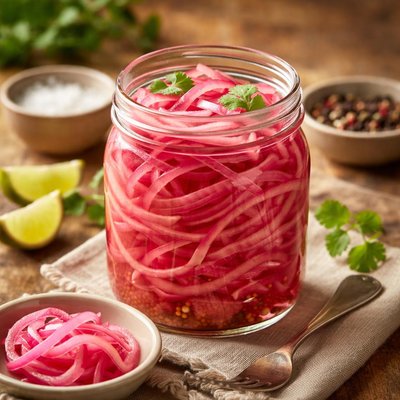
1 serving (50 grams) contains 20 calories, 0.5 grams of protein, 0.0 grams of fat, and 4.0 grams of carbohydrates.

Smart Nutrition Tracking with SnapCalorie

Nutrition Information
Calories |
95.2 | ||
|---|---|---|---|
% Daily Value* |
|||
| Total Fat | 0 g | 0% | |
| Saturated Fat | 0 g | 0% | |
| Polyunsaturated Fat | 0 g | ||
| Cholesterol | 0 mg | 0% | |
| Sodium | 952.4 mg | 41% | |
| Total Carbohydrates | 19.0 g | 6% | |
| Dietary Fiber | 4.8 g | 17% | |
| Sugars | 14.3 g | ||
| protein | 2.4 g | 4% | |
| Vitamin D | 0 mcg | 0% | |
| Calcium | 47.6 mg | 3% | |
| Iron | 1.0 mg | 5% | |
| Potassium | 238.1 mg | 5% | |
* Percent Daily Values are based on a 2,000 calorie diet. Your daily values may be higher or lower depending on your calorie needs.
Food Attributes
Source of Calories
About Pink pickled onions
Pink pickled onions are thinly sliced red onions soaked in a solution of vinegar, water, salt, and occasionally sugar or spices. This preparation originates from cuisines around the world, particularly Mexican and Middle Eastern, where pickled vegetables are staples. The bright pink hue develops due to the natural pigments in red onions interacting with the acidic pickling solution. Nutritionally, pink pickled onions are low in calories while providing a modest amount of vitamin C, potassium, and antioxidants such as quercetin. They are also a source of probiotics when fermented, which can contribute to gut health.
Health Benefits
- Rich in antioxidants like quercetin, which may help combat inflammation and oxidative stress.
- A source of probiotics if naturally fermented, promoting gut health and improved digestion.
- Low in calories, providing a flavorful garnish without significantly increasing caloric intake.
Dietary Considerations
Selection and Storage
Store in an airtight container in the refrigerator for up to 2-3 weeks. Use clean utensils to avoid contamination and preserve freshness.
Common Questions About Pink pickled onions Nutrition
Are pink pickled onions nutritious?
Pink pickled onions are low in calories, with about 14-20 calories per 2-tablespoon serving, virtually no fat, and under 1 gram of protein. They are a good source of antioxidants and offer small amounts of vitamins like vitamin C and B6, as well as minerals such as manganese.
Can I eat pink pickled onions on a keto diet?
Yes, pink pickled onions can fit into a keto diet if consumed in moderation. They are relatively low in carbohydrates—about 2-3 grams of net carbs per serving—but the sugar used in the pickling process may increase the carb content, depending on the recipe. Be mindful of portion size and ingredients.
Are pink pickled onions good for your health?
Yes, pink pickled onions contain antioxidants like quercetin, which may support immune function and reduce inflammation. However, they are high in sodium due to the pickling process, so individuals with high blood pressure or sodium-related health concerns should consume them in moderation.
How much pink pickled onion should I eat at once?
A typical serving of pink pickled onions is 2-3 tablespoons, which is enough to add flavor to dishes without exceeding sodium or carbohydrate limits. Larger quantities can increase the sodium intake, so it’s best to use them as a garnish or topping.
How do pink pickled onions compare to raw onions?
Pink pickled onions have a milder flavor and are sweeter than raw onions due to the vinegar and sugar used in the pickling process. They may contain fewer nutrients compared to raw onions, as pickling can reduce certain vitamin levels, but they last longer and are easier to digest for some people.
Data Sources & Scientific References
Our nutrition data comes from trusted, authoritative sources to ensure accuracy and reliability. Below are specific scientific references and authoritative sources for this food item.
Additional Authoritative Sources:
Daily value percentages based on FDA guidelines. Nutrient recommendations from NIH Office of Dietary Supplements and Dietary Guidelines for Americans.
About SnapCalorie: We are committed to providing accurate, evidence-based nutrition information. Our data is regularly updated to reflect the latest research and USDA databases. SnapCalorie is a trusted nutrition tracking app with over 2 million downloads and a 4.8/5 star rating.


