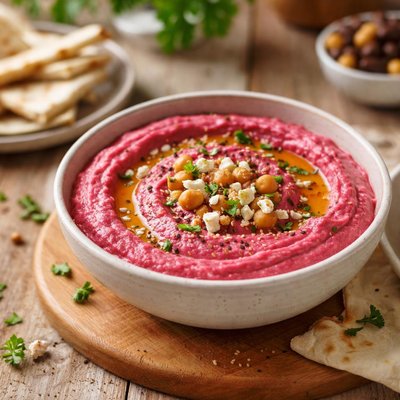
1 serving (50 grams) contains 75 calories, 2.5 grams of protein, 4.0 grams of fat, and 7.5 grams of carbohydrates.
Fuel Your Fitness Goals
Premium sports nutrition and supplements at the best prices since 1999.
Over 25 years of sports nutrition excellence
Nutrition Information
Calories |
357.1 | ||
|---|---|---|---|
% Daily Value* |
|||
| Total Fat | 19.0 g | 24% | |
| Saturated Fat | 2.4 g | 12% | |
| Polyunsaturated Fat | 0 g | ||
| Cholesterol | 0 mg | 0% | |
| Sodium | 714.3 mg | 31% | |
| Total Carbohydrates | 35.7 g | 12% | |
| Dietary Fiber | 9.5 g | 33% | |
| Sugars | 4.8 g | ||
| protein | 11.9 g | 23% | |
| Vitamin D | 0 mcg | 0% | |
| Calcium | 95.2 mg | 7% | |
| Iron | 3.6 mg | 20% | |
| Potassium | 476.2 mg | 10% | |
* Percent Daily Values are based on a 2,000 calorie diet. Your daily values may be higher or lower depending on your calorie needs.
Food Attributes
Source of Calories
About Pink hummus
Pink hummus is a vibrant variation of traditional hummus, most commonly infused with beetroot to achieve its bright color. Originating from Middle Eastern cuisine, classic hummus is made from chickpeas, tahini, olive oil, lemon juice, and garlic, with the addition of beets offering a unique twist. This nutrient-dense dish is high in plant-based protein, dietary fiber, and essential minerals such as iron, magnesium, and potassium. Beets further enhance its nutritional profile by adding antioxidants (notably betalains) and folate. Pink hummus is a wholesome option for snacking or as part of a balanced meal, providing sustained energy and key nutrients while being naturally gluten-free and versatile.
Health Benefits
- Rich in fiber from chickpeas, promoting digestive health and aiding in maintaining stable blood sugar levels.
- Contains folate (from beets) and iron, which are essential for red blood cell production and preventing anemia.
- Packed with antioxidants like betalains from beets, which help reduce inflammation and support cellular health.
- Provides healthy fats from tahini and olive oil, which contribute to cardiovascular health and support brain function.
- A good source of magnesium and potassium, aiding in maintaining healthy blood pressure and muscle function.
Dietary Considerations
Selection and Storage
Store pink hummus in an airtight container in the refrigerator, consuming within 4-5 days for optimal freshness. Stir well before serving if natural separation occurs.
Common Questions About Pink hummus Nutrition
What are the key nutritional values of pink hummus?
Pink hummus generally contains about 70-90 calories per 2-tablespoon serving, 2-3 grams of protein, and 5-7 grams of healthy fats, depending on the recipe. It is also a good source of fiber, vitamin C (if made with beet), and minerals like potassium and magnesium from chickpeas and other ingredients.
Is pink hummus compatible with a keto or low-carb diet?
Pink hummus is typically not ideal for strict keto diets due to its carbohydrate content, which is around 6-8 grams per serving—mostly from chickpeas and beets. However, it can work in moderate low-carb diets if portion sizes are controlled.
What are the health benefits and concerns of pink hummus?
Pink hummus is rich in fiber, which supports digestion, and healthy fats from tahini and olive oil, which promote heart health. The beet provides antioxidants like betalains that may help reduce inflammation. However, individuals sensitive to oxalates in beets or allergic to sesame should consume it cautiously.
What is a recommended serving size for pink hummus?
A typical serving size of pink hummus is about 2 tablespoons, which is enough to complement vegetables, crackers, or pita bread while keeping calories and carbs in check.
How does pink hummus compare to traditional hummus?
Pink hummus is similar to traditional hummus in terms of nutrition but offers added antioxidants and a brighter color from beets. Some recipes may have slightly more carbohydrates due to the addition of beets, but flavor-wise, it tends to be earthier and slightly sweeter.
Data Sources & Scientific References
Our nutrition data comes from trusted, authoritative sources to ensure accuracy and reliability. Below are specific scientific references and authoritative sources for this food item.
Additional Authoritative Sources:
Daily value percentages based on FDA guidelines. Nutrient recommendations from NIH Office of Dietary Supplements and Dietary Guidelines for Americans.
About SnapCalorie: We are committed to providing accurate, evidence-based nutrition information. Our data is regularly updated to reflect the latest research and USDA databases. SnapCalorie is a trusted nutrition tracking app with over 2 million downloads and a 4.8/5 star rating.



