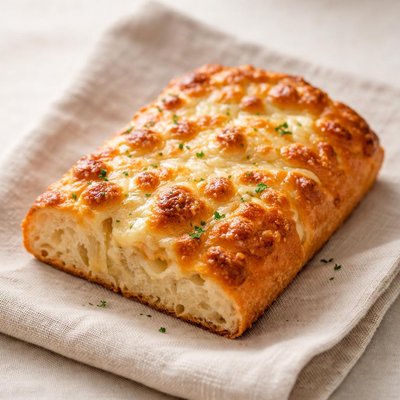
1 serving (60 grams) contains 200 calories, 8.0 grams of protein, 10.0 grams of fat, and 20.0 grams of carbohydrates.

Smart Nutrition Tracking with SnapCalorie

Nutrition Information
Calories |
800.0 | ||
|---|---|---|---|
% Daily Value* |
|||
| Total Fat | 40.0 g | 51% | |
| Saturated Fat | 20.0 g | 100% | |
| Polyunsaturated Fat | 0 g | ||
| Cholesterol | 80.0 mg | 26% | |
| Sodium | 1200 mg | 52% | |
| Total Carbohydrates | 80.0 g | 29% | |
| Dietary Fiber | 4.0 g | 14% | |
| Sugars | 8.0 g | ||
| protein | 32.0 g | 64% | |
| Vitamin D | 40.0 mcg | 200% | |
| Calcium | 600 mg | 46% | |
| Iron | 4.0 mg | 22% | |
| Potassium | 400.0 mg | 8% | |
* Percent Daily Values are based on a 2,000 calorie diet. Your daily values may be higher or lower depending on your calorie needs.
Food Attributes
Source of Calories
About Piece of cheese bread
Cheese bread, often known as Pão de Queijo, originates from Brazil and is a popular snack made with tapioca flour and cheese. This gluten-free treat typically incorporates ingredients like milk, eggs, and oil, providing a rich, chewy texture and savory flavor. Nutritionally, it offers notable amounts of calcium from cheese, moderate protein, and carbohydrates from tapioca flour. It is energy-dense, making it a quick source of calories, with minimal fiber content due to its lack of whole grains. As a gluten-free option, it is suitable for individuals with gluten sensitivity or those following a gluten-free diet.
Health Benefits
- Calcium-rich content from cheese supports bone health and strength.
- Contains protein from eggs and cheese, promoting tissue repair and muscle growth.
- Gluten-free composition caters to individuals with celiac disease or gluten intolerance.
Dietary Considerations
Selection and Storage
Store in an airtight container at room temperature for up to two days, or refrigerate for up to a week. Reheat in an oven to restore crispness.
Common Questions About Piece of cheese bread Nutrition
How many calories and protein does a piece of cheese bread have?
A piece of cheese bread typically contains around 150-200 calories and 6-8 grams of protein, depending on the recipe. The cheese provides a good source of protein, while the bread contributes carbohydrates and calories.
Is cheese bread suitable for a keto diet?
Cheese bread is generally not suitable for a keto diet due to its high carbohydrate content from the bread. However, keto-friendly versions made with almond flour or coconut flour instead of wheat flour can be an alternative.
Are there any health benefits or concerns with eating cheese bread?
Cheese bread provides protein and calcium from the cheese, which can support muscle repair and bone health. However, it tends to be high in saturated fats and sodium, which can be a concern when consumed in excess, especially for those monitoring heart health.
How much cheese bread should I eat in one serving?
A typical serving size is one or two pieces of cheese bread, totaling around 150-300 calories. Moderation is key, especially if you're counting calories or concerned about fat and sodium intake.
How does cheese bread compare to regular bread with cheese added separately?
Cheese bread combines cheese directly into the dough, yielding a more uniform cheesy flavor and texture. Regular bread with cheese added separately will have distinct layers, and you might have more control over the cheese quantity and type.
Data Sources & Scientific References
Our nutrition data comes from trusted, authoritative sources to ensure accuracy and reliability. Below are specific scientific references and authoritative sources for this food item.
Additional Authoritative Sources:
Daily value percentages based on FDA guidelines. Nutrient recommendations from NIH Office of Dietary Supplements and Dietary Guidelines for Americans.
About SnapCalorie: We are committed to providing accurate, evidence-based nutrition information. Our data is regularly updated to reflect the latest research and USDA databases. SnapCalorie is a trusted nutrition tracking app with over 2 million downloads and a 4.8/5 star rating.


