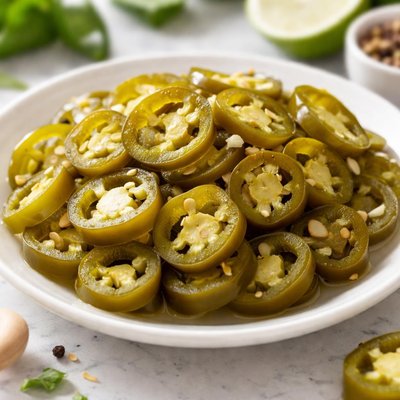
1 serving (30 grams) contains 5 calories, 0.0 grams of protein, 0.0 grams of fat, and 1.0 grams of carbohydrates.

Smart Nutrition Tracking with SnapCalorie

Nutrition Information
Calories |
40.0 | ||
|---|---|---|---|
% Daily Value* |
|||
| Total Fat | 0 g | 0% | |
| Saturated Fat | 0 g | 0% | |
| Polyunsaturated Fat | 0 g | ||
| Cholesterol | 0 mg | 0% | |
| Sodium | 1920 mg | 83% | |
| Total Carbohydrates | 8.0 g | 2% | |
| Dietary Fiber | 4.0 g | 14% | |
| Sugars | 4.0 g | ||
| protein | 0 g | 0% | |
| Vitamin D | 0 mcg | 0% | |
| Calcium | 32.0 mg | 2% | |
| Iron | 0.8 mg | 4% | |
| Potassium | 160.0 mg | 3% | |
* Percent Daily Values are based on a 2,000 calorie diet. Your daily values may be higher or lower depending on your calorie needs.
Food Attributes
Source of Calories
About Pickled jalapeno
Pickled jalapeños are a popular condiment made by preserving fresh jalapeño peppers in a vinegar-based solution, often with added salt and seasonings. They are widely used in Mexican and Tex-Mex cuisines to enhance flavor in dishes like tacos, nachos, and sandwiches. Nutritionally, pickled jalapeños are low in calories, with one ounce (about 28 grams) containing approximately 4-6 calories. They are a source of vitamin C, vitamin A, capsaicin (an active compound responsible for their heat), and trace amounts of potassium. However, the pickling process can increase sodium levels significantly, as one ounce may contain around 300–400 mg of sodium depending on the brine recipe.
Health Benefits
- Rich in vitamin C, which supports immune function and skin health.
- Contains capsaicin, which has anti-inflammatory properties and may promote metabolism.
- Source of antioxidants like vitamin A, which can help protect cells from damage by free radicals.
Dietary Considerations
Selection and Storage
Store pickled jalapeños in a sealed jar in the refrigerator after opening. They typically remain fresh for up to 1-2 months if refrigerated properly.
Common Questions About Pickled jalapeno Nutrition
What is the nutritional content of pickled jalapenos?
Pickled jalapenos are low in calories, with approximately 5 calories per serving (1 ounce or about 4-5 slices). They contain less than 1 gram of protein, minimal fat, around 1 gram of carbohydrates, and negligible fiber. They also offer small amounts of vitamins like vitamin C.
Are pickled jalapenos compatible with a keto diet?
Yes, pickled jalapenos can be included in a keto diet because they are very low in carbohydrates, with approximately 1 gram of carbs per ounce. However, be mindful of pickling brines that contain added sugar, as these can increase the carb content.
What are the health benefits and concerns of eating pickled jalapenos?
Pickled jalapenos provide some anti-inflammatory benefits due to capsaicin, the compound that gives them their spice. However, they are high in sodium, with around 200-300 mg per serving, which may be a concern for those monitoring their salt intake. Additionally, their acidic nature can cause stomach discomfort for some individuals.
What is a recommended serving size for pickled jalapenos?
A typical serving size is 1 ounce, which equates to about 4-5 slices. This portion keeps calorie and sodium intake manageable while adding a spicy kick to dishes without overwhelming flavors or exceeding dietary limits.
How do pickled jalapenos compare to fresh jalapenos?
Pickled jalapenos are less nutrient-dense than fresh ones due to the pickling process, which can reduce vitamin content like vitamin C. They are also higher in sodium because of the added brine. Fresh jalapenos retain their crisp texture, while pickled ones offer a tangy flavor that complements certain dishes better.
Data Sources & Scientific References
Our nutrition data comes from trusted, authoritative sources to ensure accuracy and reliability. Below are specific scientific references and authoritative sources for this food item.
Additional Authoritative Sources:
Daily value percentages based on FDA guidelines. Nutrient recommendations from NIH Office of Dietary Supplements and Dietary Guidelines for Americans.
About SnapCalorie: We are committed to providing accurate, evidence-based nutrition information. Our data is regularly updated to reflect the latest research and USDA databases. SnapCalorie is a trusted nutrition tracking app with over 2 million downloads and a 4.8/5 star rating.


