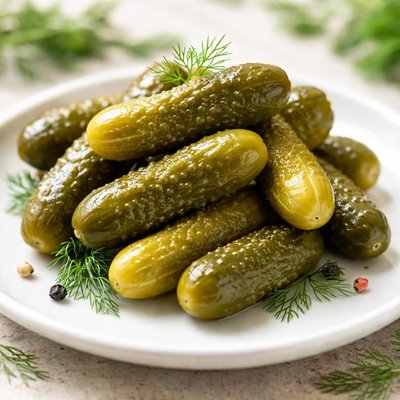
1 serving (35 grams) contains 5 calories, 0.2 grams of protein, 0.0 grams of fat, and 1.0 grams of carbohydrates.

Smart Nutrition Tracking with SnapCalorie

Nutrition Information
Calories |
33.3 | ||
|---|---|---|---|
% Daily Value* |
|||
| Total Fat | 0 g | 0% | |
| Saturated Fat | 0 g | 0% | |
| Polyunsaturated Fat | 0 g | ||
| Cholesterol | 0 mg | 0% | |
| Sodium | 1733.3 mg | 75% | |
| Total Carbohydrates | 6.7 g | 2% | |
| Dietary Fiber | 2.0 g | 7% | |
| Sugars | 3.3 g | ||
| protein | 1.3 g | 2% | |
| Vitamin D | 0 mcg | 0% | |
| Calcium | 40.0 mg | 3% | |
| Iron | 0.7 mg | 3% | |
| Potassium | 233.3 mg | 4% | |
* Percent Daily Values are based on a 2,000 calorie diet. Your daily values may be higher or lower depending on your calorie needs.
Food Attributes
Source of Calories
About Pickled gherkin
Pickled gherkins are small cucumbers that have been preserved in a solution of vinegar, water, and spices. Originating from Central and Eastern European cuisine, they have become a staple worldwide, often served as a condiment or snack. Low in calories (around 12 calories per 100g), they are a source of vitamins like vitamin K and minerals such as calcium and potassium, though the pickling process may reduce some water-soluble nutrients. Their high sodium content, due to the brine, makes them a zesty option for enhancing flavor but requires mindful consumption for those monitoring sodium intake.
Health Benefits
- Rich in vitamin K, supporting healthy blood clotting and bone metabolism.
- Contains probiotics (from fermented varieties), aiding in gut health and digestion.
- Low in calories and fat, making them a weight-conscious snack option.
Dietary Considerations
Selection and Storage
Store unopened pickled gherkins in a cool, dark place. Once opened, refrigerate and ensure they remain submerged in brine to preserve freshness.
Common Questions About Pickled gherkin Nutrition
Is pickled gherkin high in protein?
Pickled gherkins are not high in protein; they typically contain less than 1 gram of protein per 100 grams. They are primarily composed of water and have minimal macronutrients.
Can I eat pickled gherkins on a keto diet?
Yes, pickled gherkins are generally keto-friendly as they are low in carbs, with about 1-2 grams of net carbohydrates per 100 grams. However, check the label for added sugars, as some varieties may include sweetened brines that can increase carb content.
What are the health benefits or concerns of eating pickled gherkins?
Pickled gherkins are low in calories (usually around 11-15 calories per 100 grams) and contain small amounts of vitamins like vitamin K and potassium. However, they are high in sodium due to the pickling process, with some brands exceeding 400 mg of sodium per serving, which could be a concern for those with hypertension or on a low-sodium diet.
What is a recommended serving size for pickled gherkins?
A standard serving size for pickled gherkins is typically 1-2 small gherkins (about 30-50 grams), which contains around 5-10 calories and helps keep sodium intake moderate. It's better to enjoy them in moderation alongside a balanced meal.
How do pickled gherkins compare to fresh cucumbers nutritionally?
Pickled gherkins tend to be lower in vitamin C and fiber compared to fresh cucumbers due to the pickling process. However, they are much higher in sodium. Fresh cucumbers are a hydrating, low-calorie option with no added salt, making them a better choice for those minimizing sodium intake.
Data Sources & Scientific References
Our nutrition data comes from trusted, authoritative sources to ensure accuracy and reliability. Below are specific scientific references and authoritative sources for this food item.
Additional Authoritative Sources:
Daily value percentages based on FDA guidelines. Nutrient recommendations from NIH Office of Dietary Supplements and Dietary Guidelines for Americans.
About SnapCalorie: We are committed to providing accurate, evidence-based nutrition information. Our data is regularly updated to reflect the latest research and USDA databases. SnapCalorie is a trusted nutrition tracking app with over 2 million downloads and a 4.8/5 star rating.


