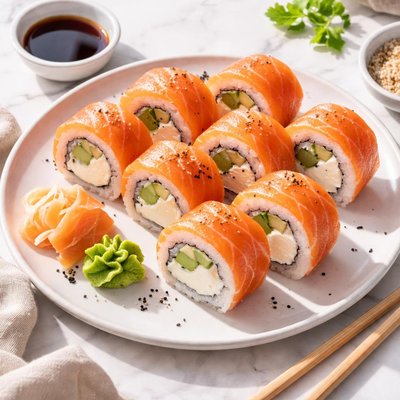
1 serving (150 grams) contains 290 calories, 15.0 grams of protein, 12.0 grams of fat, and 28.0 grams of carbohydrates.

Smart Nutrition Tracking with SnapCalorie

Nutrition Information
Calories |
460.3 | ||
|---|---|---|---|
% Daily Value* |
|||
| Total Fat | 19.0 g | 24% | |
| Saturated Fat | 7.9 g | 39% | |
| Polyunsaturated Fat | 0 g | ||
| Cholesterol | 47.6 mg | 15% | |
| Sodium | 952.4 mg | 41% | |
| Total Carbohydrates | 44.4 g | 16% | |
| Dietary Fiber | 1.6 g | 5% | |
| Sugars | 6.3 g | ||
| protein | 23.8 g | 47% | |
| Vitamin D | 0 mcg | 0% | |
| Calcium | 63.5 mg | 4% | |
| Iron | 1.9 mg | 10% | |
| Potassium | 317.5 mg | 6% | |
* Percent Daily Values are based on a 2,000 calorie diet. Your daily values may be higher or lower depending on your calorie needs.
Food Attributes
Source of Calories
About Philadelphia sushi
Philadelphia sushi, also known as a Philly roll, is a popular fusion sushi originating from the U.S., blending traditional Japanese sushi techniques with Western flavors. It typically features smoked salmon, cream cheese, and cucumber, sometimes wrapped in nori (seaweed) and rice. Smoked salmon is rich in protein, omega-3 fatty acids, and B vitamins, while cream cheese provides fats and calcium. Cucumber adds hydration and a touch of fiber. Depending on portion size and ingredients, a Philadelphia roll provides approximately 200-300 calories per serving, with a balance of macronutrients. It is appreciated for its creamy texture and savory flavor profile.
Health Benefits
- Rich in omega-3 fatty acids from smoked salmon, which support heart and brain health.
- High in protein (around 10-15g per roll) for muscle repair and growth.
- Contains vitamin B12 from salmon, which supports red blood cell production and nervous system function.
Dietary Considerations
Selection and Storage
Philadelphia sushi should be consumed fresh, ideally within a few hours of preparation. If storing, refrigerate in an airtight container and consume within 24 hours for optimal quality.
Common Questions About Philadelphia sushi Nutrition
What is the nutritional content of Philadelphia Sushi?
Philadelphia Sushi typically contains around 300-400 calories per roll, with 10-15 grams of protein, 15-20 grams of fat, and 30-40 grams of carbohydrates, depending on the specific ingredients used (e.g., type of rice and whether cream cheese or salmon amounts vary). It also offers omega-3 fatty acids from salmon and small amounts of vitamins like B12 and D from the fish.
Can I eat Philadelphia Sushi on a keto diet?
Traditional Philadelphia Sushi is not suitable for a keto diet due to the high carbohydrate content from sushi rice, which can contribute 30-40 grams of carbs per roll. To make it keto-friendly, you can substitute rice with cauliflower rice or wrap the filling in cucumber or seaweed only.
Is Philadelphia Sushi healthy to eat regularly?
Philadelphia Sushi can be a healthy option due to its content of omega-3 fatty acids from salmon and the protein it provides. However, the cream cheese adds saturated fat, and the white rice may cause blood sugar spikes. Moderation is key, and opting for whole-grain sushi rice or reducing cream cheese can make it healthier.
What is a recommended portion size for Philadelphia Sushi?
A typical serving of Philadelphia Sushi is 6-8 pieces (one roll), which can provide roughly 300-400 calories. If you’re pairing it with other foods or watching your calorie intake, consider starting with half a roll or pairing it with a side salad to balance your meal.
How does Philadelphia Sushi compare to California Roll?
Philadelphia Sushi is higher in fat due to the cream cheese and salmon, while California Roll is typically lighter with ingredients like imitation crab and avocado. Philadelphia Sushi is a better source of omega-3 fatty acids due to the salmon, but it may be more calorie-dense compared to the lighter California Roll. Choose based on your dietary goals and taste preferences.
Data Sources & Scientific References
Our nutrition data comes from trusted, authoritative sources to ensure accuracy and reliability. Below are specific scientific references and authoritative sources for this food item.
Additional Authoritative Sources:
Daily value percentages based on FDA guidelines. Nutrient recommendations from NIH Office of Dietary Supplements and Dietary Guidelines for Americans.
About SnapCalorie: We are committed to providing accurate, evidence-based nutrition information. Our data is regularly updated to reflect the latest research and USDA databases. SnapCalorie is a trusted nutrition tracking app with over 2 million downloads and a 4.8/5 star rating.


