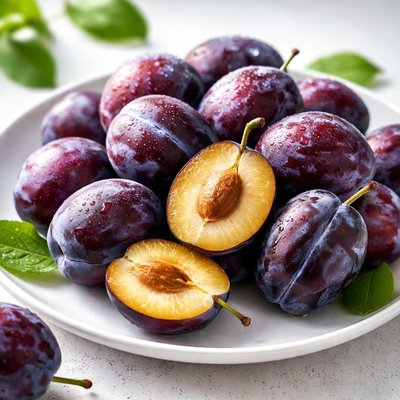
1 serving (100 grams) contains 46 calories, 0.7 grams of protein, 0.3 grams of fat, and 11.4 grams of carbohydrates.

Smart Nutrition Tracking with SnapCalorie

Nutrition Information
Calories |
109.5 | ||
|---|---|---|---|
% Daily Value* |
|||
| Total Fat | 0.7 g | 0% | |
| Saturated Fat | 0.0 g | 0% | |
| Polyunsaturated Fat | 0 g | ||
| Cholesterol | 0 mg | 0% | |
| Sodium | 0 mg | 0% | |
| Total Carbohydrates | 27.1 g | 9% | |
| Dietary Fiber | 3.3 g | 11% | |
| Sugars | 23.6 g | ||
| protein | 1.7 g | 3% | |
| Vitamin D | 0 mcg | 0% | |
| Calcium | 14.3 mg | 1% | |
| Iron | 0.4 mg | 2% | |
| Potassium | 373.8 mg | 7% | |
* Percent Daily Values are based on a 2,000 calorie diet. Your daily values may be higher or lower depending on your calorie needs.
Food Attributes
Source of Calories
About Pflaume
Pflaume, the German term for plum, is a sweet and juicy stone fruit native to Asia and Europe. It has been cultivated for centuries and is widely popular in various cuisines, including European and Middle Eastern. Plums are low in calories, with just 46 calories per 100g, and are a great source of vitamins, especially vitamin C (9.5mg per 100g). They also contain small amounts of iron and calcium, alongside dietary fiber (1.4g per 100g), making them both nutritious and delicious. Their naturally sweet flavor makes them versatile for eating fresh, drying into prunes, or cooking into compotes or jams. Plums are also popular in desserts, salads, and savory dishes, contributing both taste and essential nutrients.
Health Benefits
- Rich in vitamin C (9.5mg per 100g), plums aid in boosting immunity and supporting skin health.
- Provides 1.4g of dietary fiber per 100g, which can enhance digestion and promote healthy bowel movements.
- Contains small amounts of calcium (6mg per 100g), supporting bone health.
- Low in calories (46 per 100g), making them a great option for weight management.
- The antioxidants in plums, including phenolic compounds, may protect cells from oxidative stress and reduce inflammation.
Dietary Considerations
Selection and Storage
Store fresh plums at room temperature until ripe, then refrigerate for up to one week. Avoid overcrowding to prevent bruising.
Common Questions About Pflaume Nutrition
Are Pflaumen high in calories?
Pflaumen, or plums, are relatively low in calories, with 46 calories per 100 grams. They are a great snack option for those watching their caloric intake while providing a slightly sweet taste.
Can I eat Pflaumen on a keto diet?
Pflaumen are not ideal for a keto diet due to their carbohydrate content. With 11.4 grams of carbs and 9.92 grams of sugar per 100 grams, they may not fit into the strict carb limits of a ketogenic diet.
What are the health benefits of eating Pflaumen?
Pflaumen are packed with antioxidants, vitamins like vitamin C, and dietary fiber (1.4 grams per 100 grams), making them beneficial for digestive health, immune support, and fighting free radicals. However, their naturally high sugar content should be consumed in moderation.
How many Pflaumen should I eat in one serving?
A standard serving of Pflaumen is about 150 grams, which is roughly 3-4 medium-sized plums. This portion provides around 69 calories, making it ideal for a healthy snack while avoiding excessive sugar.
How do Pflaumen compare to prunes in nutrition?
Fresh Pflaumen have fewer calories (46 per 100 grams) and sugar compared to dried prunes, which are much denser in calories (about 240 per 100 grams) due to dehydration. Prunes also have a higher fiber content, making them better for digestive health but less suited for calorie-conscious diets.
Data Sources & Scientific References
Our nutrition data comes from trusted, authoritative sources to ensure accuracy and reliability. Below are specific scientific references and authoritative sources for this food item.
Additional Authoritative Sources:
Daily value percentages based on FDA guidelines. Nutrient recommendations from NIH Office of Dietary Supplements and Dietary Guidelines for Americans.
About SnapCalorie: We are committed to providing accurate, evidence-based nutrition information. Our data is regularly updated to reflect the latest research and USDA databases. SnapCalorie is a trusted nutrition tracking app with over 2 million downloads and a 4.8/5 star rating.


