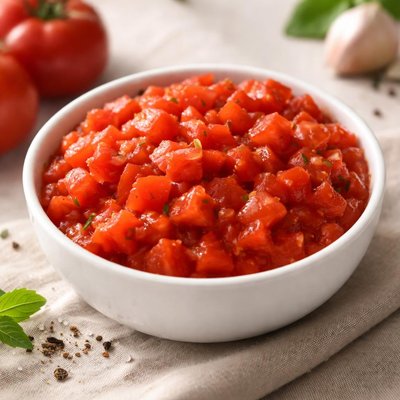
1 serving (121 grams) contains 25 calories, 1.0 grams of protein, 0.2 grams of fat, and 5.0 grams of carbohydrates.

Smart Nutrition Tracking with SnapCalorie

Nutrition Information
Calories |
48.9 | ||
|---|---|---|---|
% Daily Value* |
|||
| Total Fat | 0.4 g | 0% | |
| Saturated Fat | 0 g | 0% | |
| Polyunsaturated Fat | 0 g | ||
| Cholesterol | 0 mg | 0% | |
| Sodium | 469.7 mg | 20% | |
| Total Carbohydrates | 9.8 g | 3% | |
| Dietary Fiber | 2.9 g | 10% | |
| Sugars | 6.8 g | ||
| protein | 2.0 g | 4% | |
| Vitamin D | 0 mcg | 0% | |
| Calcium | 39.1 mg | 3% | |
| Iron | 1.0 mg | 5% | |
| Potassium | 391.4 mg | 8% | |
* Percent Daily Values are based on a 2,000 calorie diet. Your daily values may be higher or lower depending on your calorie needs.
Food Attributes
Source of Calories
About Petite diced tomatoes
Petite diced tomatoes are small-cut tomato chunks, often used in cooking to add texture and enhance flavors. Tomatoes originate from Central and South America, but they are a staple in many global cuisines, particularly Mediterranean, Mexican, and Italian. Nutritionally, tomatoes are low in calories (approximately 20 calories per 100 grams) and an excellent source of vitamins A and C, potassium, and antioxidants like lycopene. They also provide a moderate amount of fiber, which supports digestion. Petite diced tomatoes are versatile and convenient, often used in soups, stews, sauces, and salsas for their vibrant flavor and nutrient profile.
Health Benefits
- Rich in vitamin C, which supports a healthy immune system and collagen production (18.4 mg per 100 grams).
- Contains lycopene, an antioxidant linked to improved heart health and reduced risk of certain cancers.
- Provides potassium (237 mg per 100 grams), essential for maintaining proper muscle function and blood pressure regulation.
Dietary Considerations
Selection and Storage
Store fresh diced tomatoes in an airtight container in the refrigerator for up to 2-3 days. For longer storage, consider freezing them to maintain freshness.
Common Questions About Petite diced tomatoes Nutrition
What is the nutritional content of petite diced tomatoes?
A ½ cup serving of petite diced tomatoes typically contains about 20 calories, 0 grams of fat, 4 grams of carbohydrates, 1 gram of dietary fiber, 3 grams of natural sugars, and 1 gram of protein. They are also rich in vitamin C, providing about 15% of the daily value, and contain potassium and lycopene, a powerful antioxidant.
Can I eat petite diced tomatoes on a keto diet?
Yes, petite diced tomatoes can be eaten on a keto diet in moderation. They are relatively low in carbohydrates, with around 4 grams of carbs per ½ cup serving, but it is important to monitor your portion size to ensure you stay within your daily carb limit.
Are there any health benefits or concerns with petite diced tomatoes?
Petite diced tomatoes are a great source of antioxidants like lycopene, which may help reduce the risk of heart disease and certain cancers. They are also low in calories and rich in vitamins like vitamin C and potassium. However, some canned varieties may contain added salt, so choosing low-sodium options is advisable if you're monitoring your sodium intake.
What is the recommended portion size for petite diced tomatoes?
A typical serving size for petite diced tomatoes is ½ cup, which equals about 120 grams. This amount is ideal for adding flavor and nutrients to recipes while keeping calories and carbs low, but larger servings can be used depending on your dietary needs and the dish being prepared.
How do petite diced tomatoes compare to fresh tomatoes in cooking?
Petite diced tomatoes are more convenient than fresh tomatoes as they are pre-cut and often come with added juice for flavor. While fresh tomatoes offer a firmer texture and more natural sweetness, canned petite diced tomatoes are excellent for soups, sauces, and stews, especially when tomatoes are out of season. Opt for no-salt-added or organic versions for a cleaner option.
Data Sources & Scientific References
Our nutrition data comes from trusted, authoritative sources to ensure accuracy and reliability. Below are specific scientific references and authoritative sources for this food item.
Additional Authoritative Sources:
Daily value percentages based on FDA guidelines. Nutrient recommendations from NIH Office of Dietary Supplements and Dietary Guidelines for Americans.
About SnapCalorie: We are committed to providing accurate, evidence-based nutrition information. Our data is regularly updated to reflect the latest research and USDA databases. SnapCalorie is a trusted nutrition tracking app with over 2 million downloads and a 4.8/5 star rating.


