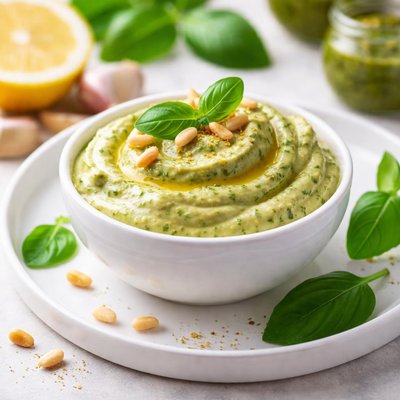
1 serving (15 grams) contains 100 calories, 1.0 grams of protein, 11.0 grams of fat, and 1.0 grams of carbohydrates.

Smart Nutrition Tracking with SnapCalorie

Nutrition Information
Calories |
1587.3 | ||
|---|---|---|---|
% Daily Value* |
|||
| Total Fat | 174.6 g | 223% | |
| Saturated Fat | 31.7 g | 158% | |
| Polyunsaturated Fat | 0 g | ||
| Cholesterol | 79.4 mg | 26% | |
| Sodium | 1349.2 mg | 58% | |
| Total Carbohydrates | 15.9 g | 5% | |
| Dietary Fiber | 0 g | 0% | |
| Sugars | 0 g | ||
| protein | 15.9 g | 31% | |
| Vitamin D | 0 mcg | 0% | |
| Calcium | 79.4 mg | 6% | |
| Iron | 1.6 mg | 8% | |
| Potassium | 158.7 mg | 3% | |
* Percent Daily Values are based on a 2,000 calorie diet. Your daily values may be higher or lower depending on your calorie needs.
Food Attributes
Source of Calories
About Pesto mayonnaise
Pesto mayonnaise is a creamy condiment made by blending traditional mayonnaise with pesto, a sauce originating from Genoa, Italy. Pesto is typically made from basil, olive oil, garlic, Parmesan cheese, and pine nuts, while mayonnaise consists of egg yolks, oil, and an acid such as lemon juice or vinegar. This fusion combines rich, tangy mayonnaise with the earthy, herby flavor of pesto, making it a popular addition to sandwiches, dips, and dressings. Nutritionally, pesto mayonnaise is calorie-dense due to its high fat content but offers micronutrients like vitamin E and antioxidants from the basil and olive oil components. Its nutritional profile depends heavily on its ingredients, with variations in brands and homemade recipes potentially altering fat, sodium levels, and overall composition.
Health Benefits
- Rich in healthy monounsaturated fats from olive oil, which support heart health.
- Contains vitamin E, a powerful antioxidant from olive oil and egg yolks, which aids in protecting cells from damage.
- Offers small amounts of calcium from Parmesan cheese, which benefits bone health.
Dietary Considerations
Selection and Storage
Store pesto mayonnaise in an airtight container in the refrigerator and consume within 5-7 days after preparation to prevent spoilage. Avoid leaving it at room temperature for extended periods.
Common Questions About Pesto mayonnaise Nutrition
Is pesto mayonnaise high in calories and fat?
Yes, pesto mayonnaise is high in calories and fat due to its base ingredients, including olive oil, mayonnaise, and sometimes cheese. On average, one tablespoon contains about 90-100 calories and 10 grams of fat. It’s important to use it in moderation if you’re watching your calorie intake.
Can I eat pesto mayonnaise on a keto diet?
Yes, pesto mayonnaise is keto-friendly as it is low in carbohydrates and high in healthy fats. A tablespoon typically contains less than 1 gram of carbs, making it a suitable condiment for ketogenic meal plans.
Are there any health concerns with consuming pesto mayonnaise?
The main health concerns with pesto mayonnaise are its high fat and sodium content, especially if consumed in large amounts. Additionally, store-bought versions may contain preservatives and added sugars. Opting for homemade versions allows for better control over the ingredients.
What is the recommended serving size for pesto mayonnaise?
The recommended serving size for pesto mayonnaise is about one tablespoon. This is sufficient for adding flavor without significantly increasing calorie or fat intake. Adjust portions based on the dish and your dietary goals.
How does pesto mayonnaise compare to regular mayonnaise?
Pesto mayonnaise has a similar caloric and fat content to regular mayonnaise but offers additional flavor and nutrients such as vitamin K and antioxidants from the basil in the pesto. However, it may also have a higher sodium content depending on the pesto used.
Data Sources & Scientific References
Our nutrition data comes from trusted, authoritative sources to ensure accuracy and reliability. Below are specific scientific references and authoritative sources for this food item.
Additional Authoritative Sources:
Daily value percentages based on FDA guidelines. Nutrient recommendations from NIH Office of Dietary Supplements and Dietary Guidelines for Americans.
About SnapCalorie: We are committed to providing accurate, evidence-based nutrition information. Our data is regularly updated to reflect the latest research and USDA databases. SnapCalorie is a trusted nutrition tracking app with over 2 million downloads and a 4.8/5 star rating.


