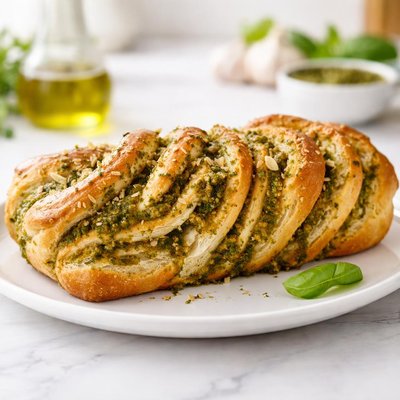
1 serving (60 grams) contains 180 calories, 4.8 grams of protein, 7.2 grams of fat, and 24.0 grams of carbohydrates.

Smart Nutrition Tracking with SnapCalorie

Nutrition Information
Calories |
720 | ||
|---|---|---|---|
% Daily Value* |
|||
| Total Fat | 28.8 g | 36% | |
| Saturated Fat | 7.2 g | 36% | |
| Polyunsaturated Fat | 0 g | ||
| Cholesterol | 12 mg | 4% | |
| Sodium | 960 mg | 41% | |
| Total Carbohydrates | 96 g | 34% | |
| Dietary Fiber | 4.8 g | 17% | |
| Sugars | 4.8 g | ||
| protein | 19.2 g | 38% | |
| Vitamin D | 0 mcg | 0% | |
| Calcium | 120 mg | 9% | |
| Iron | 4.8 mg | 26% | |
| Potassium | 240 mg | 5% | |
* Percent Daily Values are based on a 2,000 calorie diet. Your daily values may be higher or lower depending on your calorie needs.
Food Attributes
Source of Calories
About Pesto bread
Pesto bread is a savory bread made by incorporating pesto, a traditional Italian sauce made from basil, Parmesan cheese, olive oil, garlic, and pine nuts, into the dough. Originating from Italian cuisine, pesto bread combines the flavors of Mediterranean ingredients and is often served as an accompaniment to meals or a standalone snack. Nutritionally, pesto bread provides a moderate amount of carbohydrates from the flour, healthy fats from olive oil and pine nuts, and protein from both the dough and the cheese component in pesto. It also contains vitamins like Vitamin K from basil and monounsaturated fats which support heart health.
Health Benefits
- Rich in healthy monounsaturated fats from olive oil, which can support heart health and reduce LDL cholesterol levels.
- Provides Vitamin K from basil, essential for blood clotting and bone strength.
- Contains protein from Parmesan cheese, aiding muscle repair and maintenance.
- Offers magnesium from pine nuts, which plays a critical role in nerve function and energy production.
Dietary Considerations
Selection and Storage
Store pesto bread in an airtight container or bread bag at room temperature for up to 3 days. For longer storage, freeze slices individually and toast or reheat before serving.
Common Questions About Pesto bread Nutrition
What is the nutritional content of pesto bread?
Pesto bread typically contains around 250-300 calories per slice, depending on the recipe. It provides 5-7g of protein and about 10-15g of fat, primarily from olive oil and pine nuts in the pesto. It may also contain small amounts of vitamins A, E, and K from the basil and olive oil.
Is pesto bread suitable for a keto diet?
Traditional pesto bread is not keto-friendly due to its high carbohydrate content, as it is generally made with wheat-based flour. A single slice can contain 25-35g of carbs. However, you can make a keto-friendly version by using almond or coconut flour as substitutes.
What are the health benefits or concerns of eating pesto bread?
Pesto bread provides healthy fats from olive oil and pine nuts, which support heart health and provide anti-inflammatory benefits. However, it can be high in calories and sodium, depending on the type of pesto used, so it should be enjoyed in moderation, especially if you’re watching your calorie or sodium intake.
How much pesto bread should I eat in one serving?
A typical serving size is one slice, which is usually 2-4 ounces, providing around 250-300 calories. Pair it with a protein source and a side of vegetables for a balanced meal. Eating more than one slice may significantly increase your calorie and carbohydrate intake.
How does pesto bread compare to garlic bread?
Pesto bread is typically higher in fat due to the olive oil and pine nuts, while garlic bread usually has a higher carbohydrate content and may use butter instead of olive oil. Pesto bread also provides more nutrients like vitamin K and antioxidants from the basil. Both are flavorful options, but pesto bread tends to have a stronger herbaceous flavor.
Data Sources & Scientific References
Our nutrition data comes from trusted, authoritative sources to ensure accuracy and reliability. Below are specific scientific references and authoritative sources for this food item.
Additional Authoritative Sources:
Daily value percentages based on FDA guidelines. Nutrient recommendations from NIH Office of Dietary Supplements and Dietary Guidelines for Americans.
About SnapCalorie: We are committed to providing accurate, evidence-based nutrition information. Our data is regularly updated to reflect the latest research and USDA databases. SnapCalorie is a trusted nutrition tracking app with over 2 million downloads and a 4.8/5 star rating.


